Gran Hotel
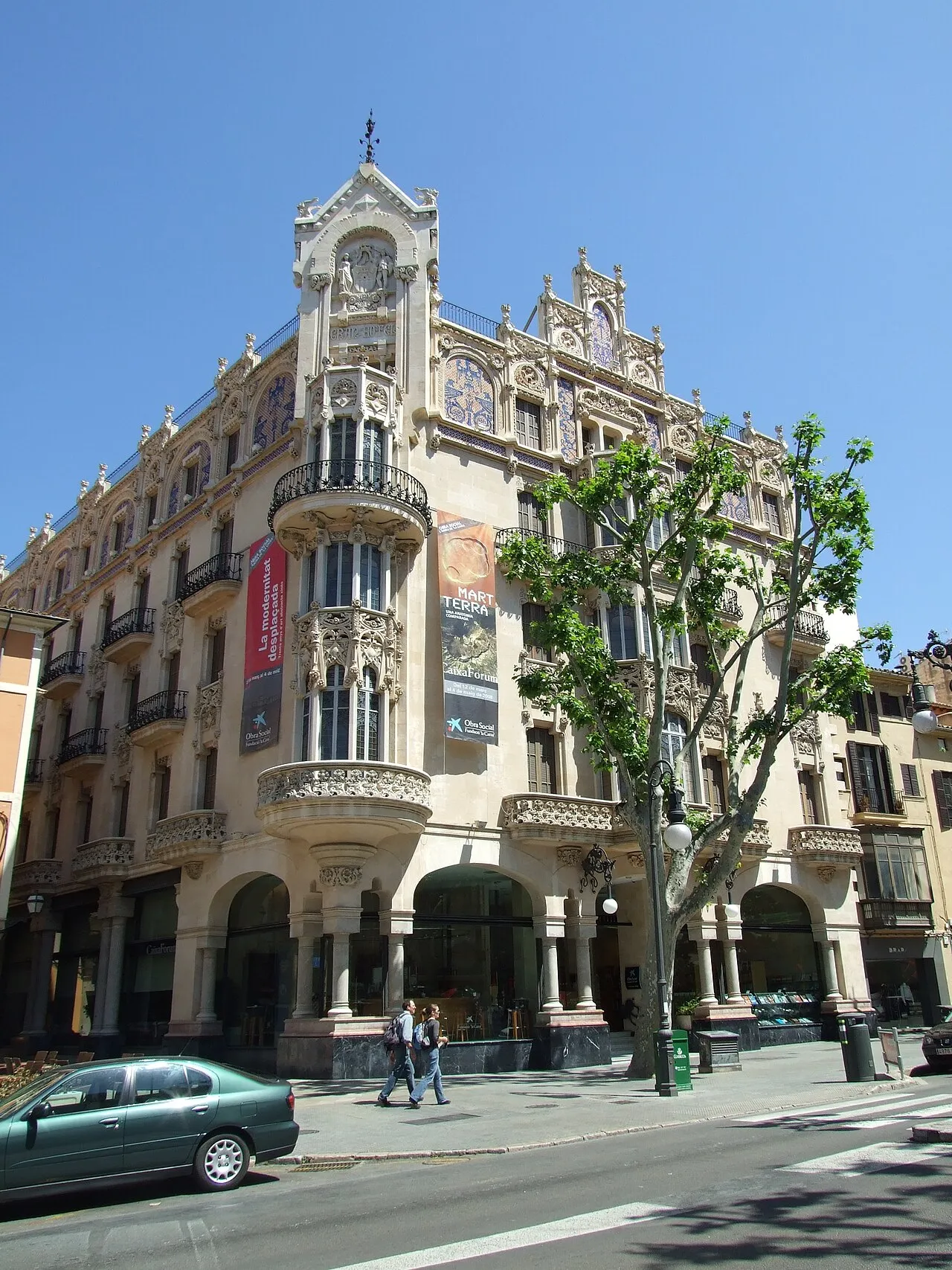
Lluís Domènech i Montaner, 1903. Glazed ceramic, floral garlands and sculpture built into the wall, by the same author as the Palau de la Música in Barcelona. Today it is CaixaForum and you can go in free or for a token price.

A pastry chef, a jeweller and a luxury hotel. Who commissioned the city's most daring buildings, why they all arrived in the same decade and where to see them.
🎧 On the walk El Born, La Lonja and Modernist PalmaBetween 1903 and 1910, within a five-minute walk, Palma filled up with undulating façades, coloured ceramic and wrought iron that coils like a plant. It was not aristocrats who commissioned it: it was a hotelier, a pastry chef and a jeweller. Modernisme arrived here with the new money, and that is the whole explanation.
For centuries the noble architecture of Palma had been discreet on the outside and spectacular on the inside: sober stone façades and magnificent patios hidden behind a gate. That logic worked because prestige was proved to whoever came in, not to whoever walked past.
Modernisme turns that around. The commercial middle class that had prospered on trade, industry and the emerging tourism had no family name to show off, so it showed off a façade. It wanted its house to be seen from the street and commissioned buildings designed for exactly that.
The vehicle was Barcelona. Palma was tightly connected to the Catalan capital by sea, shared its language and its family networks, and the architects and the models travelled on the same routes as the goods. Which is why Mallorcan Modernisme is a variant of the Catalan one, not an independent phenomenon.
Lluís Domènech i Montaner, 1903. Glazed ceramic, floral garlands and sculpture built into the wall, by the same author as the Palau de la Música in Barcelona. Today it is CaixaForum and you can go in free or for a token price.
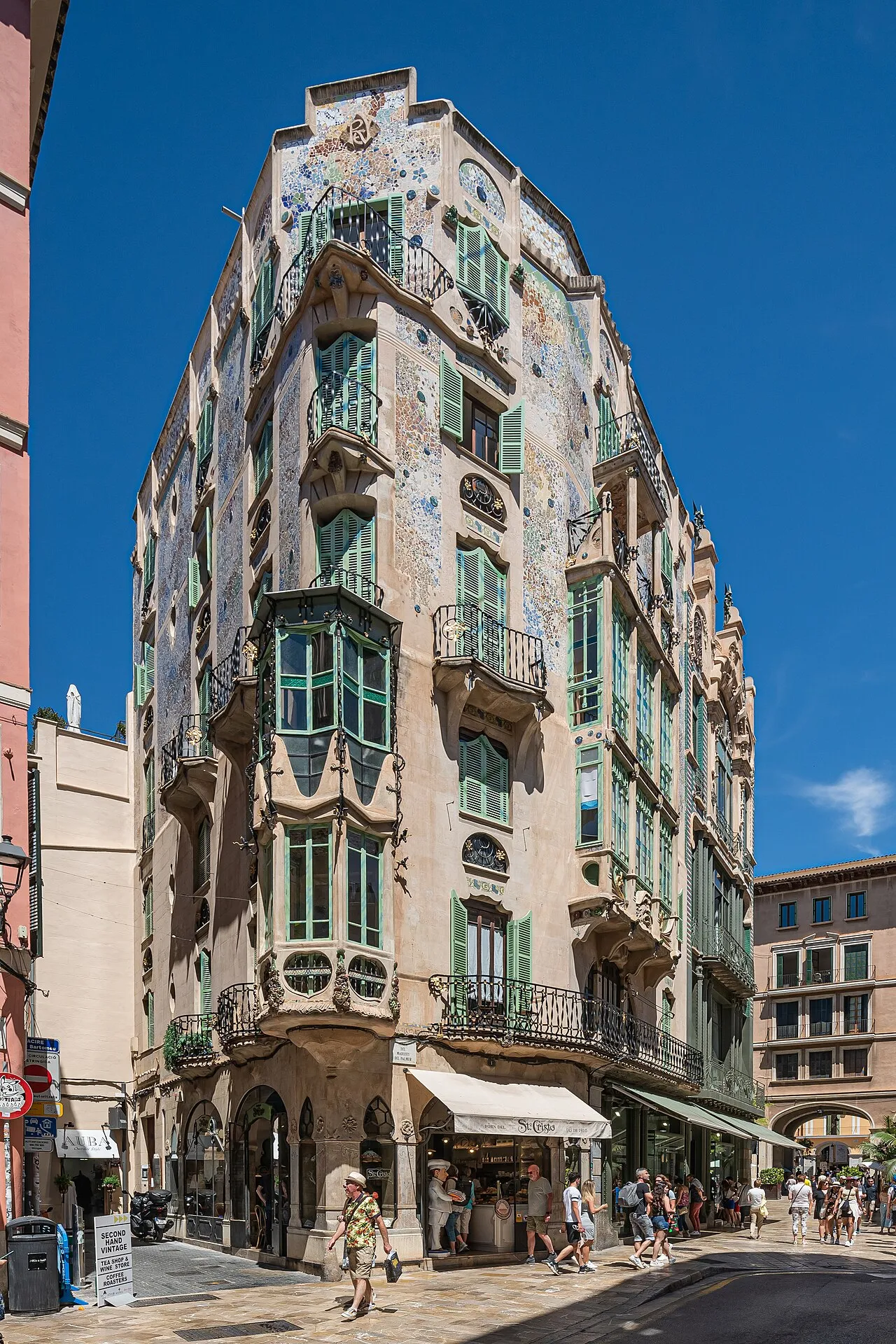
1909, and the most extravagant building in the city: trencadís of crockery and broken glass with flowers, butterflies and a monstrous mask hidden among the ceramic. A jeweller commissioned it, with his workshop below and a dental clinic inside.
Download the app and discover Palma offline, whenever you like. Take the walking tour El Born, La Lonja and Modernist Palma with a local guide in your ear.
Find out more about Viavoy →The Gran Hotel was raised by Lluís Domènech i Montaner in 1903, and Mallorcan tourism was born with it: it was the first building on the island with electricity and a telephone, with 450 light bulbs, a lift, hot water and heating, when nothing like it existed in Mallorca. Two years later the Foment del Turisme was founded, the oldest in Spain.
Can Casasayas and its twin, the Pensió Menorquina, were commissioned by Josep Casasayas, a pastry chef who had come over from Barcelona, worked in the Can Frasquet bakery and ended up taking over the business. When things went well he wanted a house in the latest style, and hired Francesc Roca Simó.
Can Forteza Rey is from 1909 and was commissioned by the jeweller Josep Forteza Rey, with the design attributed to Lluís Forteza Rey. It was not only a home: the jewellery workshop operated downstairs and Ignasi Forteza-Rey's dental clinic was inside. Work, science and art on the same façade.
The route is completed by the Forn des Teatre, the bakery with a Modernista façade that is among the most photographed in Palma, and the Almacenes El Águila, a commercial building with an iron structure and big windows that is the most urban of the group.
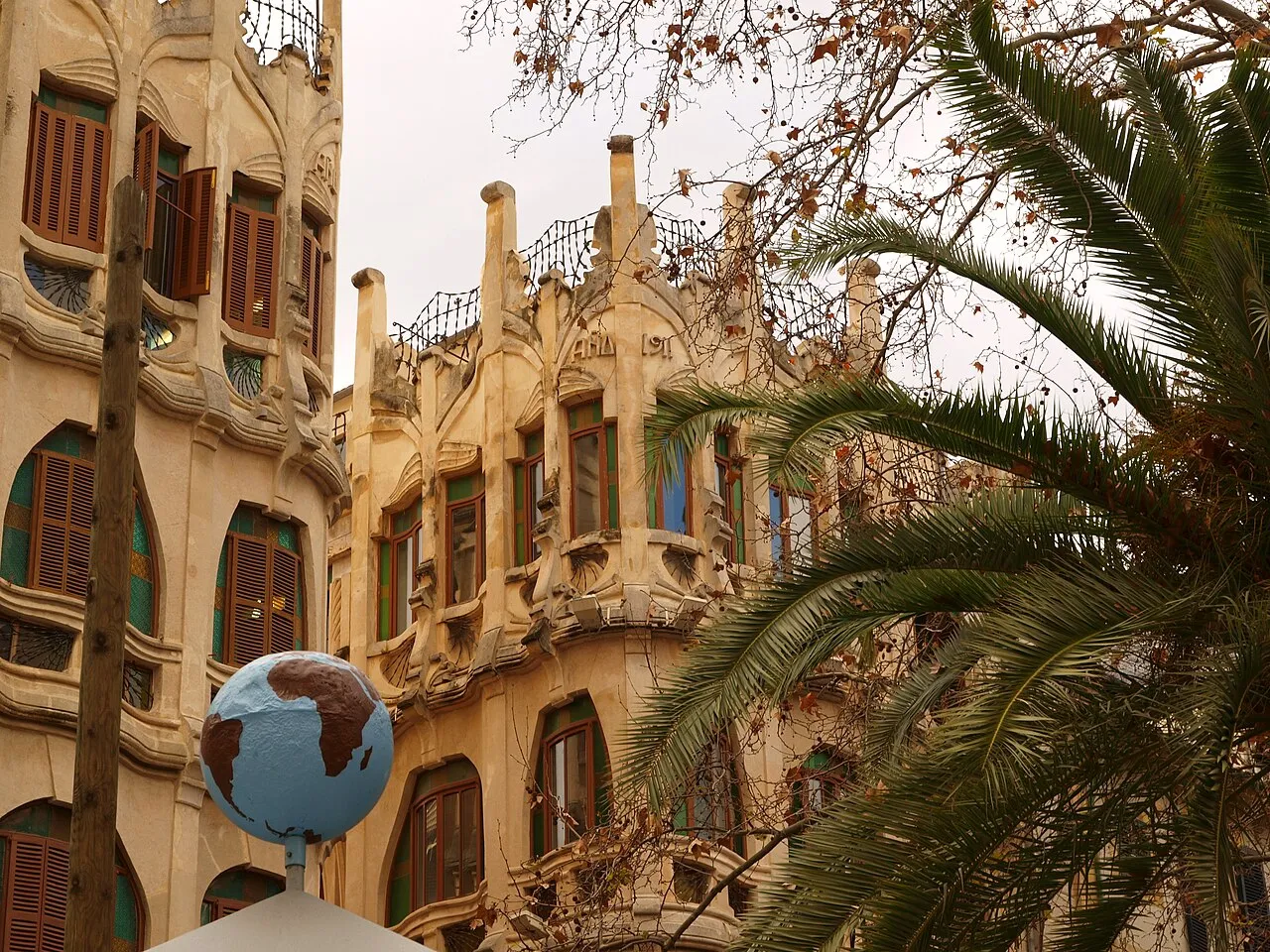
The stone undulates: parabolic arches and curved balconies that echo the Casa Milà. They are two twin buildings separated by the street, designed as a single set. Stand in the middle of that street and look up: that is the position they were designed for.
A bakery with a Modernista façade opposite the Gran Hotel, with its original sign and stained glass. It is among the most photographed in the city and still works as a bakery: you can go in and buy an ensaïmada.
The five on the classic route are the Gran Hotel by Domènech i Montaner, Can Casasayas and its twin the Pensió Menorquina, the Forn des Teatre, the Almacenes El Águila and Can Forteza Rey. They are all within a ten-minute walk, between the Plaça Weyler and the Plaza Mayor.
Because of the connection with Barcelona, with which Palma shared sea routes, language and family networks: the architects and the models travelled on the same routes as the goods. And because of a commercial middle class grown rich that, having no family name to show off, showed off a façade.
A cladding made of fragments of crockery, plates and broken glass reassembled on the wall, the technique Gaudí made popular at Park Güell and the Casa Batlló. It lets you cover curved surfaces where a whole tile will not fit, and it is made from waste material. Can Forteza Rey is the great Mallorcan example.
Only the Gran Hotel, which since 1993 has been the CaixaForum of Palma, with free entry or a token price depending on the exhibition. The others are private homes and businesses, so what you see is the façade. The Forn des Teatre you can set foot in, because it still works as a bakery.
A luxury hotel, a pastry chef and a jeweller. Can Casasayas was built for Josep Casasayas, owner of the Can Frasquet bakery; Can Forteza Rey for the jeweller Josep Forteza Rey, who had his workshop on the ground floor. This is freshly made commercial money, not aristocracy with centuries behind the name.
Everything. The Gran Hotel opened in 1903 as the first grand luxury hotel on the island, and two years later the Foment del Turisme de Mallorca was born, the oldest tourism promotion association in Spain, which began selling the island around Europe with leaflets and posters. All Mallorcan tourism starts in that square.
Start on the Plaça Weyler with the Gran Hotel and the Forn des Teatre opposite, carry on to the Principal Theatre — which is not Modernista but contrasts deliberately — go down to the Plaza del Mercado with the two twins and finish at Can Forteza Rey, next to the Plaza Mayor.
It is a good hour, everything less than ten minutes apart, and only the Gran Hotel can be visited inside. The others are private homes and businesses: what you see is the façade, and the façade is the whole argument.
The light matters. Can Forteza Rey wants morning sun, when it faces calle Colom head on and the ceramic gives back all its colours; against the light the trencadís loses almost all its effect. Can Casasayas works better in mid-afternoon.
And there is a second Modernista layer outside the centre, in the Eixample of Palma, with houses of the same period that almost nobody visits. If the subject grabs you, that area is worth another good hour.
Download Viavoy and walk Palma offline, whenever you like.

Keep reading