Palma in 2 days: an itinerary through the old town, Bellver and Santa Catalina
A city that grew rich facing the sea and turned it into stone. How to split two days between the cathedral, the hidden patios, the Modernisme and the neighbourhood that ate all the others.
Palma has a reputation problem: plenty of people treat it as the place you pass through on the way to a cove. It is an expensive mistake, because its old town brings together civil Gothic of the first European rank, more than a hundred noble patios, an intense Modernista outbreak and a circular castle with no equivalent in Spain. Two days are enough, but they are needed.
Start at the Parc de la Mar before going into the cathedral. Seeing the building reflected in the water first thing, before the queues, puts everything that follows in order.
Day 1 · The cathedral, the sea and the patios
Morning: the monumental quarter.
Start down below, at the Parc de la Mar, with the cathedral reflected in the artificial lake. That lake was dug in 1984 with a single purpose: to give La Seu back the reflection a motorway of the sixties had taken away. A city spending public money to solve a problem of how it is looked at.
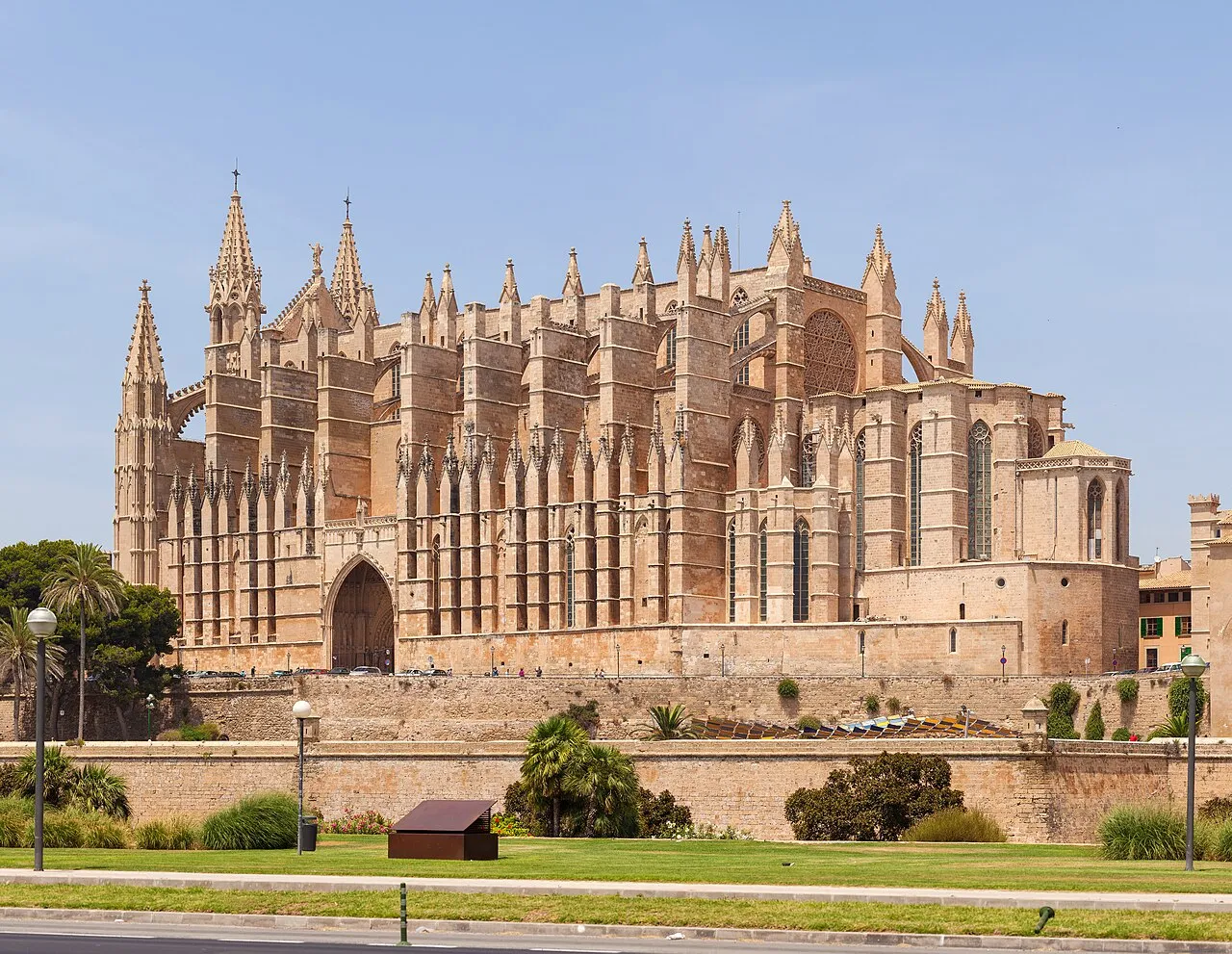
Go up to the cathedral as soon as it opens. It was built over the main mosque and facing the Mediterranean on purpose, to be the first thing ships saw, and inside it has fourteen octagonal pillars that leave the nave completely clear. Gaudí's intervention — the choir out of the centre, the wrought-iron baldachin over the altar — is what defines what you see today.
Next door is the Palace of La Almudaina, which was a Roman fort, then a Muslim alcázar and then a Gothic palace: the Christians did not knock it down, they moved in. It is still an official residence of the Crown, so check beforehand that it is not closed for a state occasion.
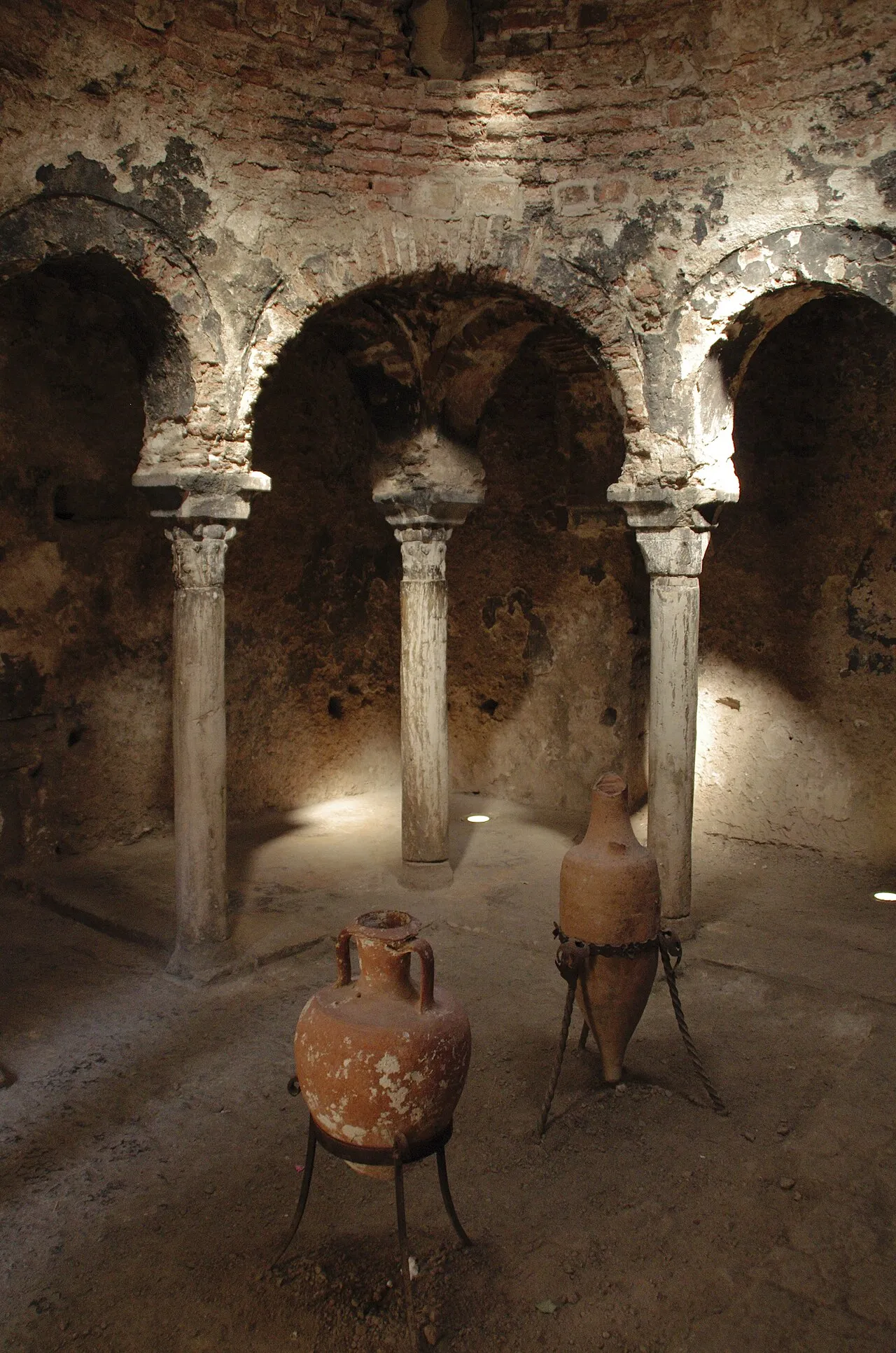
Then go down to the Arab Baths, in the Portella quarter. It is a single room and a fifteen-minute visit, but it is the oldest thing you set foot in in Palma: a hammam of the tenth to twelfth centuries with twelve columns whose capitals were reused from Roman and Byzantine buildings.
La Seu, with one of the tallest and clearest Gothic naves in Europe. Its great rose window, the eye of the Gothic, is more than thirteen metres across and has some 1,200 pieces of glass. Go first thing: less queue and the sun comes in from the sea side.
One of the very few buildings still standing from Muslim Madina Mayurqa. Twenty-five star-shaped skylights pierce the vault. Go when the light is high: without sun coming in from above, the point of the visit is lost.
Walk up to plaza de Cort, the administrative centre since 1229, with its thousand-year-old olive tree and the enormous carved wooden eaves of the City Hall flying three metres out over the street. Cross the square and look at it from the other side: from the foot of the building it is foreshortened.
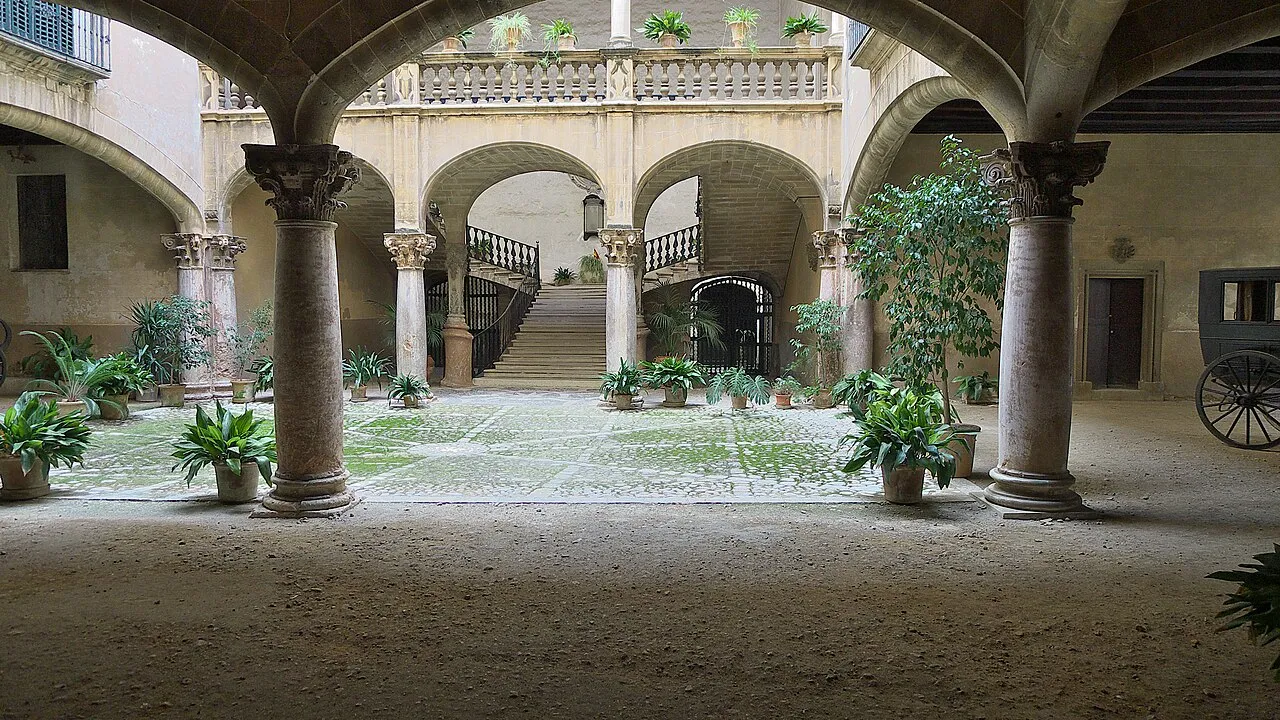
And slip into calle Morei and calle Zavellá, which is the patio route. Palma keeps more than a hundred listed noble patios, almost all behind closed gates, and this is the area where most can be seen: Can Oleza, Can Bordils, Can Vivot, Can Marquès. You put your head in at the doorway when it is open, and that is it.
Can Vivot is the most spectacular: red marble columns from Binissalem, iron lanterns and an imperial double-flight staircase, untouched since its 1683-1711 remodelling because the family is still tied to the house. Can Oleza is the one that reads most clearly: Gothic, Renaissance and Baroque three metres apart.
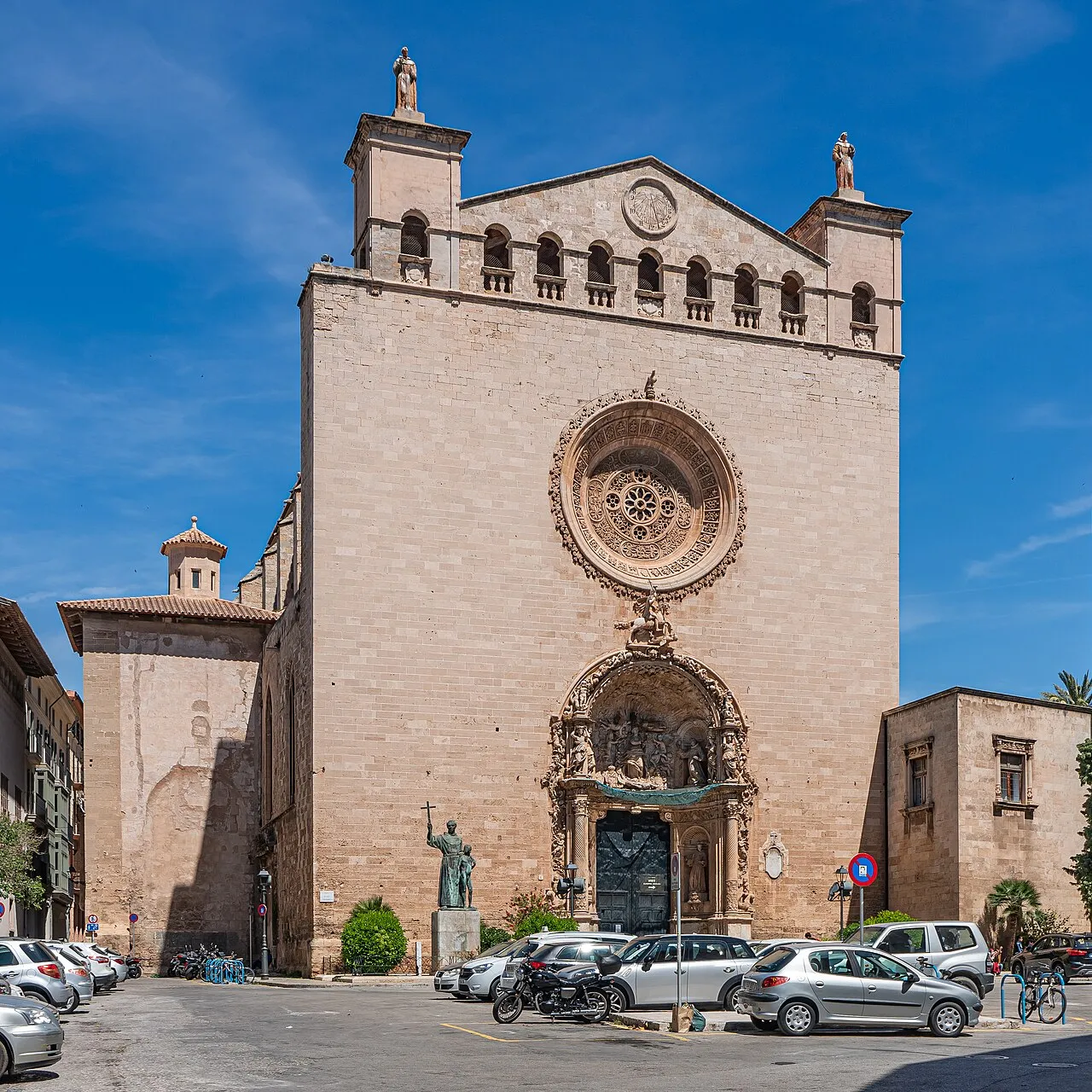
Finish at the basilica of Sant Francesc, whose cloister — columns in pairs, lobed arcades, orange trees — is among the most beautiful in the Mediterranean. Inside lies Ramon Llull, who wrote philosophy in Catalan when the whole of Europe was writing it in Latin.
Ten minutes of narrow streets looking in through gates. Can Vivot, Can Oleza, Can Bordils, Can Marquès. Free, no queues, and one of the best walks in Palma. Almost nobody does it because it is not signposted.
It took them close to a century just to close the vaults, from 1281 on. The cloister is the reason for the visit: give it most of your time. A step away is Ca'n Joan de s'Aigo, Palma's historic horchatería.
Day 2 · The Lonja, the Modernisme and Santa Catalina
Morning: the money from the sea.
Start on the Passeig de Sagrera, facing the water, because that is where Palma makes sense: for centuries the city lived with its back to the island and its face to this sea. The merchants who gambled a fortune on a ship raised the finest stones you are going to see.
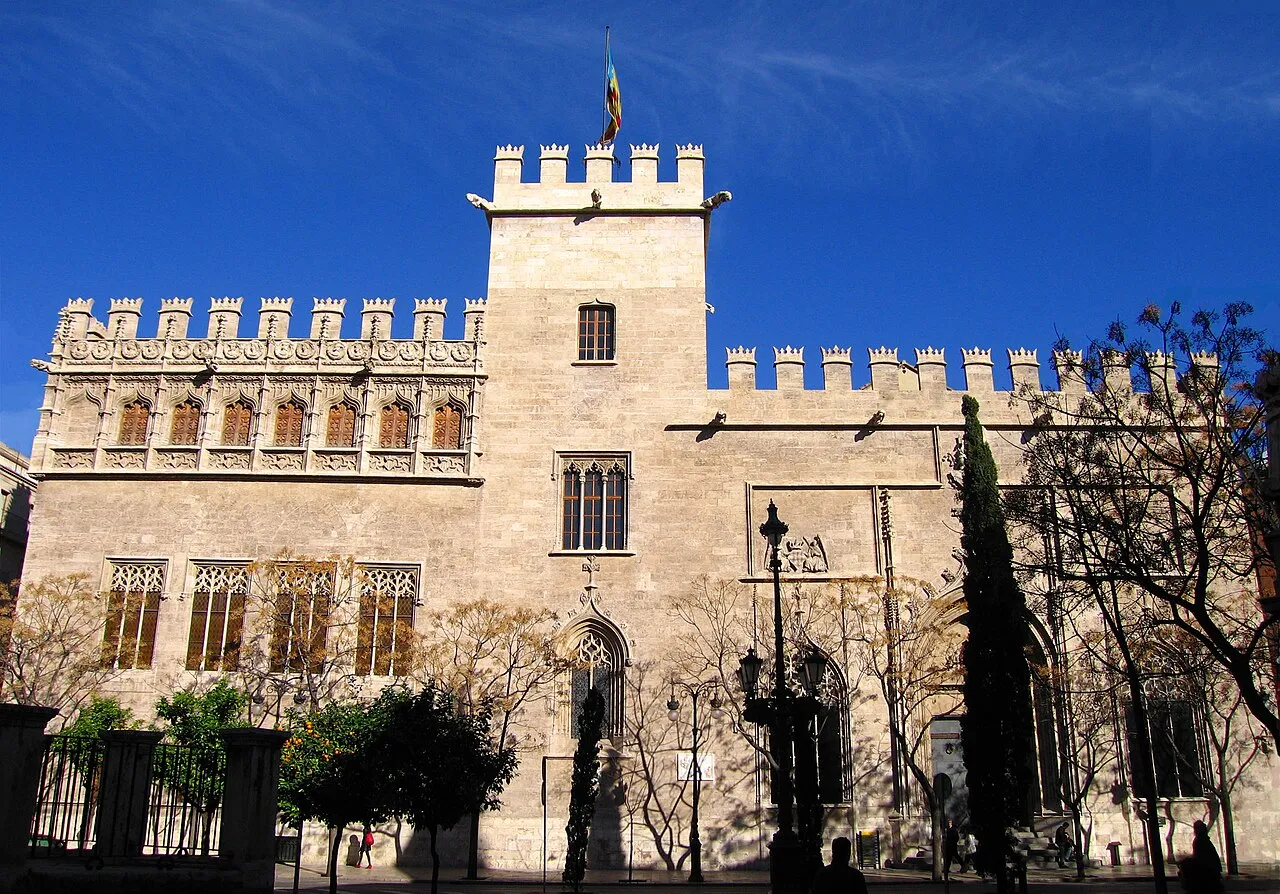
The Lonja is the proof. It looks like a castle with its turrets and battlements, and it is a trading exchange: Guillem Sagrera raised it between 1420 and 1452 for the merchants' guild, which wanted a building that shouted its power. Inside, six twisted columns without capitals open out at the top into ribs. Check whether it is open: it only is when there is an exhibition on.
Next to it, the Consolat de Mar, since 1306 the seat of a maritime trade court where the merchants themselves passed judgement, without lawyers and by word of mouth. Today it is the presidency of the Balearic Govern, the regional government, so you see it from outside.
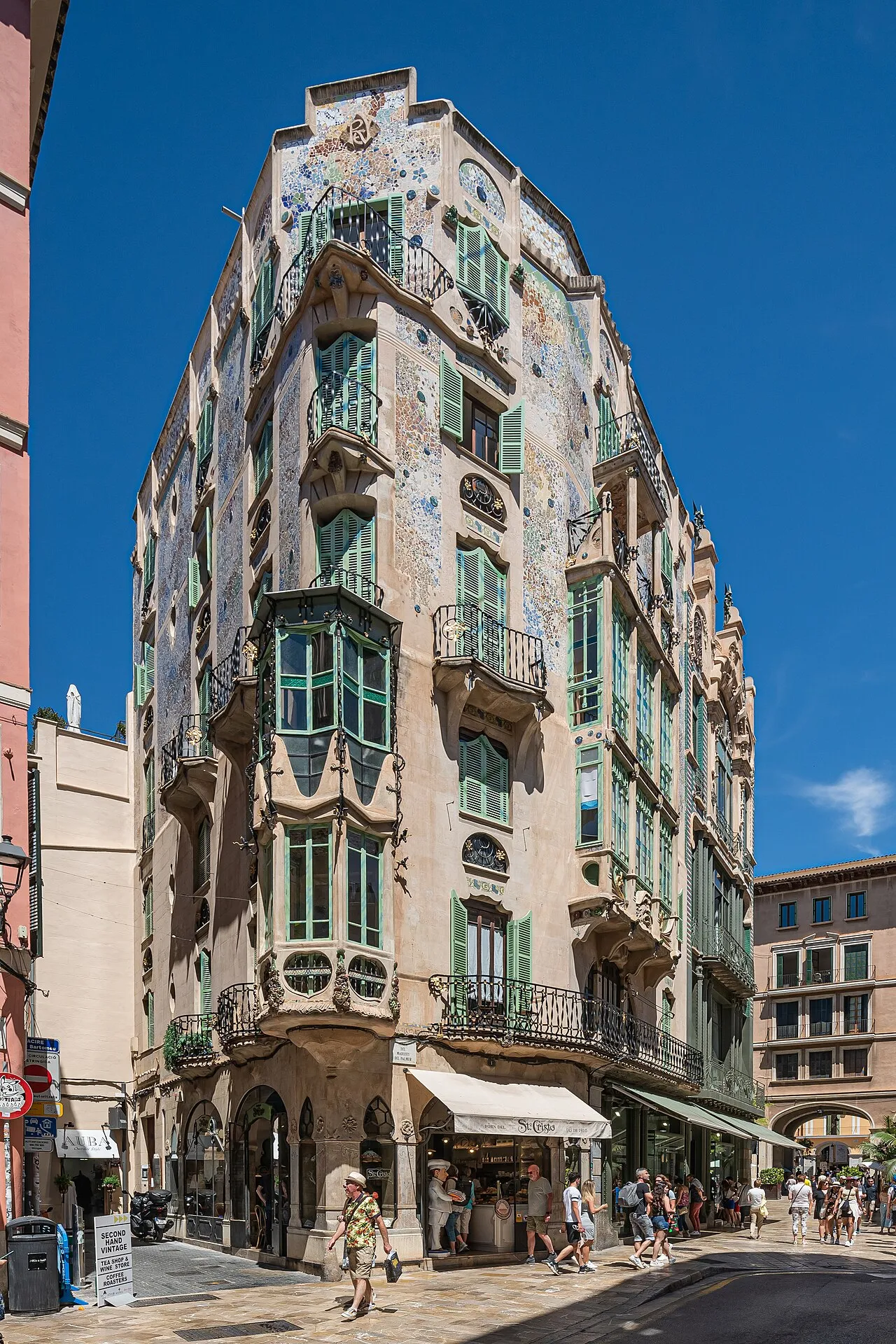
Go up to the Born and follow the Modernista axis: the Gran Hotel by Domènech i Montaner, which in 1903 was the first building on the island with electricity and a telephone; Can Casasayas, commissioned by a pastry chef; and Can Forteza Rey, the most extravagant trencadís façade in Palma, the work of a jeweller.
One of the peaks of European civil Gothic. The battlements are pure theatre: there was no need to fortify a trading hall, but the language of the castle was the language of power. Valencia copied its columns sixty years later and took the fame.
Trencadís of crockery and broken glass, with a great monstrous mask hidden among the ceramic. Look at it from the pavement opposite and in the morning: against the light it loses almost all its effect.
Day 2 · Afternoon: Bellver, Santa Catalina and the sea
Outside the old town.
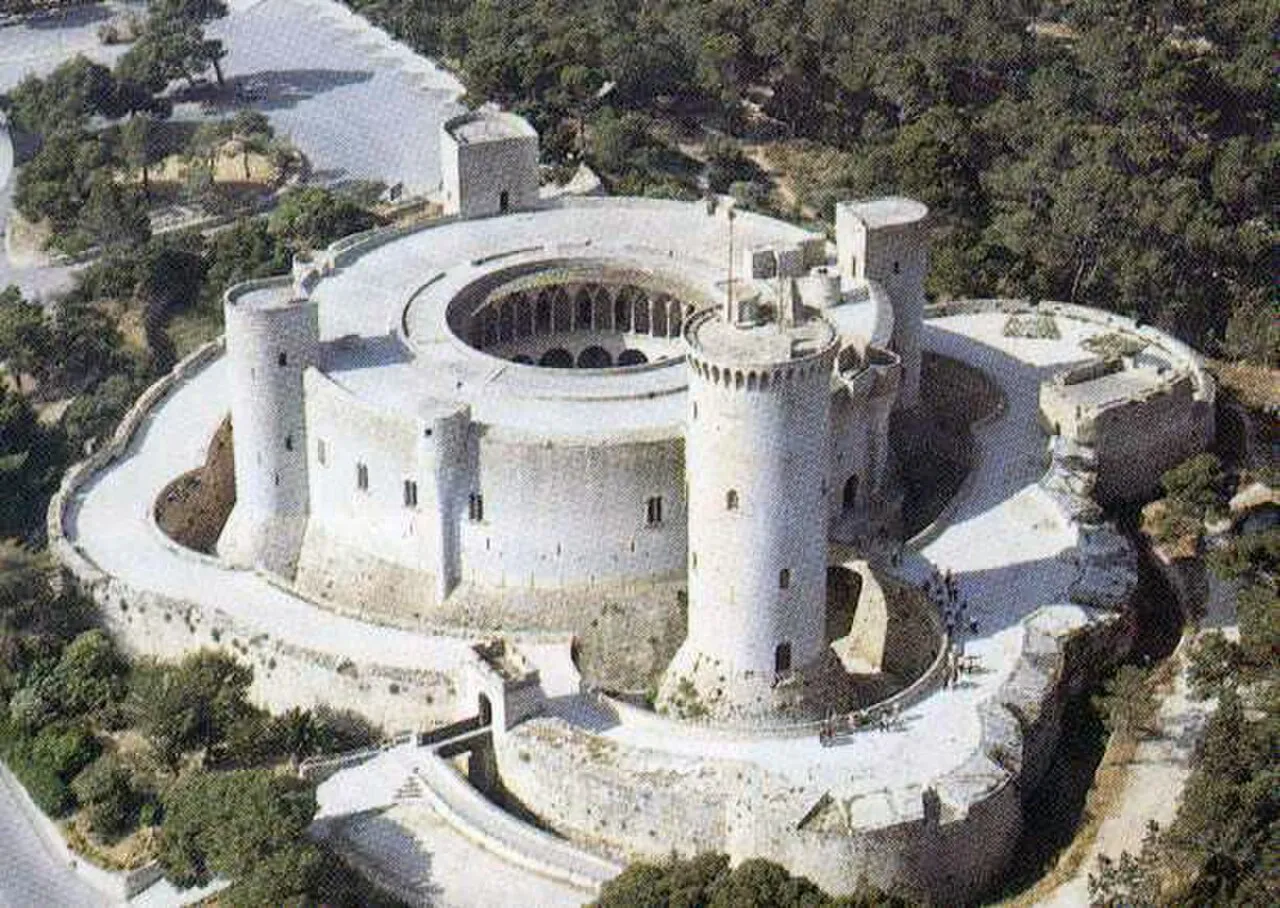
Go up to the castle of Bellver, three kilometres from the centre, on a city bus that gets almost to the gate. It is round, from 1300, and one of the very few circular castles in Europe: the circle is not a whim, it is tactics, because with no dead corners every inch of wall is covered.
It was a royal palace and ended up a prison: Jovellanos was shut up here between 1802 and 1808, with no trial and no sentence. The upper terrace gives the best panorama of Palma and of the whole bay, and that alone makes the climb worth it.
Walk down through El Terreno to plaza Gomila, which in the sixties and seventies was the Mallorcan Saint-Tropez — Tito's, Barbarela, Zhivago — and which, after decades switched off, has come back to life with an intervention by MVRDV commissioned by the family behind Camper.
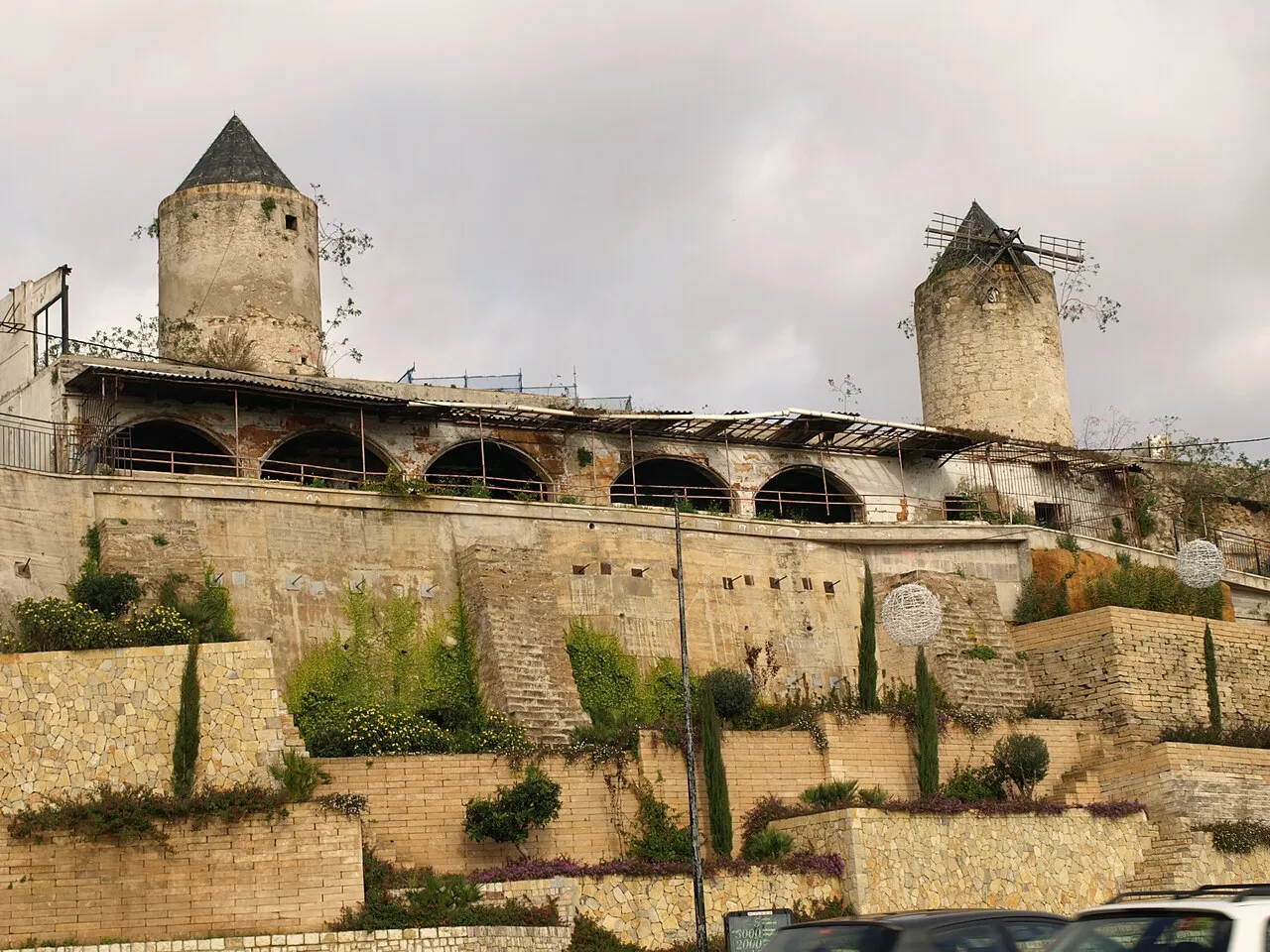
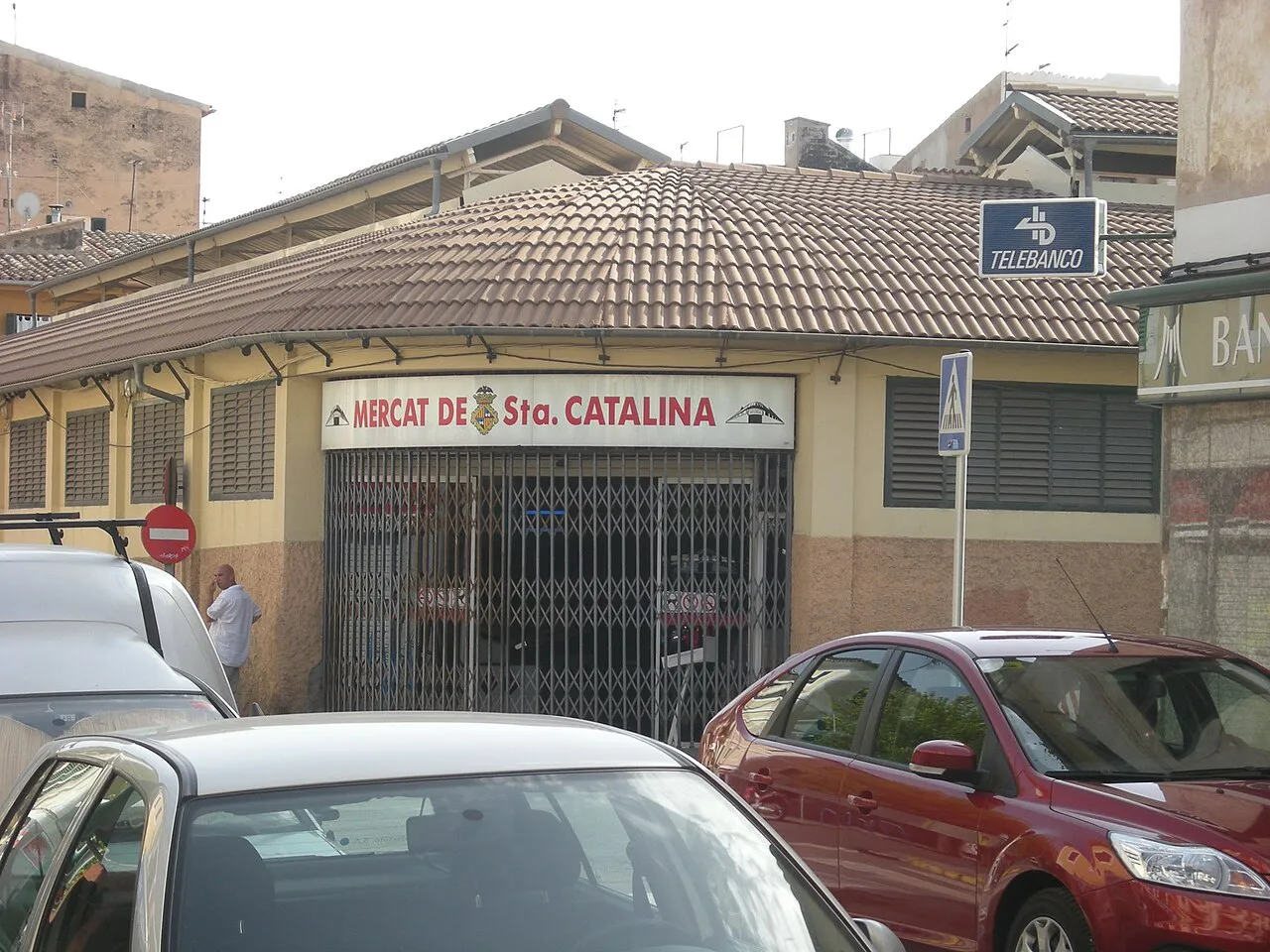
Finish in Santa Catalina. The market is the oldest in Palma and still has its lifelong stalls alongside the new counters; around it, calle de la Fàbrica and calle de Sant Magí hold the greatest density of restaurants in the city. And five minutes away, Es Jonquet, with its windmills cut out against the sunset.
Bellver comes from old Catalan bell veer: good view. Seven centuries ago they already called it that for what you can see from here. Inside is the Museum of the History of the City, with Roman marbles brought from Italy by an enlightened cardinal.
The windmills are up on the high ground because that is where the wind blows best. Only the wooden cap turned, aimed with a beam, and canvas sails were tied to the arms as on a ship. At dusk, with the cathedral behind.
Two full ones. With one you can do the essentials — cathedral, Almudaina, Lonja and a turn around the old town — but the noble patios, the Modernista axis and Santa Catalina all fall out, and they are a good part of the city's real interest. With three you can add an excursion to the Serra de Tramuntana.
Can you see Palma on foot?
The whole old town, yes: it is flat, compact and pedestrian, and everything is less than fifteen minutes away. Outside the old town, Santa Catalina is a quarter of an hour on foot and the castle of Bellver is three kilometres away, with a city bus that climbs almost to the gate.
Which sights do you have to pay for?
The cathedral and the Palace of La Almudaina, which are separate, the castle of Bellver and the basilica of Sant Francesc with its cloister. Free are the Casal Solleric, the Parc de la Mar, the church of Santa Eulàlia, the Gran Hotel as a cultural centre and the Lonja, though that last one only opens when an exhibition is up.
Is the patio route worth it?
Very much so, and it is free. Palma keeps more than a hundred listed noble patios, almost all behind closed gates, and calle Morei and calle Zavellá hold the best of them: Can Vivot, Can Oleza, Can Bordils. You see them from the doorway when it is open. Ten minutes of walking, and almost nobody does it because it is not signposted.
When is the best time to visit Palma?
Spring and autumn, for temperature, prices and crowds. Winter is surprisingly pleasant, with mild temperatures and a calm city, though part of the coastal offer shuts. If you go in January, on the 20th the city celebrates Sant Sebastià, its patron saint, with bonfires, grills and concerts all over town until dawn.
What can you do near Palma?
The Serra de Tramuntana, a World Heritage Site, with Valldemossa, Deià and Sóller, less than an hour away; the wooden train to Sóller, which leaves from the centre of Palma itself; and the coves of the south and east of the island. All of it needs a car or public transport with some planning.
Practical information
DurationTwo full days. With one, the patios, the Modernisme and Santa Catalina all fall out.
The orderParc de la Mar and cathedral first thing. Bellver and Santa Catalina on the second day.
TicketsThe cathedral and the Almudaina are separate. The Lonja only opens when an exhibition is up.
Getting aroundThe old town is flat and pedestrian. Bellver by city bus; Santa Catalina, 15 min on foot.
When to goSpring and autumn. In summer, heat, crowds and high accommodation prices.
EatingSanta Catalina market and calle de la Fàbrica and calle de Sant Magí. Sobrasada, frit and pa amb oli.
On the map
🎧 With Viavoy
Walk Palma and listen at your own pace
Download Viavoy and walk Palma offline, whenever you like.