The Ensanche of Bilbao: the Gran Vía, Moyúa and the Alhóndiga
Neighbourhoods · Bilbao

The Ensanche of Bilbao: the Gran Vía, Moyúa and the Alhóndiga

An extension planned so large that its engineers were taken for dreamers. Palaces built on iron, a building with forty-three columns none of them alike and the most famous metro entrances in Spain.

9 min read · Updated for 2026
🎧 On the walk The Ensanche: Gran Vía, Moyúa and the Alhóndiga

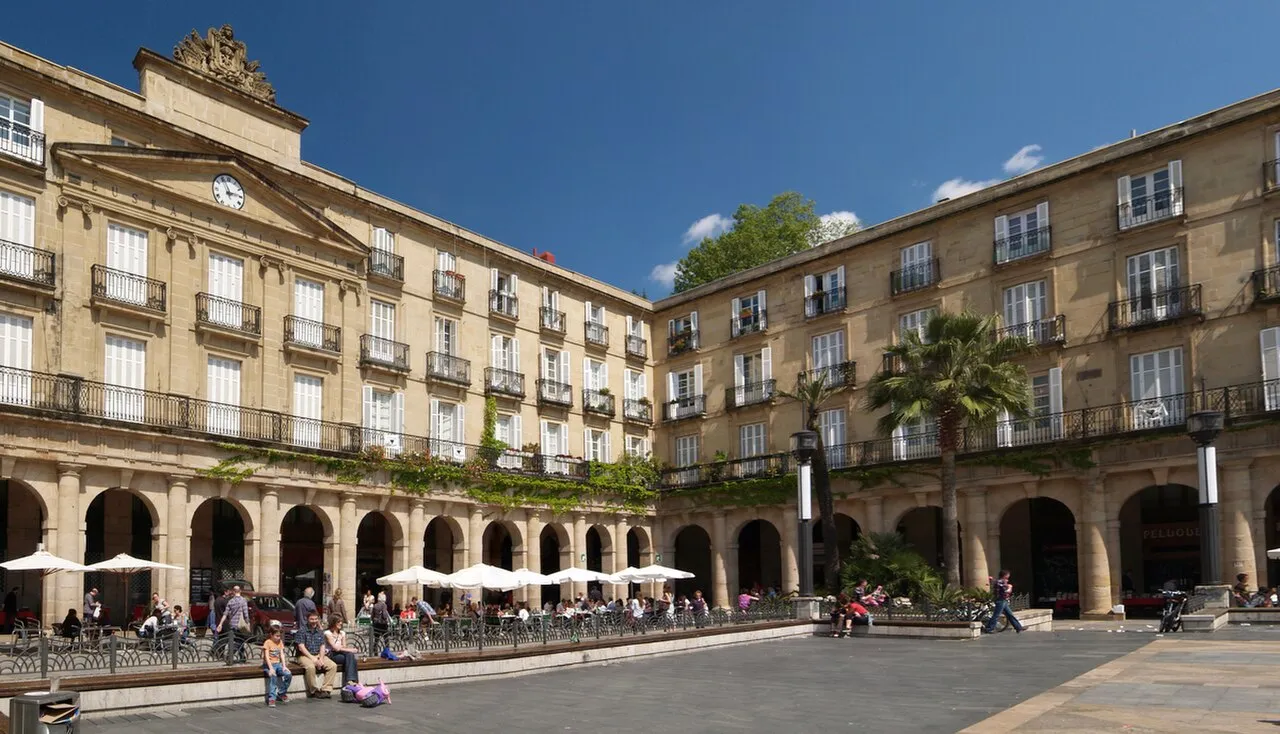
In 1876 Bilbao decided to build itself a new city on the flats of Abando, market gardens on the other side of the estuary. The medieval town, which had spent almost six centuries fitting into seven streets, had become ridiculously small for the money the iron ore was generating. What was laid out then is what is now called the Ensanche, and its main street is still the most elegant avenue in the city.

The curved glass metro entrances scattered along the Gran Vía were designed by Norman Foster and the people of Bilbao call them fosteritos. It is unusual for the most quoted piece of design in a city to be the way into public transport.

A city drawn on the mud

Three engineers who aimed too high, and got it right.

The plan was signed by Pablo Alzola, Ernesto Hoffmeyer and Severino Achúcarro, and what is striking is not the layout but the ambition. They designed a Bilbao far larger than the one that existed, with blocks for a population nobody was forecasting, and at the time some took them for fantasists. The city not only filled every block: it ended up overflowing them.

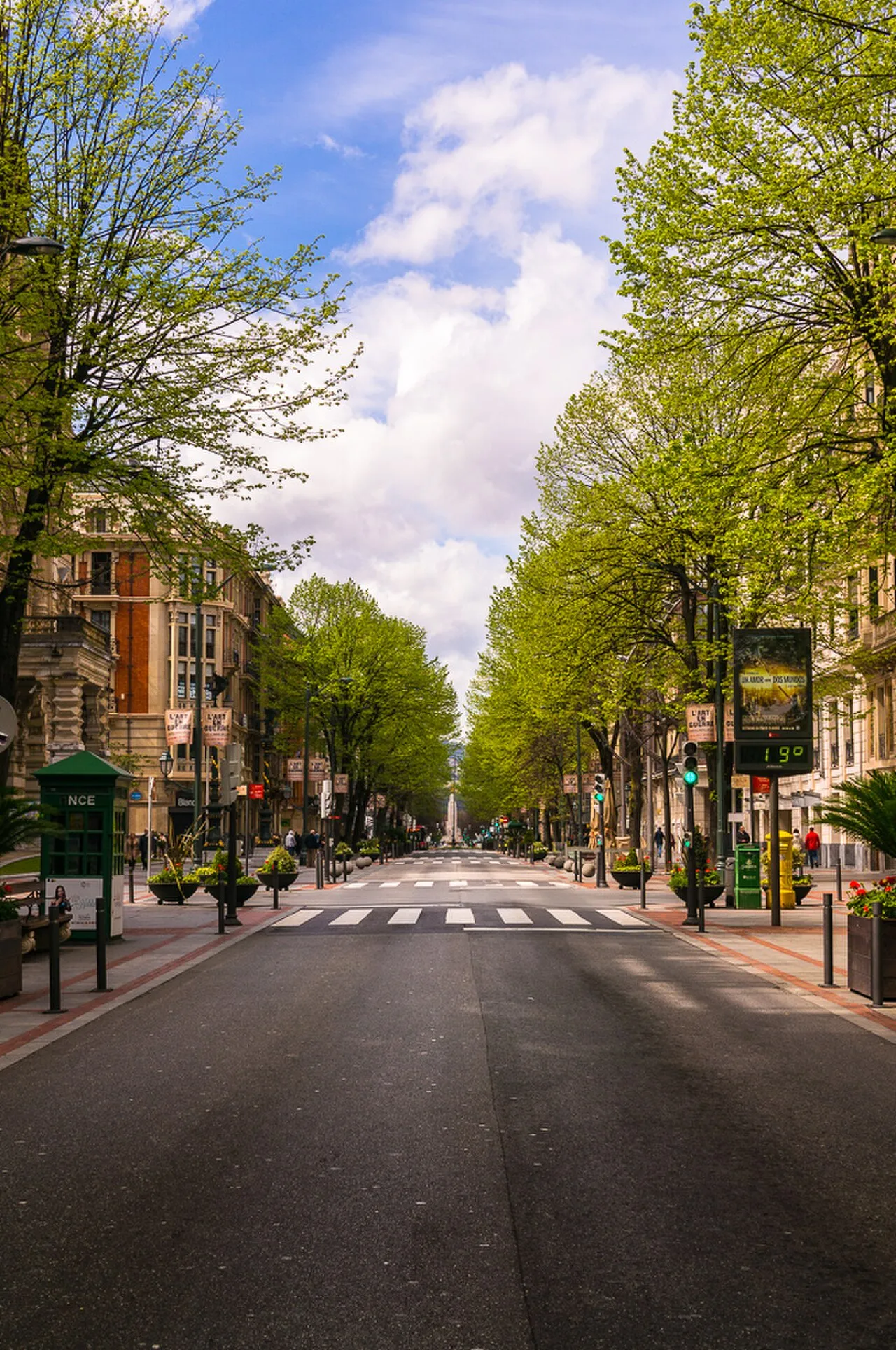
The scheme is that of the nineteenth-century European extensions: a regular grid, wide blocks, a main avenue that orders the whole and circular squares at the important junctions. The Gran Vía runs a little over a kilometre and a half between the Plaza Circular and the Plaza del Sagrado Corazón.

The contrast with the other bank is total and it is what makes crossing the bridge interesting. Over there, three-metre alleys laid out in 1300; over here, an avenue twenty metres wide designed for carriages and later for trams. Between one and the other lie six hundred years and an industrial revolution.

The name honours Diego López de Haro, Lord of Bizkaia, who on 15 June 1300 signed the charter that turned a few houses beside the estuary into a town with the right to hold a market and a port. That piece of paper is literally the birth certificate of Bilbao.

1Gran Vía de Don Diego López de Haro

Gran Vía de Don Diego López de Haro

📍 From Plaza Circular to Sagrado Corazón

A kilometre and a half of avenue laid out in 1876 over market gardens, today the shopping and office spine of the city. Its interest lies in the whole and in the upper floors: at shop-window height it looks like any street, and up above are the crowning details, the domes and the worked stone.

2Plaza Moyúa and the Palacio Chávarri

Plaza Moyúa and the Palacio Chávarri

📍 Centre of the Ensanche

The ellipse everything passes through, with a garden in the middle and the 1894 palace that has the quirk people in Bilbao most like to tell you about: no two of its windows are the same, every one changes shape or size. Once you know, it is impossible to stop looking at it.

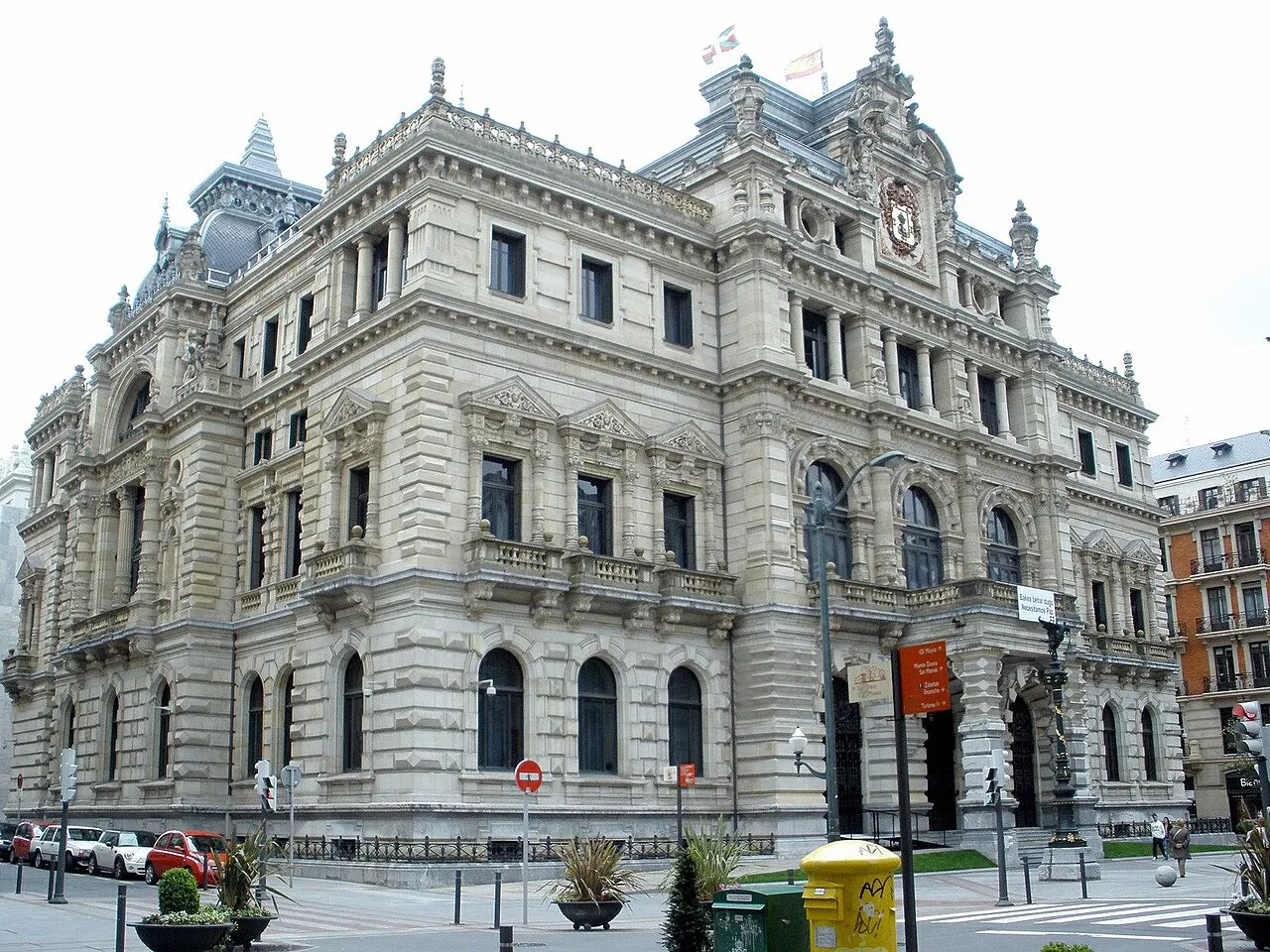
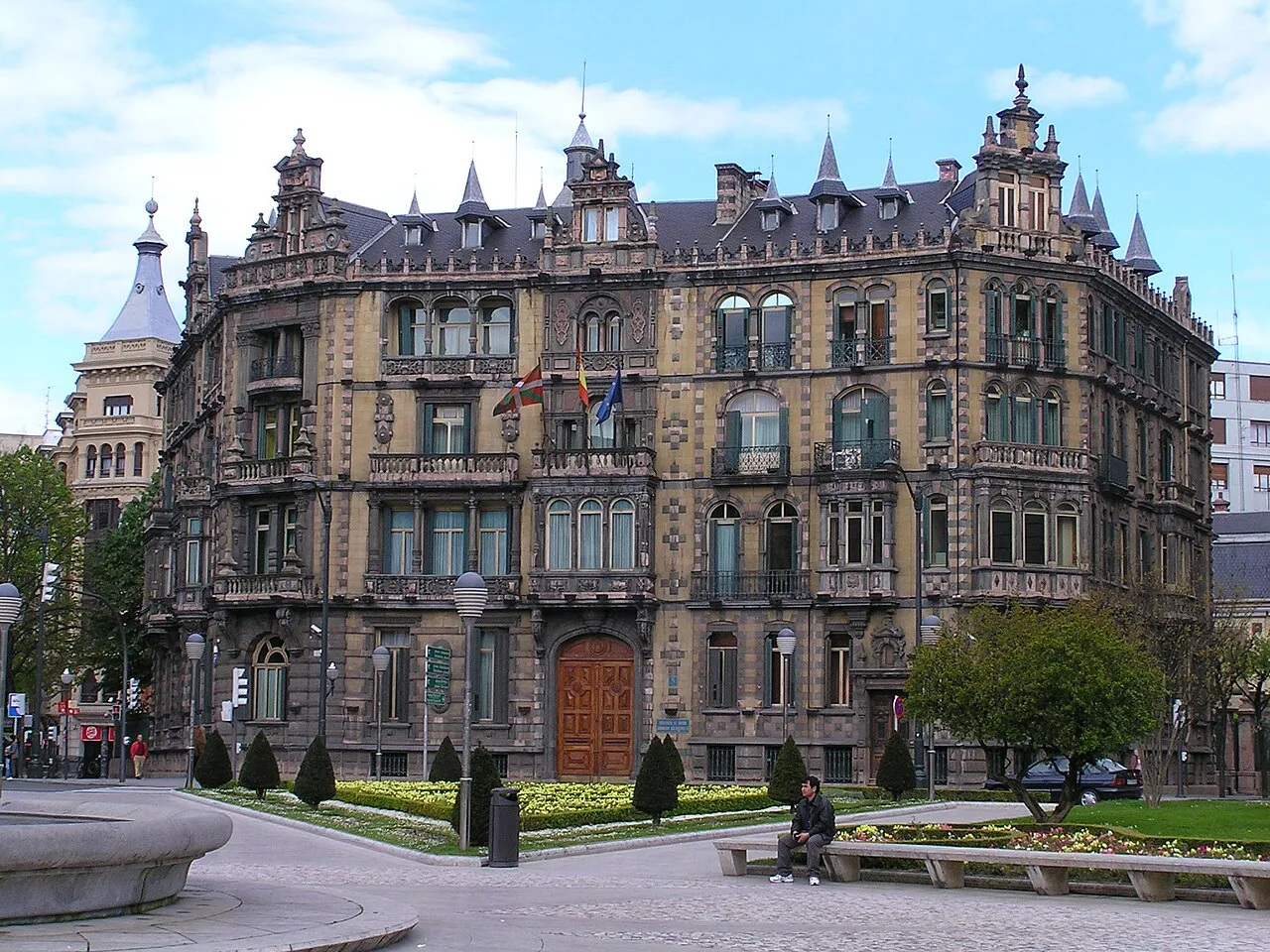
3Palacio de la Diputación Foral

Palacio de la Diputación Foral

📍 Gran Vía, 25

From 1900 and the most ostentatious building on the avenue, with a marble staircase, stained glass and reception rooms that can be visited at set times. It is the best example of how iron money was spent when it wanted to prove something to anyone arriving from outside.

🎧 With Viavoy

Explore Bilbao at your own pace

Download the app and discover Bilbao offline, whenever you like. Take the walking tour The Ensanche: Gran Vía, Moyúa and the Alhóndiga with a local guide in your ear.

Find out more about Viavoy →

The Alhóndiga, which nobody calls Azkuna Zentroa

Two blocks from the Gran Vía stands the building that best sums up how this city works with its past. It was the Alhóndiga, the municipal wine warehouse put up in 1909 by Ricardo Bastida, one of the architects who have most shaped the face of Bilbao. It stood abandoned for years.

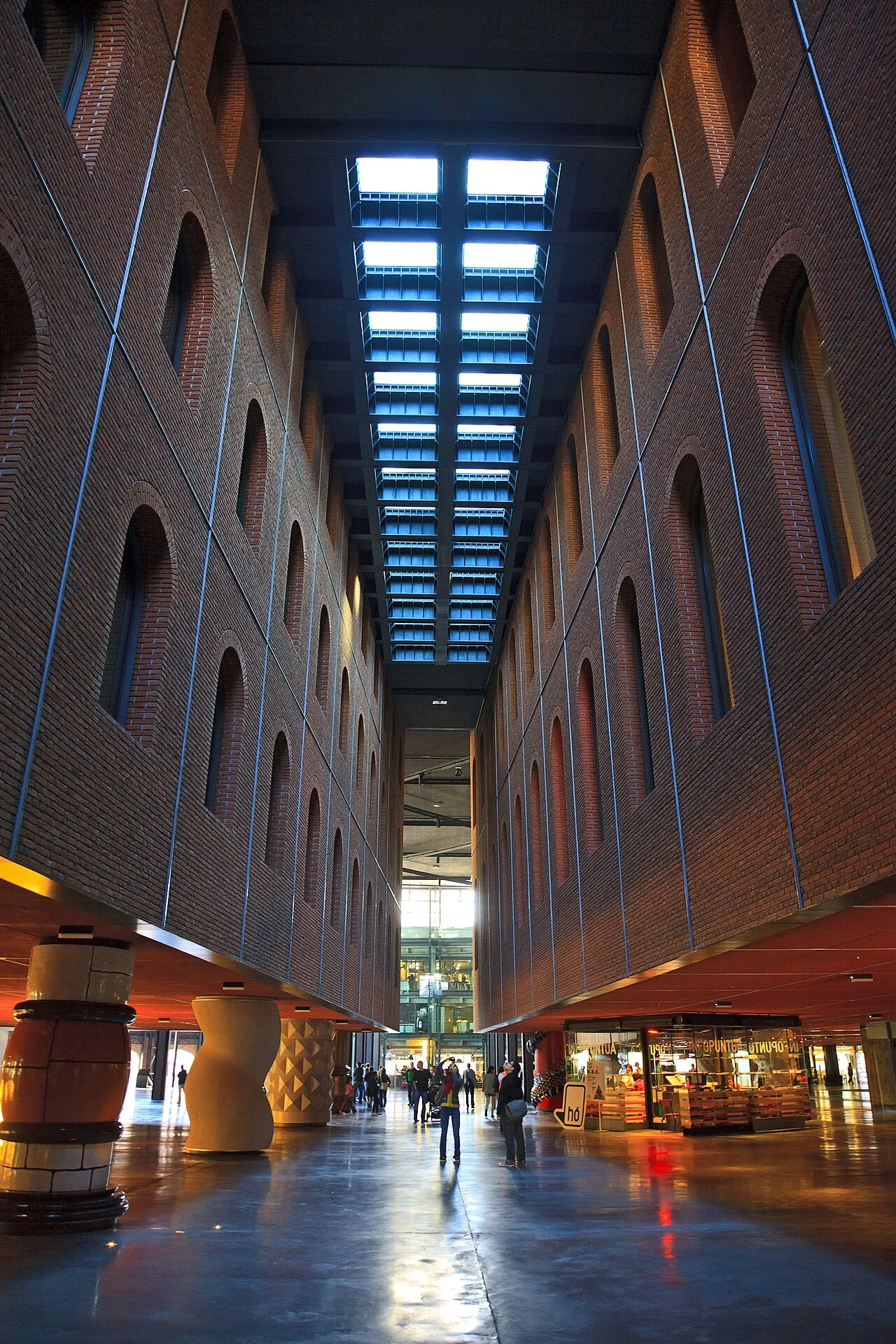
Instead of knocking it down, the decision was to hollow it out completely and keep only the façades. The interior was commissioned from the French designer Philippe Starck, who put three new independent buildings inside it, lifted off the ground on columns to leave the ground floor completely clear.

Those columns are the work: there are forty-three and no two are alike. Each was designed by a different artist drawing on a culture, a period or a style — there are Roman ones, Indian, Egyptian, futurist, pure fantasy — with its own material and finish. Walking among them is the real reason to go in.

Upstairs there is a library, cinemas, exhibition rooms, a gym and a swimming pool with a glass bottom, so that from the floor below you watch people swimming above your head. The ground floor is public and free: you cross it, you sit in it, and you do not have to buy anything.

4Azkuna Zentroa

Azkuna Zentroa

📍 Plaza Arriquibar, 4

The official name honours Iñaki Azkuna, mayor from 1999 until his death in office in 2014, who governed through the years of the transformation. Nobody uses it in ordinary conversation. Fifteen minutes are enough for the essentials, and it is the best shelter in the Ensanche if it starts to rain.

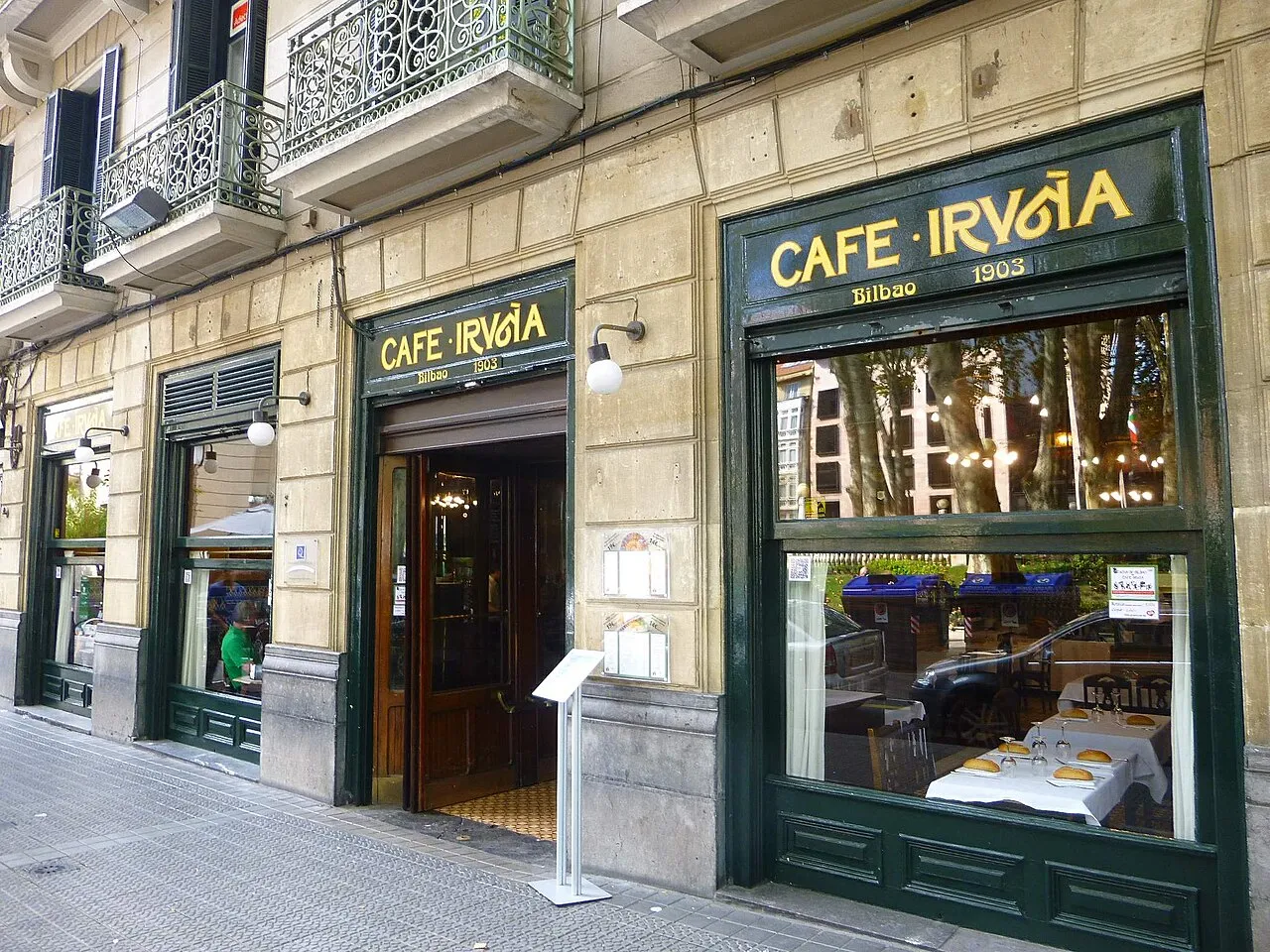
5Café Iruña

Café Iruña

📍 Jardines de Albia

Opened in 1903 and decorated in neo-Mudéjar style, with tilework, a coffered ceiling and a bar that has not changed in a century. It is one of those cafés that work at once as a monument and as a place to have breakfast. The pinchos morunos, spiced meat skewers, at its counter are a local institution.

Frequently asked questions

What is the Ensanche of Bilbao?

The new city laid out from 1876 onwards on the flats of Abando, market gardens on the other side of the estuary, when the medieval town of seven streets became too small for the money the iron ore was generating. It is a regular grid with the Gran Vía as its main axis and circular squares at the important junctions.

What is the Alhóndiga and why is it called Azkuna Zentroa?

It was the municipal wine warehouse of 1909, the work of Ricardo Bastida, which was hollowed out inside keeping only the façades in order to fit three buildings inside it suspended on forty-three columns designed by different artists. The official name honours the mayor Iñaki Azkuna, but on the street everyone still says the Alhóndiga.

Can you go into the Azkuna Zentroa for free?

Yes. The ground floor, which is where the forty-three columns are and where all the architectural interest lies, is open and free: you can cross it, sit down and stay without buying anything. The facilities upstairs — library, cinemas, gym and swimming pool — have their own charges.

What are the fosteritos?

The curved glass metro entrances scattered along the Gran Vía and much of the city, designed by Norman Foster when the Bilbao metro was built. The name is affectionate and completely popular, and it is curious that the most quoted piece of design in a city should be the way into public transport.

Is it worth staying here?

It is probably the best area: it leaves the Guggenheim, the Casco Viejo and the station ten or fifteen minutes away on foot, it has three metro stops on the avenue itself and it is far quieter at night than the old town. Prices are a little higher, but the difference in a good night's sleep makes up for it.

What can you visit inside on the Gran Vía?

The Palacio de la Diputación Foral opens to visitors at set times, and is worth it for the marble staircase and the reception rooms. The Azkuna Zentroa can be entered freely on its ground floor. The rest of the avenue is shops and offices: its interest lies in the ensemble of façades and in the upper floors.

How to walk it

The itinerary that works starts on the Plaza Circular, next to Abando station, and goes up the Gran Vía westwards. First stop at the Jardines de Albia, with the Café Iruña; second at Moyúa, for the Chávarri and the Diputación; and then a detour south for the Azkuna Zentroa.

From there, ten minutes on foot take you down to the Guggenheim or into the Doña Casilda park, where the Museum of Fine Arts is. The Ensanche therefore works as a hinge between the Casco Viejo and Abandoibarra, and you cross it almost without meaning to several times a day.

As a visit in itself it is a good hour with stops. It is not a neighbourhood of monuments, it is a neighbourhood of ensemble: what you have to do is raise your eyes above the shop windows, because at eye level this is any shopping street and up above are the domes, the glazed balconies and the worked stone.

And for eating, calle Ledesma and the streets around the Diputación are the Ensanche's alternative to the pintxos of the old town: tidier, with terraces and a little more expensive, but with counters of a very high standard.

Practical information

WhereLeft bank of the estuary, between the Plaza Circular and Indautxu.
Getting thereMetro Abando, Moyúa and Indautxu, all three on the avenue itself.
DurationA good hour for the walk; half a day with the Azkuna Zentroa and the Museum of Fine Arts.
FreeThe ground floor of the Azkuna Zentroa, with its forty-three columns.
EatingCalle Ledesma and the streets around the Diputación. Café Iruña for breakfast.
TipRaise your eyes: the good part of the Ensanche is on the upper floors.
On the map

🎧 With Viavoy

Walk Bilbao and listen at your own pace

Download Viavoy and walk Bilbao offline, whenever you like.

from 2,99 €· one-off payment
City Pass · 9,99 €3 days, all the tours in Bilbao
Find out more about Viavoy →
Viavoy app

Keep reading

More articles

Itineraries

Bilbao in 2 days: the estuary, the titanium and the Siete Calles

Monuments

Visiting the Guggenheim in Bilbao: what to see inside and out

Food & drink

Pintxos in Bilbao: how it works and where to go

Festivals

Aste Nagusia: the Semana Grande of Bilbao