1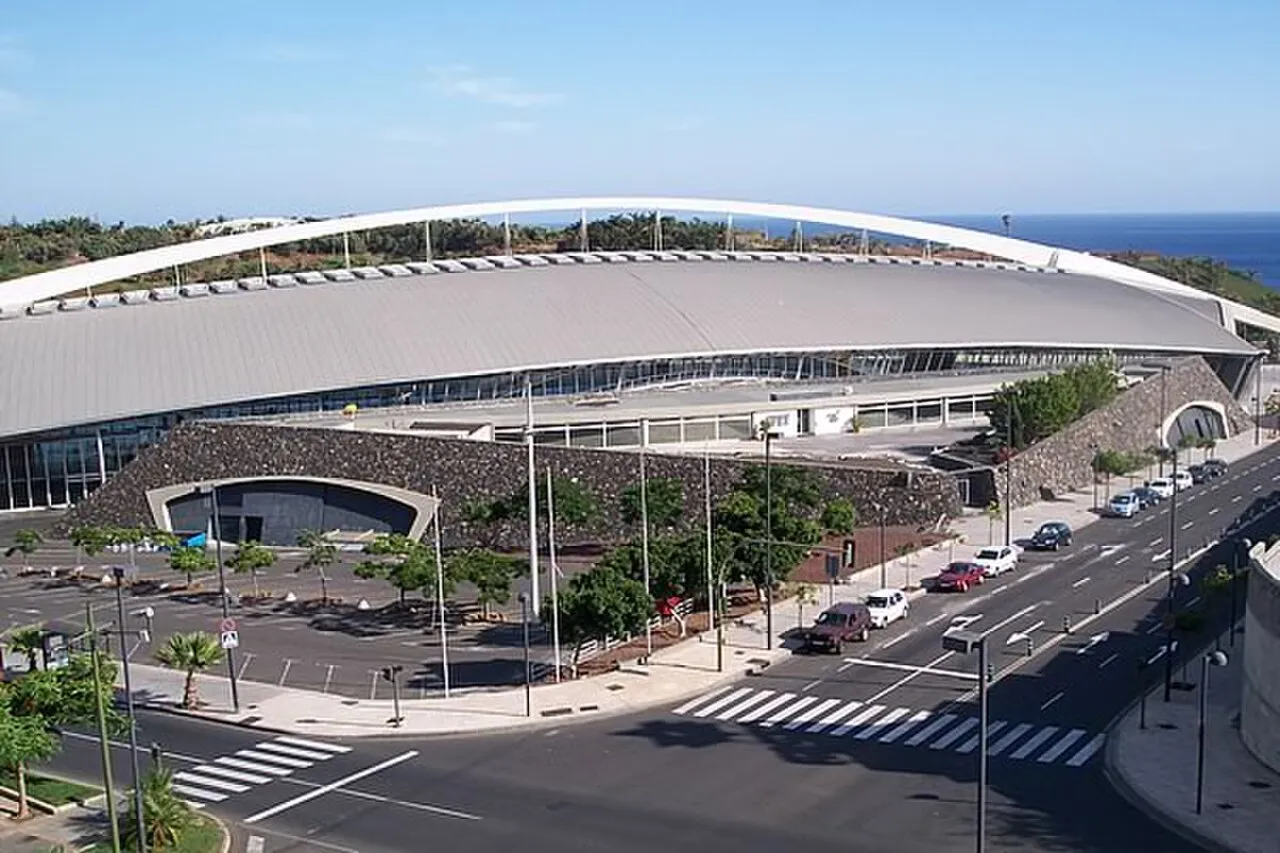
Tenerife Exhibition Centre
📍 Seafront
Calatrava in 1996, seven years before the Auditorio. More than 40,000 m², with an upper hall of 12,000 without a single pillar. The Carnival takes shelter here when it rains.
A capital of two hundred thousand people with five buildings by international names in less than two kilometres. How that came about and in what order to see them.
🎧 On the walk The Auditorium, the Palmetum and the seafrontIt is an anomaly that is hard to explain and very easy to enjoy: in a city the size of Santa Cruz there are two works by Santiago Calatrava, two by Herzog & de Meuron and the last great piece by César Manrique, all within walking distance. This is the route and, above all, the order that makes them make sense.
The Tenerife Exhibition Centre, the island's exhibition centre, opened in May 1996 and was the architect's first major work in the city. It is restrained, symmetrical, absolutely white, and its feat is hidden: the upper hall takes up some twelve thousand square metres without a single pillar in the middle, the largest covered space in the archipelago.
The curved ribs you see from outside are not ornament: they are the structural system that makes that clear span possible. This is Calatrava solving a problem, before his vocabulary turned into a recognisable brand.
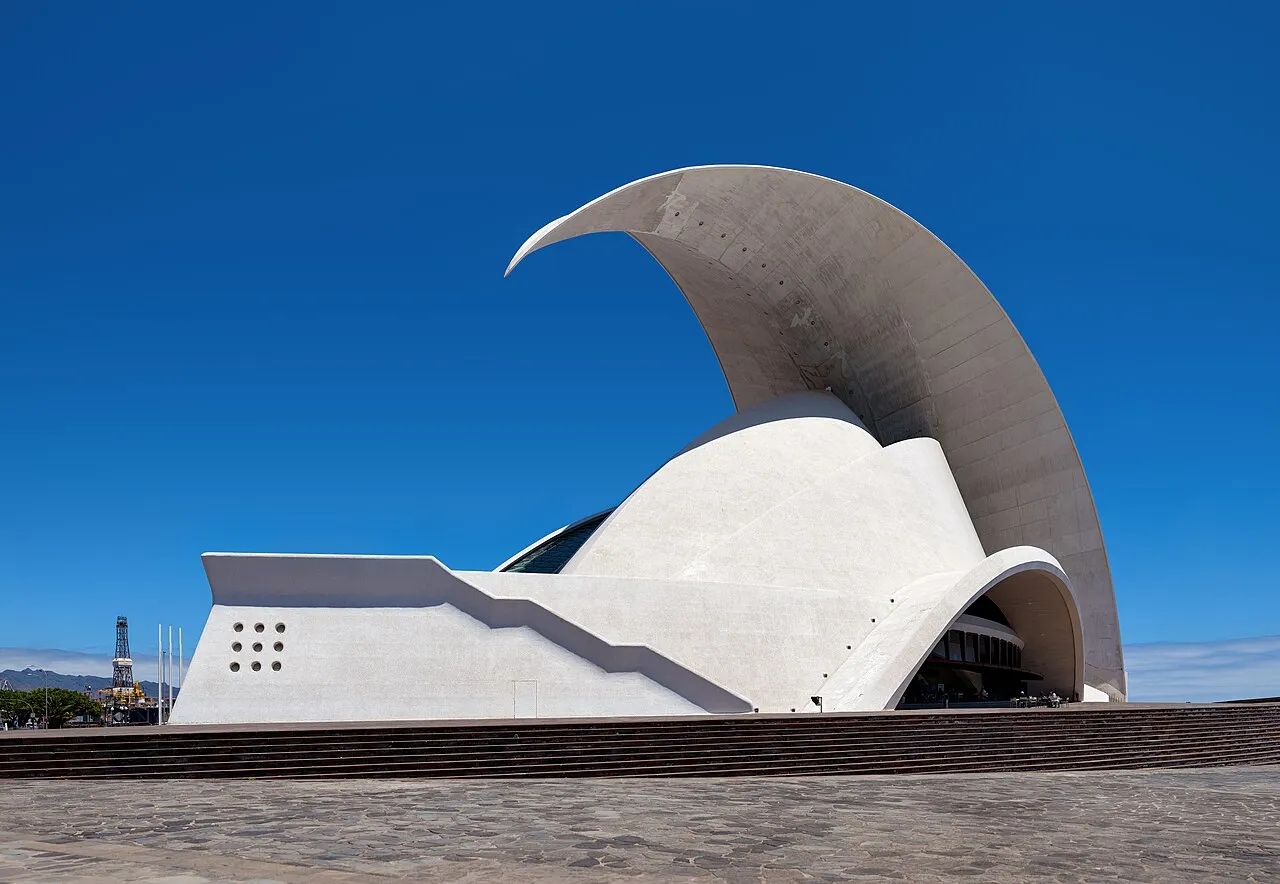
The Tenerife Auditorium, begun in 1997 and opened on 26 September 2003, is the opposite: all gesture. The great white wave rests on only two points and flies, and it is clad in trencadís, the broken ceramic mosaic that Gaudí made popular in Barcelona.
It also cost far more than planned, coming close to more than double the budget, a pattern that repeats across this architect's work and that is part of the public conversation about the building. From the day it opened, people began calling Santa Cruz the Sydney of the Atlantic.
Calatrava in 1996, seven years before the Auditorio. More than 40,000 m², with an upper hall of 12,000 without a single pillar. The Carnival takes shelter here when it rains.
The white wave of 2003, clad in trencadís and resting on two points. Home of the Tenerife Symphony Orchestra and with an opera company of its own.
Download the app and discover Santa Cruz de Tenerife offline, whenever you like. Take the walking tour The Auditorium, the Palmetum and the seafront with a local guide in your ear.
Find out more about Viavoy →The Swiss practice behind the Tate Modern signed the 2006 remodelling of the Plaza de España, with that artificial lake of salt water pumped from the Atlantic in the middle of the largest square in the Canary Islands.
And in 2008, together with the Tenerife-born Virgilio Gutiérrez, the TEA, on the banks of the Santos ravine: concrete and light, with ramps that draw the ravine itself into the route instead of turning their back on it.
That decision is the key to the building. Ravines are the geological signature of the Canary Islands — deep channels cut into the volcanic rock — and in cities they usually become the back of everything. Here it becomes a façade.
Inside the TEA there is also the best collection in the world of Óscar Domínguez, the Tenerife-born Surrealist who triumphed in interwar Paris alongside Breton and Picasso, and who invented decalcomania. It is one of the few cases in which the contents live up to the container.
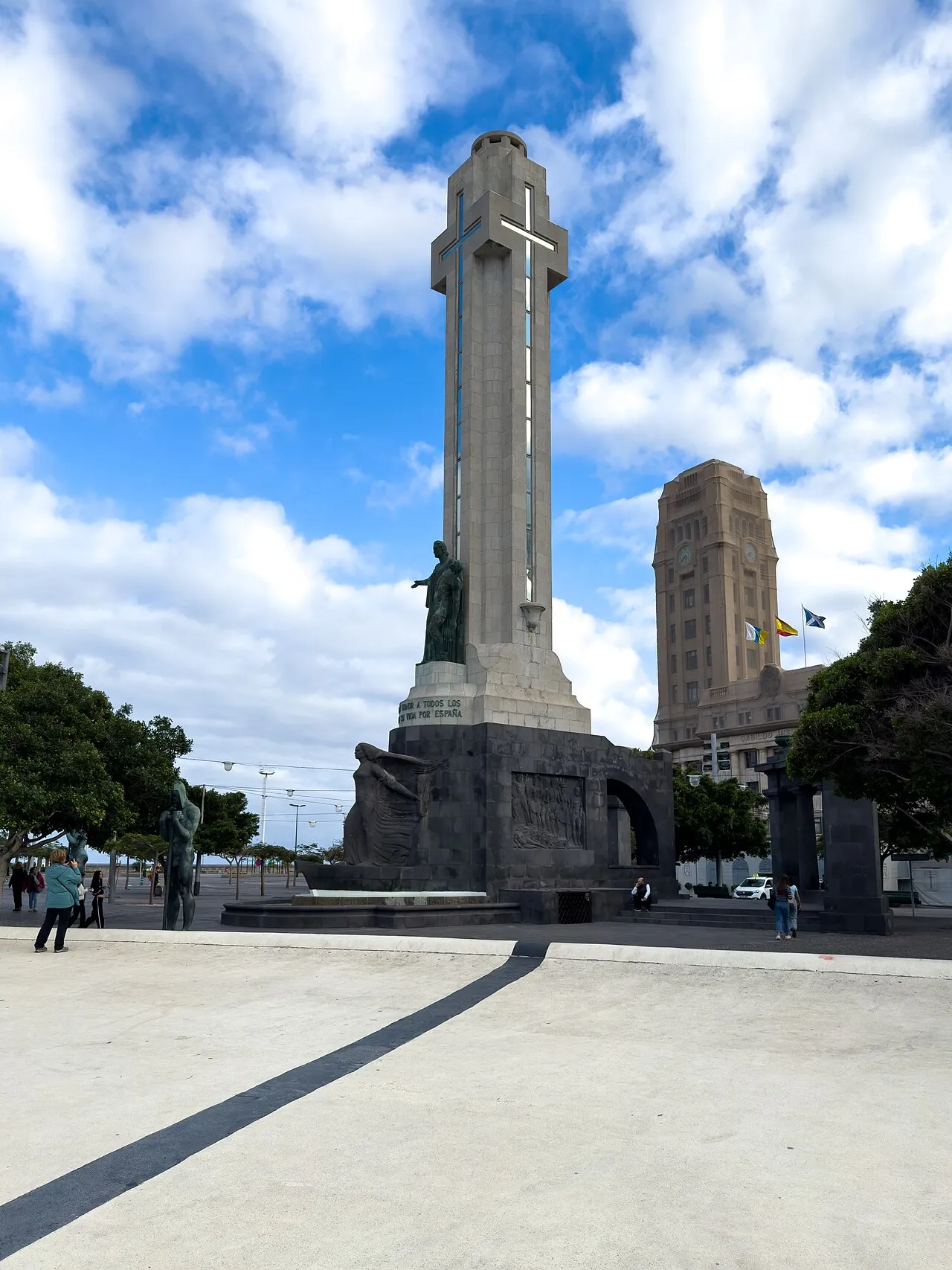
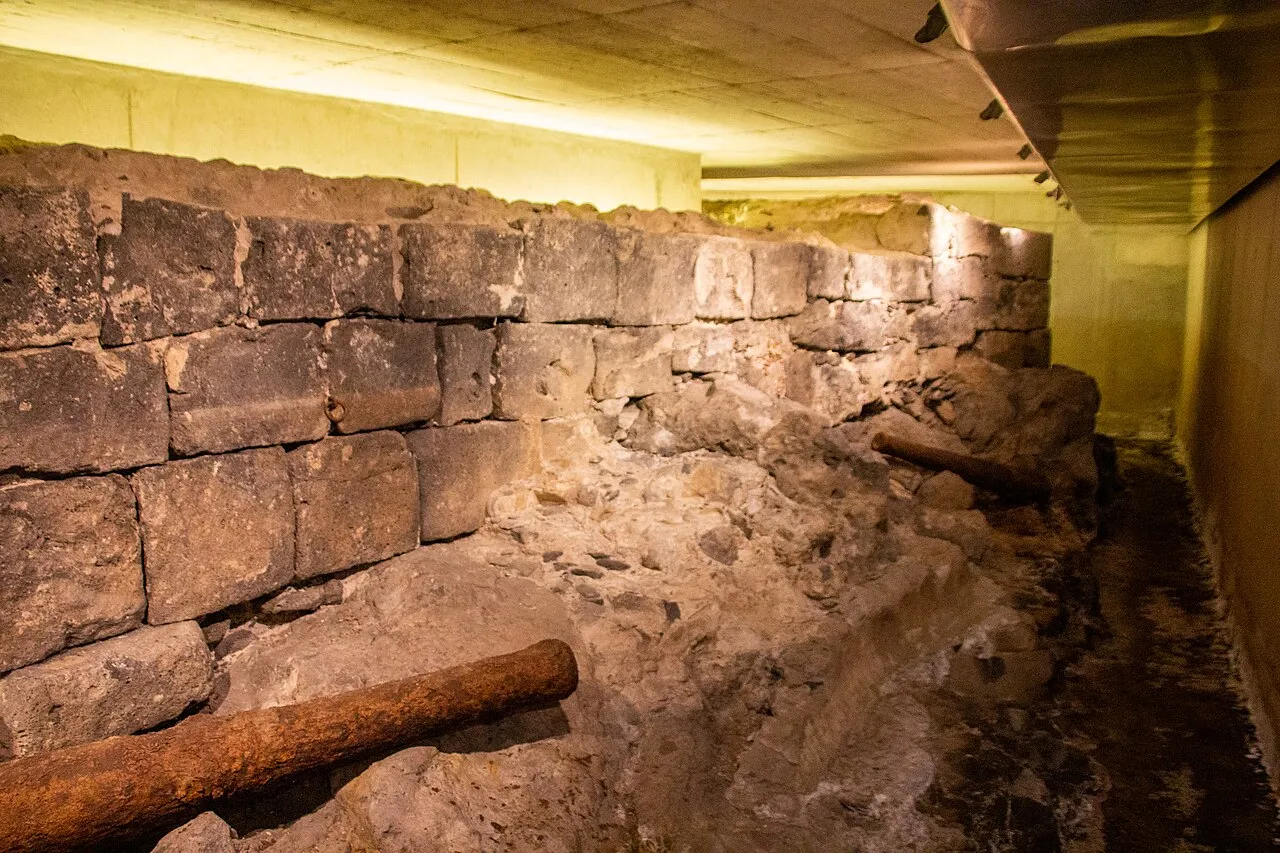
And there is a third episode by the same practice in the city that almost nobody connects: the works on the square were what brought to light the San Cristóbal Castle, the sixteenth-century fortress buried under the ground, which today is visited in an underground gallery.
The César Manrique Maritime Park is the last great piece by the Lanzarote artist in Tenerife: salt-water pools, waterfalls and black volcanic rock across twenty-two thousand square metres reclaimed from the sea. Manrique died in an accident in 1992 and the park opened in 1995, by then without him.
His contribution is not formal but ideological: he argued that architecture in the Canary Islands should be born of the volcanic landscape instead of being imposed on it, and in an archipelago that was filling up with indiscriminate tourist construction, that position was radical.
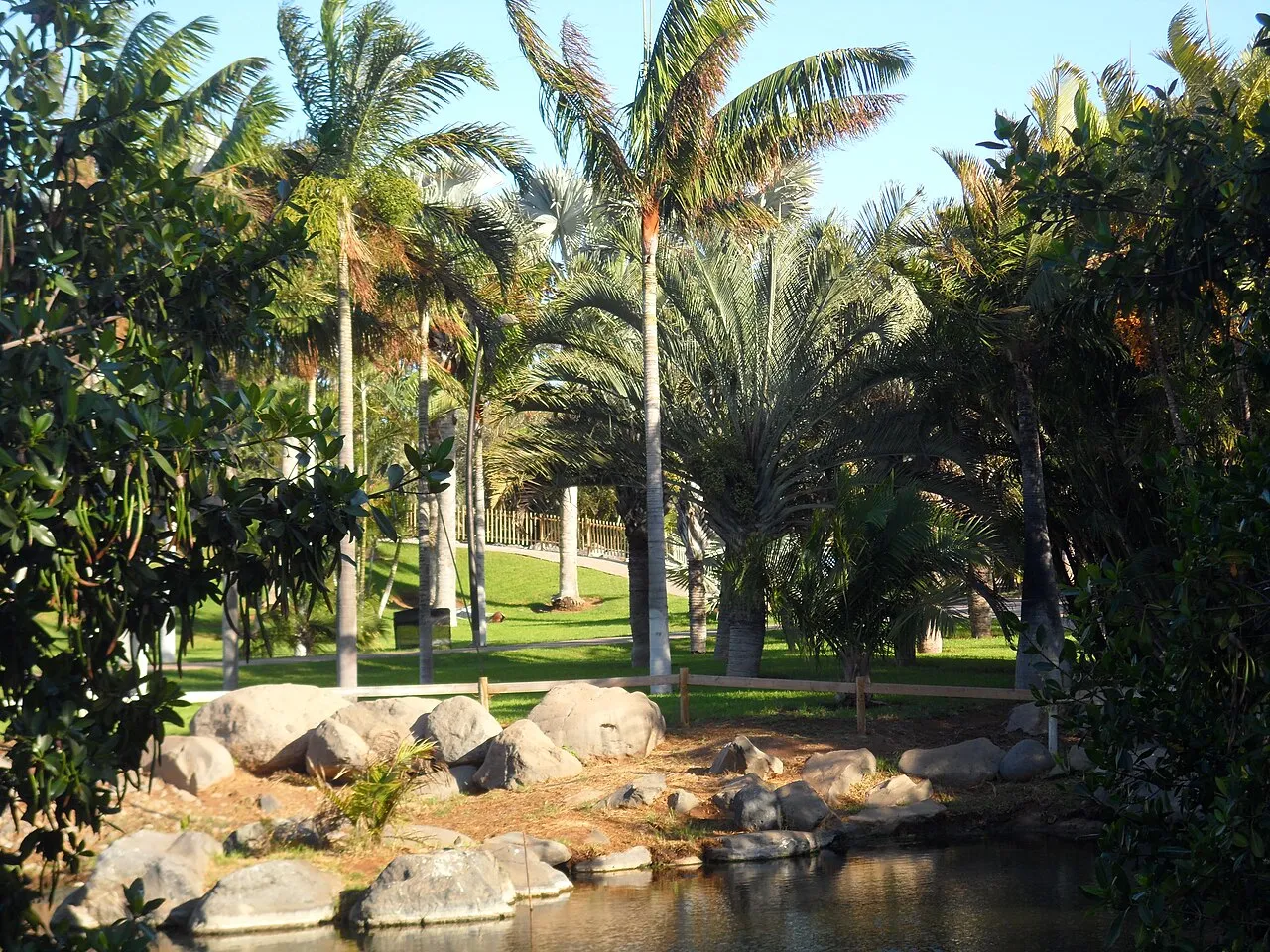
The route closes with the Palmetum, which is not architecture by a big name but is the city's best planning idea: twelve hectares of botanical garden built on the old municipal rubbish tip, sealed and replanted, opened in 2014.
And for historical counterweight, two buildings that explain where all this comes from: the Carta Palace, Canarian Baroque of 1721-1752 with its courtyard of tea wood, and the Masonic Temple, the largest in Spain, with its façade of sphinxes and Egyptian columns raised from 1900.
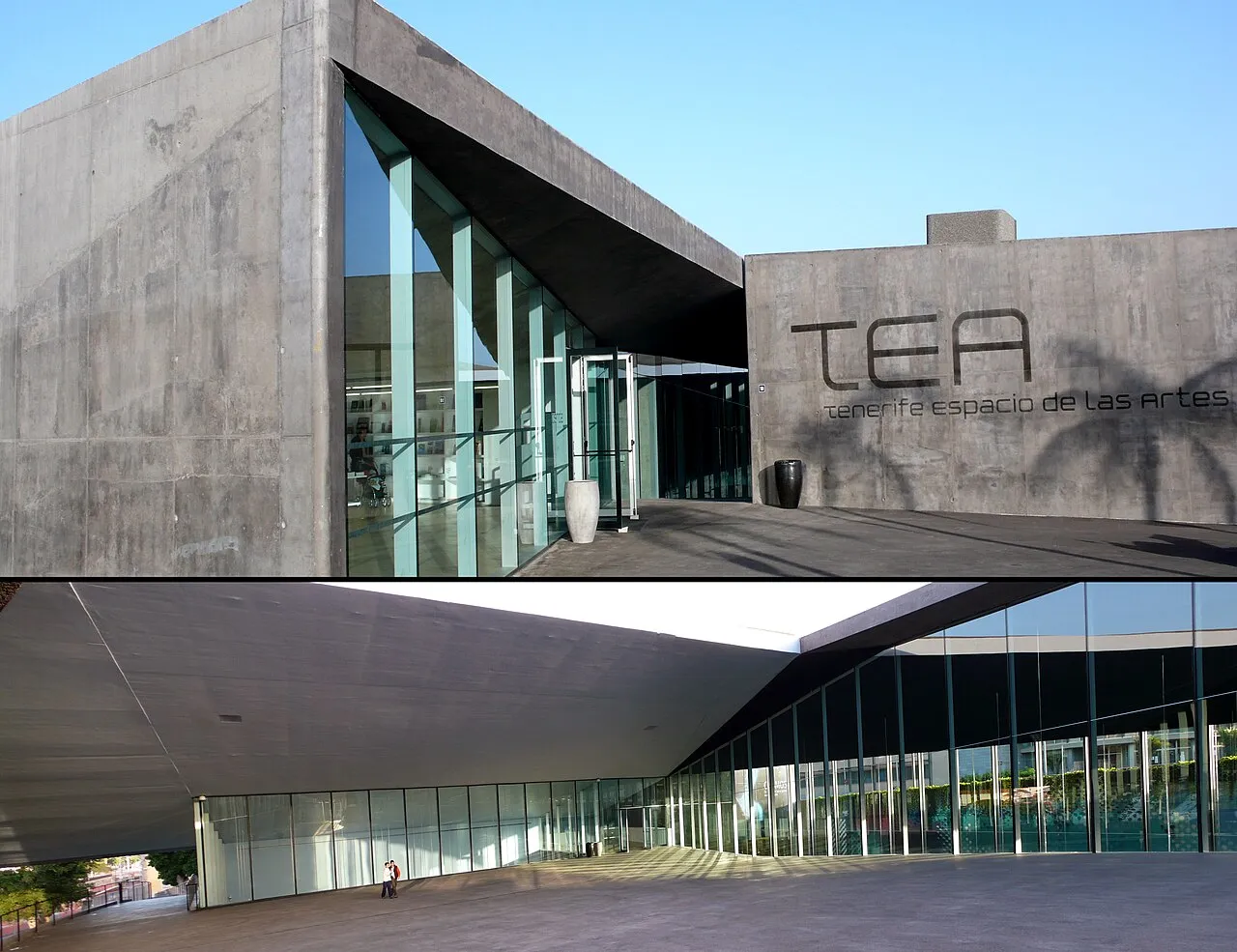
Herzog & de Meuron with Virgilio Gutiérrez, 2008. It draws the ravine into the route and holds the best collection in the world of Óscar Domínguez.
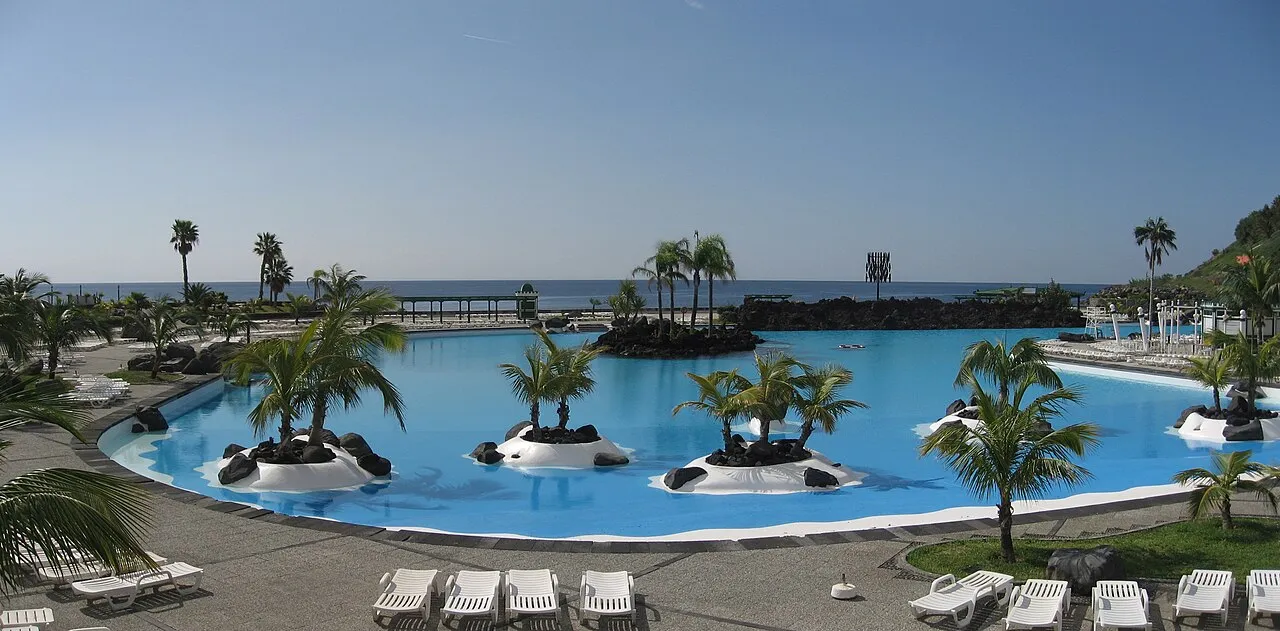
Manrique's last great work, opened in 1995 three years after his death. Salt water, volcanic rock and not one jarring straight line.
Five by international names within walking distance: two by Santiago Calatrava — the Recinto Ferial of 1996 and the Auditorio of 2003 —, two by Herzog & de Meuron — the Plaza de España of 2006 and the TEA of 2008 — and César Manrique's Parque Marítimo, opened in 1995. It is a very unusual concentration in a city of this size.
The Auditorio de Tenerife, without argument. Its great white wave clad in trencadís rests on only two points and turned Santa Cruz into a world architectural icon from the day it opened, in September 2003. They call it the Sydney of the Atlantic, and the comparison is unavoidable.
A cladding made of broken ceramic pieces recomposed into a continuous surface. Gaudí made it popular in Barcelona, at Park Güell and the Casa Batlló, and Calatrava brings it back here for the Auditorio. From a distance it looks like plain white; close up it turns into a tapestry of fragments.
It ended up coming close to more than double what was budgeted, a pattern that repeats in almost every one of Calatrava's big projects and that is part of the public conversation about his work. The result is beyond argument as an icon, but the cost overrun is a fact worth knowing when you weigh the building up.
An idea rather than a form: that architecture in the Canary Islands should be born of the volcanic landscape instead of being imposed on it. In an archipelago that in the sixties and seventies was filling up with indiscriminate tourist construction, that position was radical, and in Lanzarote it went as far as becoming island policy. The Parque Marítimo is his last great work.
Two, and they are worth the detour. The Palacio de Carta, Canarian Baroque of 1721-1752, with a courtyard of tea wood that has been intact for three centuries; and the Masonic Temple, raised from 1900 and the largest Masonic centre that ever existed in Spain, with sphinxes and Egyptian columns on the façade.
A long half-day. The seafront — Auditorio, Parque Marítimo, Recinto Ferial and Palmetum — is walked from end to end along a flat, continuous promenade, and the TEA and the Plaza de España are in the centre, ten or twenty minutes on foot. If you also go inside the Auditorio and the TEA, count on a full day.
Download Viavoy and walk Santa Cruz de Tenerife offline, whenever you like.

Keep reading