Tapas routes in Madrid: three bar-to-bar crawls
Food and drink · Madrid

Tapas routes in Madrid: three bar-to-bar crawls

La Latina, the Austrias quarter and Lavapiés: what to order at each stop, what it costs and how to tapear without looking like a tourist.

11 min read · Updated for 2026
🎧 On the walk Tapas: La Latina & El Rastro

In Madrid, going for tapas is not a cheap way to have dinner: it is a way of moving through the city. You walk into a bar, order standing at the counter, eat one thing, pay and move on to the next. Nobody settles in, nobody orders the whole menu and nobody sits down unless they are going to eat in earnest. Understanding that choreography completely changes a night in the capital, because the three routes in this guide — the Cava Baja, the Austrias quarter and Lavapiés — fit inside two kilometres and pack in more century-old taverns than any other city in Spain.

Realistic budget: between 3 and 5 € per stop (caña plus tapa) and 10 to 16 € for a ración to share. A four-stop route works out at 20-25 € per person.

How tapas work in Madrid: the unwritten rules

First, the timing. The bar runs from 12:30 to 15:30 for the aperitif and lunch, and from 20:00 for the evening. If you walk in at 18:30 asking for dinner, they will look at you fondly and pour you a caña. Madrileños dine between 21:00 and 23:00, and later still at the weekend.

Second, the drink. You order a caña (a small draught beer, between 1.50 and 3 €), a doble if you are thirsty, or a vermut de grifo — vermouth on tap — with its slice of orange and its olive, the undisputed king of the Sunday aperitif. Wine by the glass is cheap and decent in almost any tavern: a Rioja or a Ribera for 2.50-4 €.

Third, the tapa. In Madrid the tapa is not always free — that is more a Granada or León thing — but many classic bars still put something out with your drink: a few olives, some crisps, a piece of tortilla. The important distinction is between a “tapa” (an individual portion), a “ración” (a plate to share, 10-16 €) and a “media ración” (half portion). Order raciones only if there are three or more of you, or you will have no room left in your stomach for the second stop.

And fourth, the attitude. You order at the bar, you don't wait for someone to come and take your order, you pay at the end and in many places the napkin goes on the floor — a custom on its way out, but if you see the floor covered in paper, that bar is one of the good ones. And don't take a table for a single caña on a Saturday at nine: in Madrid, the table is for eating.

🎧 With Viavoy

Explore Madrid at your own pace

Download the app and discover Madrid offline, whenever you like. Take the walking tour Tapas: La Latina & El Rastro with a local guide in your ear.

Find out more about Viavoy →

Route 1 · La Latina and the Cava Baja

The street with more taverns per square metre than any other in Spain. Ideal on a Sunday after the Rastro.

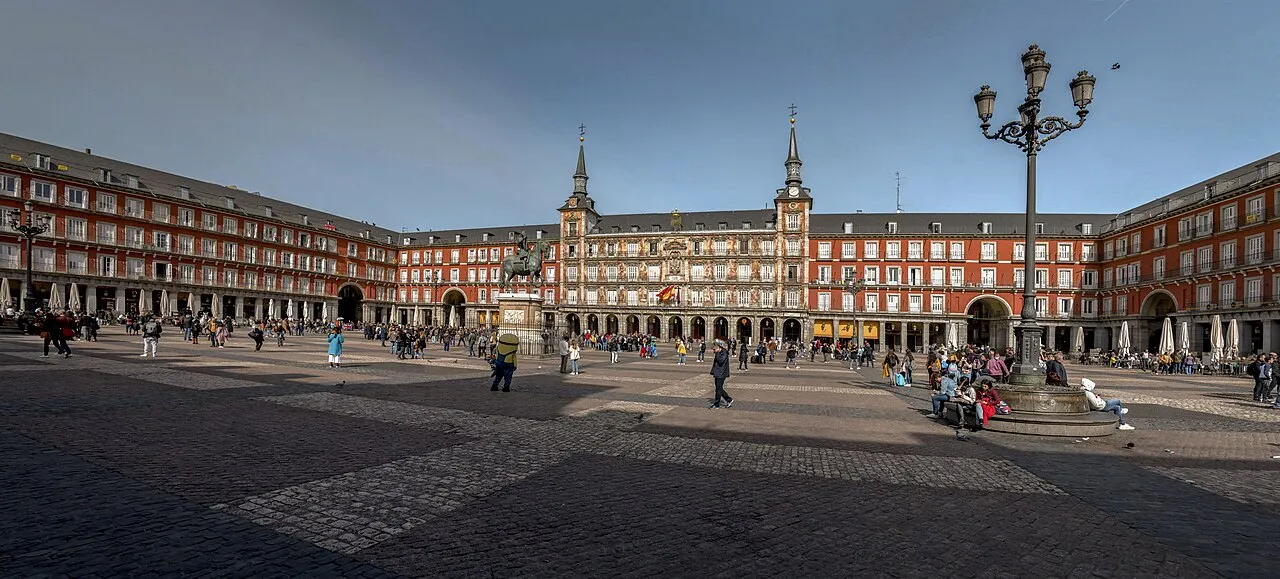
This is the classic route and the one to do if you only have one night. It starts in the Plaza de la Cebada or the Plaza de Cascorro and climbs the Cava Baja up to the Plaza Mayor: barely seven hundred metres and some twenty bars. It works every day, but on Sunday lunchtime, when the Rastro packs up, it is a party.

A logistics tip: don't book. This route is done standing up, and whoever books a table ends up shut inside a single place. If there are more than four of you, split up: big groups don't fit at the good bars.

1Plaza de la Cebada

Plaza de la Cebada

📍 La Latina

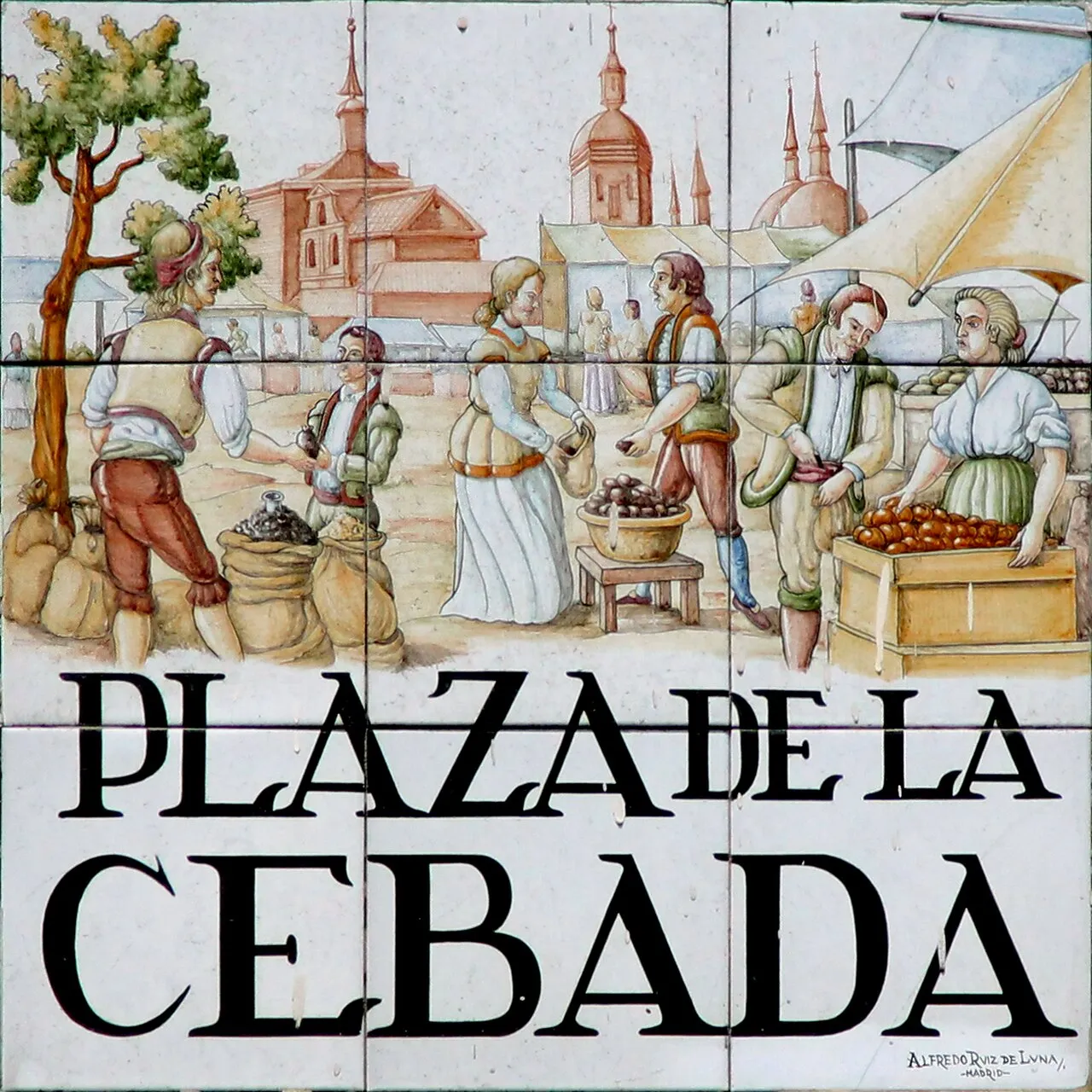
The starting point and the most castizo heart of the neighbourhood: the iron-and-glass market inherits the pavilions of the nineteenth century, and around it stand bars that have been there for ever and terraces that cannot cope at lunchtime. The name comes from the cebada — the barley — sold here for the animals when this was the entry gate for grain into the town. A fact to put you off your vermut: in this very square stood Madrid's public scaffold, where General Riego was executed in 1823.

2Calle Cava Baja

Calle Cava Baja

📍 La Latina

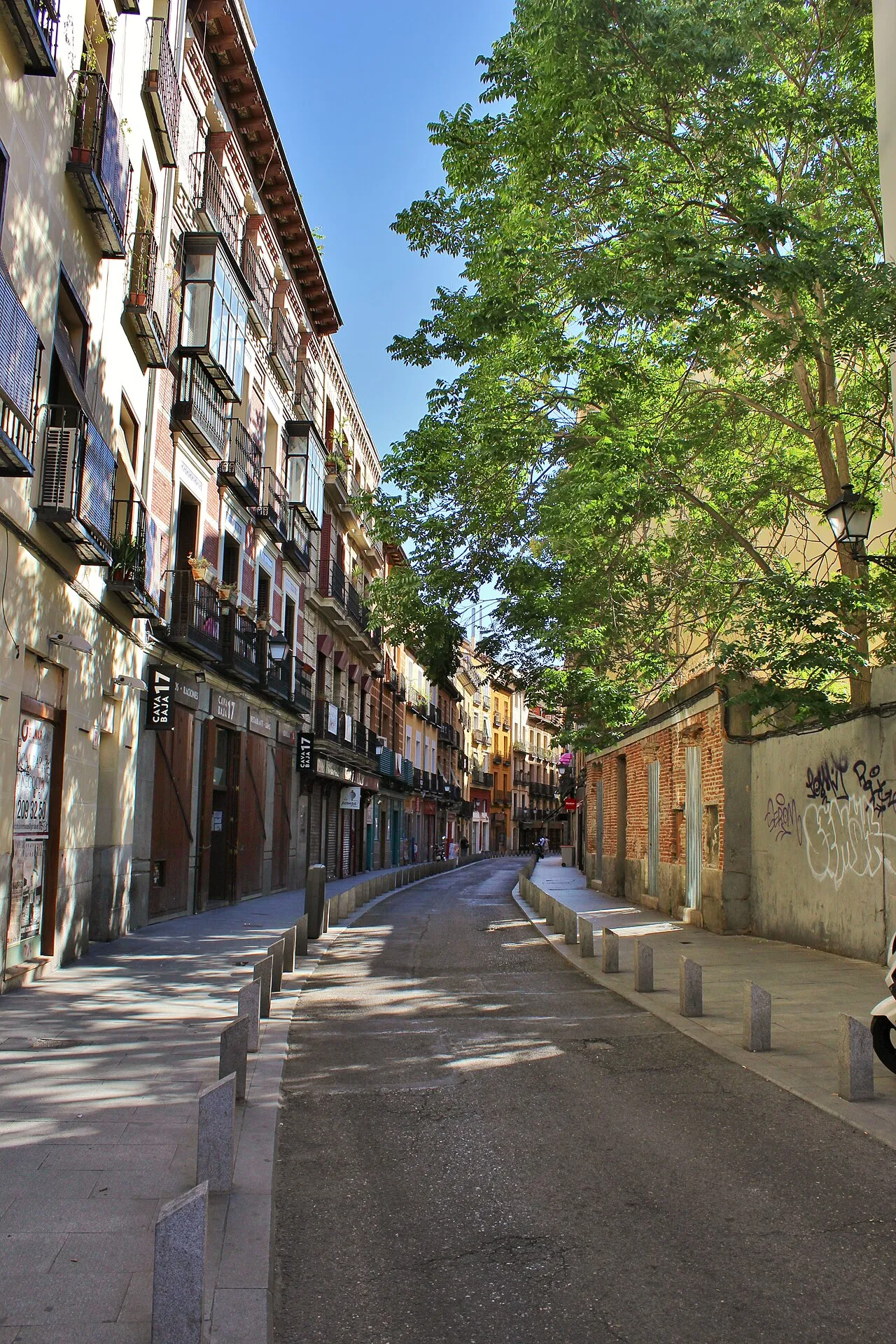
It smells of wine spilt on old wood and of ham sliced to order. This narrow curve was the moat of the Christian wall and later a cart track, lined with inns where the muleteers arriving in the town slept; today's taverns descend from those inns. Look out for the tiled dados and the zinc counters that survive. Custom dictates you do the whole street without sitting down: two tapas per bar at most, then on to the next.

3Txakolina

Txakolina

📍 Cava Baja, 26

A slice of the Basque Country in the heart of Habsburg Madrid, and one of the stops where sitting down really is worth it. Order the oxtail tacos, unctuous and home-made, and the bao bun with crispy baby squid, crunchy outside and tender within, with a glass of txakoli poured from a height: a young white from the north, sharp and with a hint of natural fizz. Around 4-7 € per pincho. Book if you are going in the evening, because it fills up fast.

4Casa Amadeo “Los Caracoles”

Casa Amadeo “Los Caracoles”

📍 Plaza de Cascorro, 18

Since 1942, this corner has smelt of paprika and bay leaf. Its dish is a single one and has never changed: caracoles a la madrileña, snails slow-stewed with chorizo, ham, tomato and chilli until the sauce thickens and calls for bread. A ración costs around 10-12 € and is eaten standing at the bar. It is the most castizo aperitif of the Rastro and peaks in May, during San Isidro, when the snail becomes the city's official dish.

5San Miguel Market

San Miguel Market

📍 Plaza de San Miguel

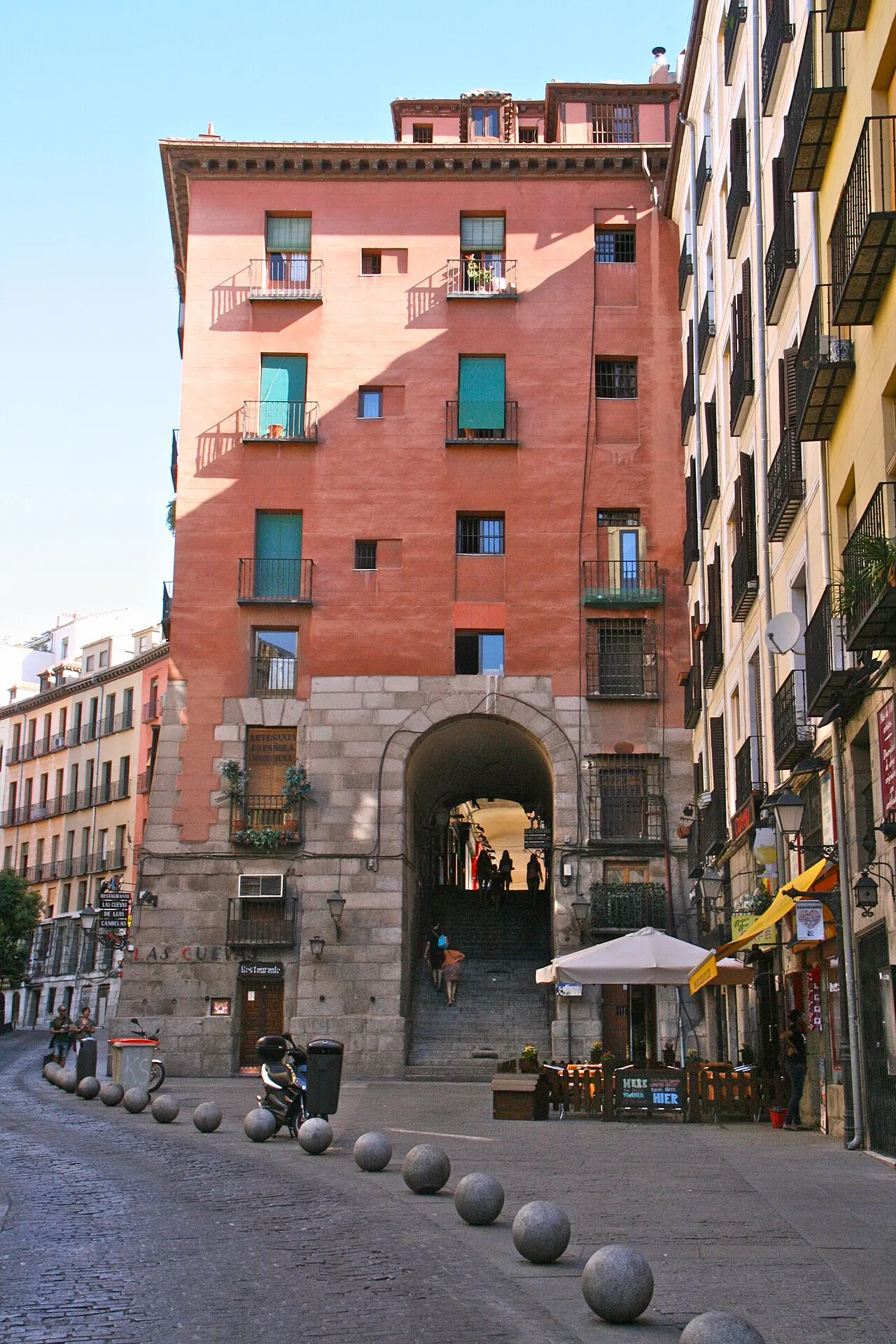
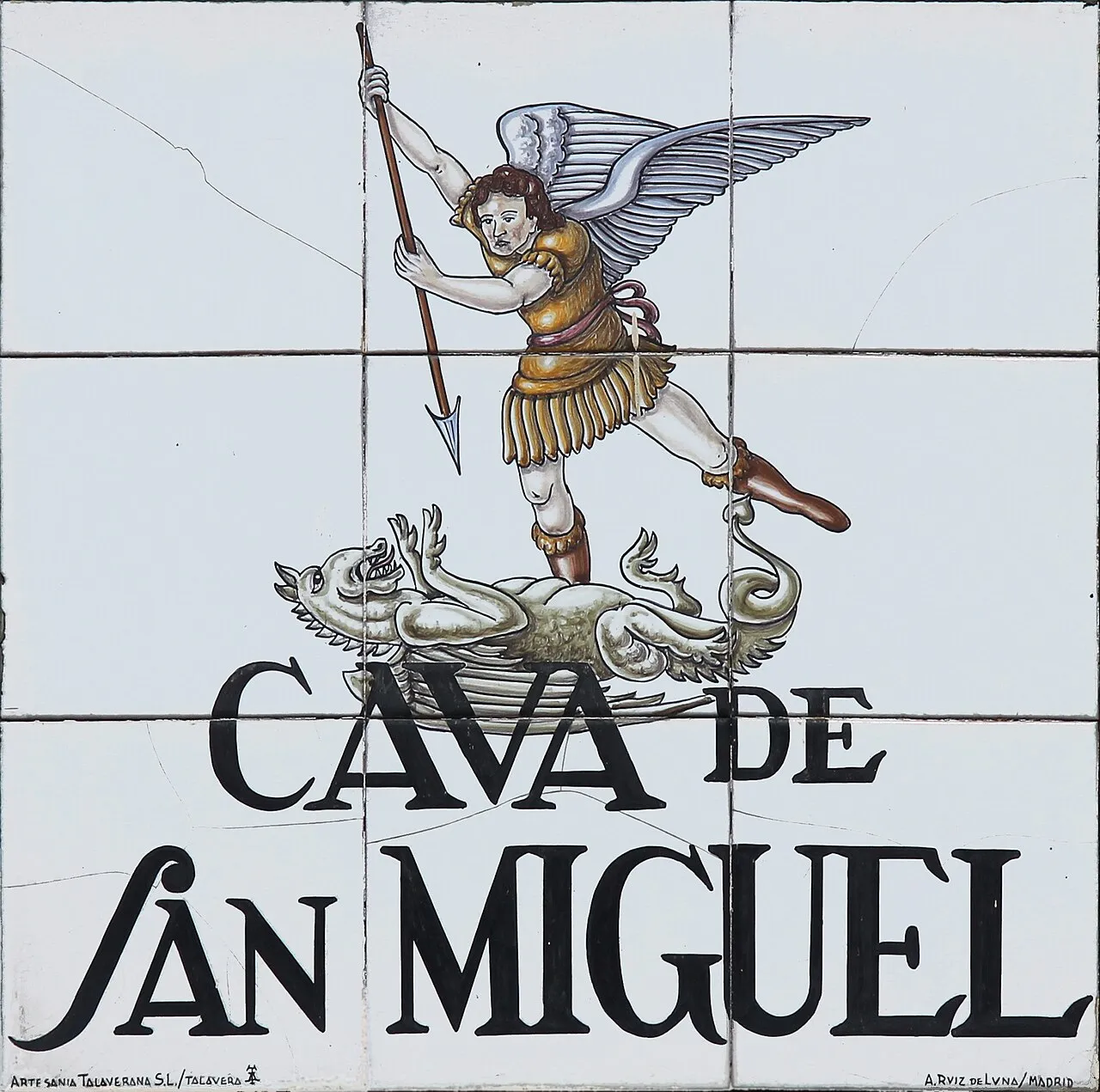
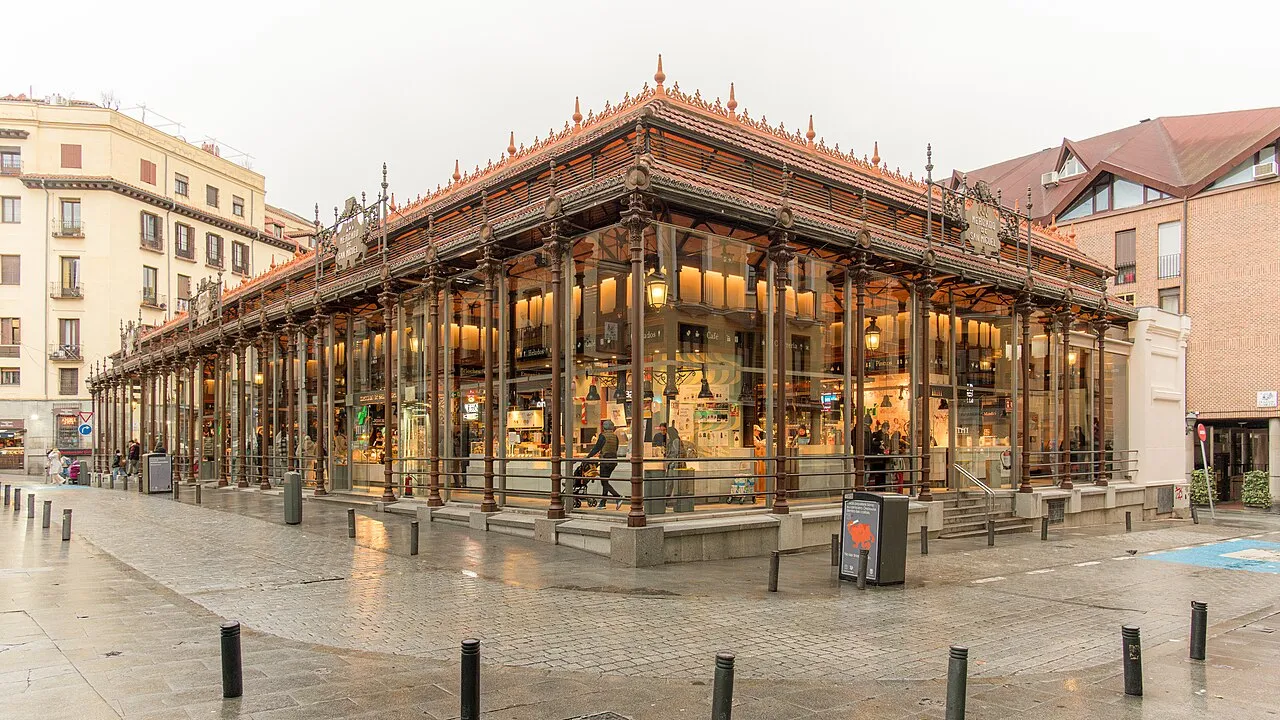
The natural end of the route, and here we have to be honest: it is gorgeous — an iron-and-glass cage from 1916 — but it is one of the most expensive places in the centre and madrileños rarely come. Use it the way they do: go in late, have a glass of vermut and an oyster while watching the bustle, take your photo and leave. To eat properly, walk a hundred metres down the Cava de San Miguel, where the houses hide up to eight storeys down the slope.

Arco de Cuchilleros and the oldest restaurant in the world
The end of route 1

Arco de Cuchilleros and the oldest restaurant in the world

Beneath the monumental arch that bridges the drop from the Plaza Mayor — named after the cutlers and knife-grinders who supplied the butchers — is Botín, opened in 1725 and recognised by Guinness as the oldest restaurant in the world in continuous operation. Its dish is suckling pig roasted in a wood-fired oven that, they say, has never fully gone out; tradition has it that a young Goya washed dishes in this kitchen. It is not cheap (around 45-60 € per person) and it is touristy, but eating here is biting into three centuries of history. Book weeks in advance.

🎧 On the tour Historic & Royal Madrid (Habsburg Quarter)

Route 2 · Sol and the Austrias quarter, the route of the classics

Cod, croquetas and chocolate: the century-old houses of the centre.

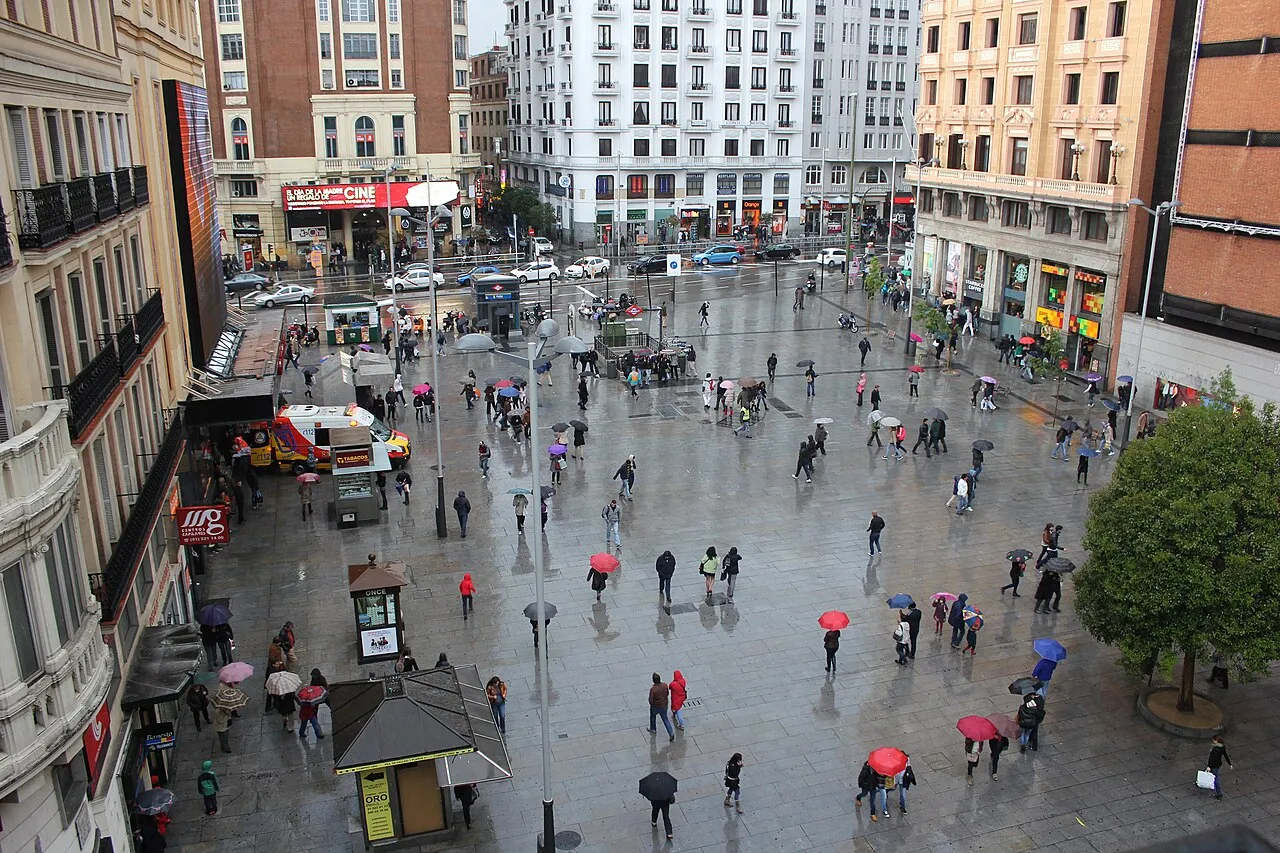
This route is shorter — about six hundred metres — and serves for eating well in the area where you eat worst if you choose badly. The rule: don't sit at any terrace in the Puerta del Sol or the Plaza Mayor, and dive into the streets behind.

The axis runs from calle Tetuán to the Plaza Mayor by way of the Pasadizo de San Ginés. Do it at lunchtime or mid-afternoon; it fits perfectly with a morning of museums or monuments.

6Casa Labra

Casa Labra

📍 Tetuán, 12

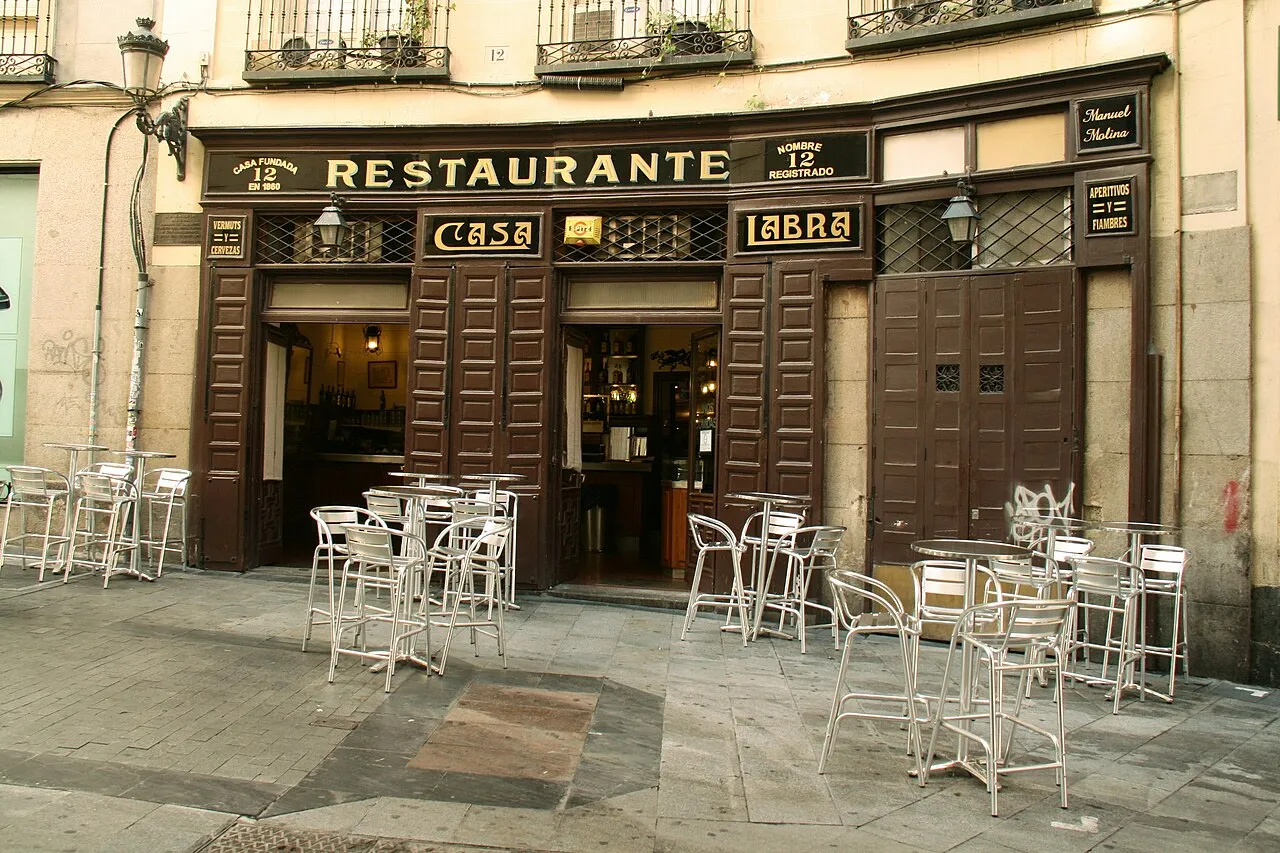
Thirty metres from Sol and light years from its terraces. This tavern from 1860 has barely changed: a zinc counter, wood and a queue of people ordering the same thing for over a century, the slab of battered cod and the cod croqueta, both for little more than 1.50-2 € apiece. And a historical detail: in a back room of this very establishment the PSOE, Spain's socialist party, was founded in secret in 1879. You are eating where a party was born, and cheaply at that.

7Cava de San Miguel

Cava de San Miguel

📍 Los Austrias

The sloping street that occupies the old moat of the medieval wall, filled in during the sixteenth century. Its houses hide up to eight storeys on the ravine side — the tallest in old Madrid, built “a la malicia”, with cunning, to pay less tax — and their ground floors are lined with vaulted stone mesones, some with a guitarist thrown in. They are touristy and noisy, but a glass of wine and a plate of calamares in one of those cellars is a scene you have to live once.

8The bocadillo de calamares in the Plaza Mayor

The bocadillo de calamares in the Plaza Mayor

📍 Plaza Mayor

Madrid's most argued-over dish: bread, fried squid rings and nothing else, no sauce or lemon according to the purists. Nobody quite knows why a city without a sea adopted the squid as its emblem, but the bocadillo has for decades been the breakfast after a night out and the afternoon snack after the Rastro. It costs between 4 and 6 € in the bars under the arcades and in the streets leading off towards Botoneras. Eat it standing up, looking at the Casa de la Panadería.

9Chocolatería San Ginés

Chocolatería San Ginés

📍 Pasadizo de San Ginés, 5

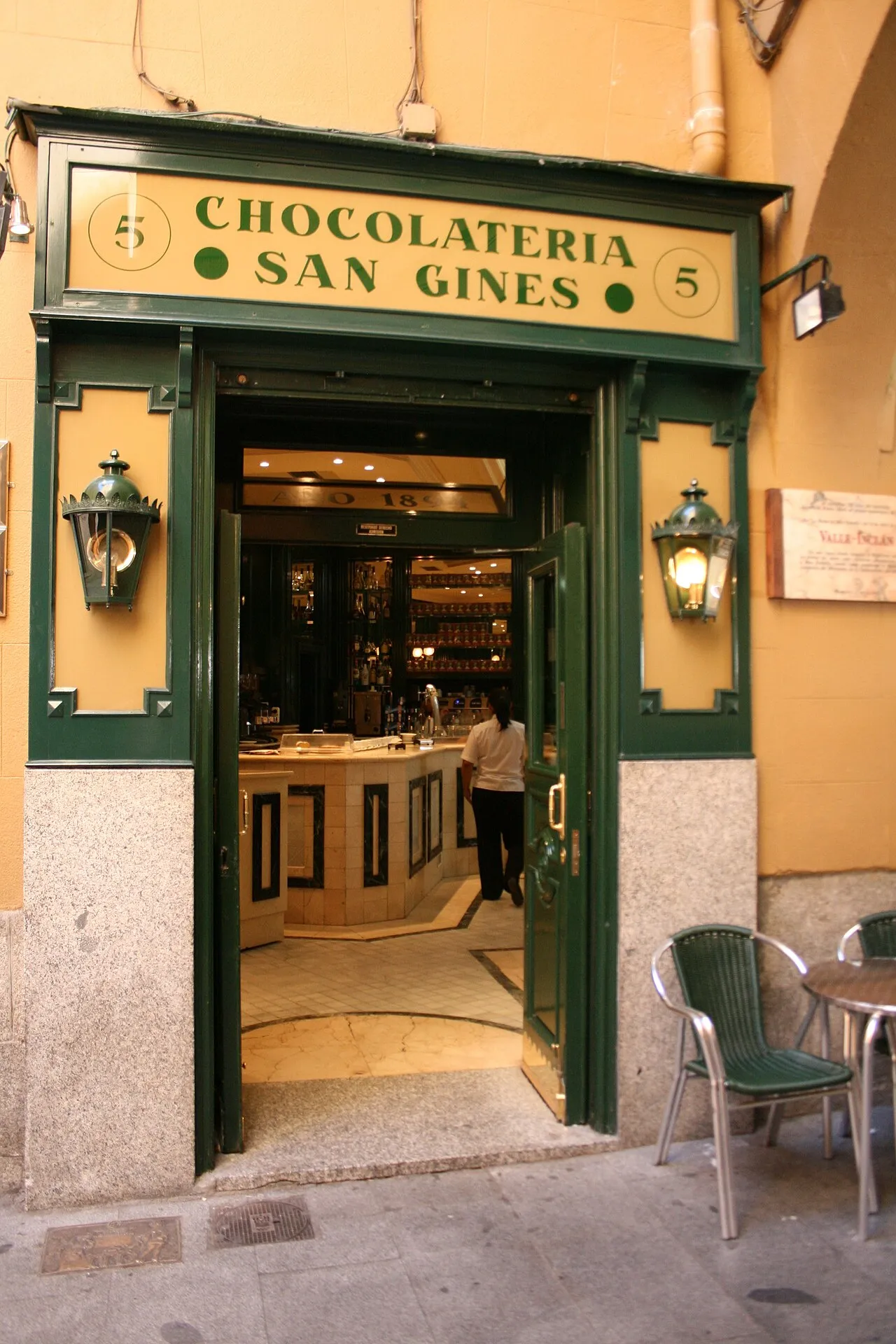
The compulsory dessert, tucked away in a passage since 1894: marble, mirrors and waiters in white jackets serving thick chocolate, the kind that almost holds the spoon upright, with churros or porras. The difference is in the dough: the churro is thin and crisp, the porra fatter and spongier because it contains raising agent. Around 6-8 € per person and open almost twenty-four hours, so at three in the morning you will find the party crowd mixed in with people on their way to breakfast.

Route 3 · Lavapiés and Malasaña, markets and world cooking

Where tapas stop being castizo and go global.

If you already know the two previous routes, this is the one that will surprise you. In Lavapiés, residents of more than eighty nationalities live together in a few blocks, and you can taste it: Senegalese, Bangladeshi, Ecuadorian, Chinese, and also the lifelong bar with its tortilla. In Malasaña the mix is different: historic taverns, craft beer and markets converted into grazing counters.

This route is the cheapest of the three. With 15-20 € per person you eat more than enough, and along the way you see two of the liveliest neighbourhoods in the city.

10Calle de Argumosa

Calle de Argumosa

📍 Lavapiés

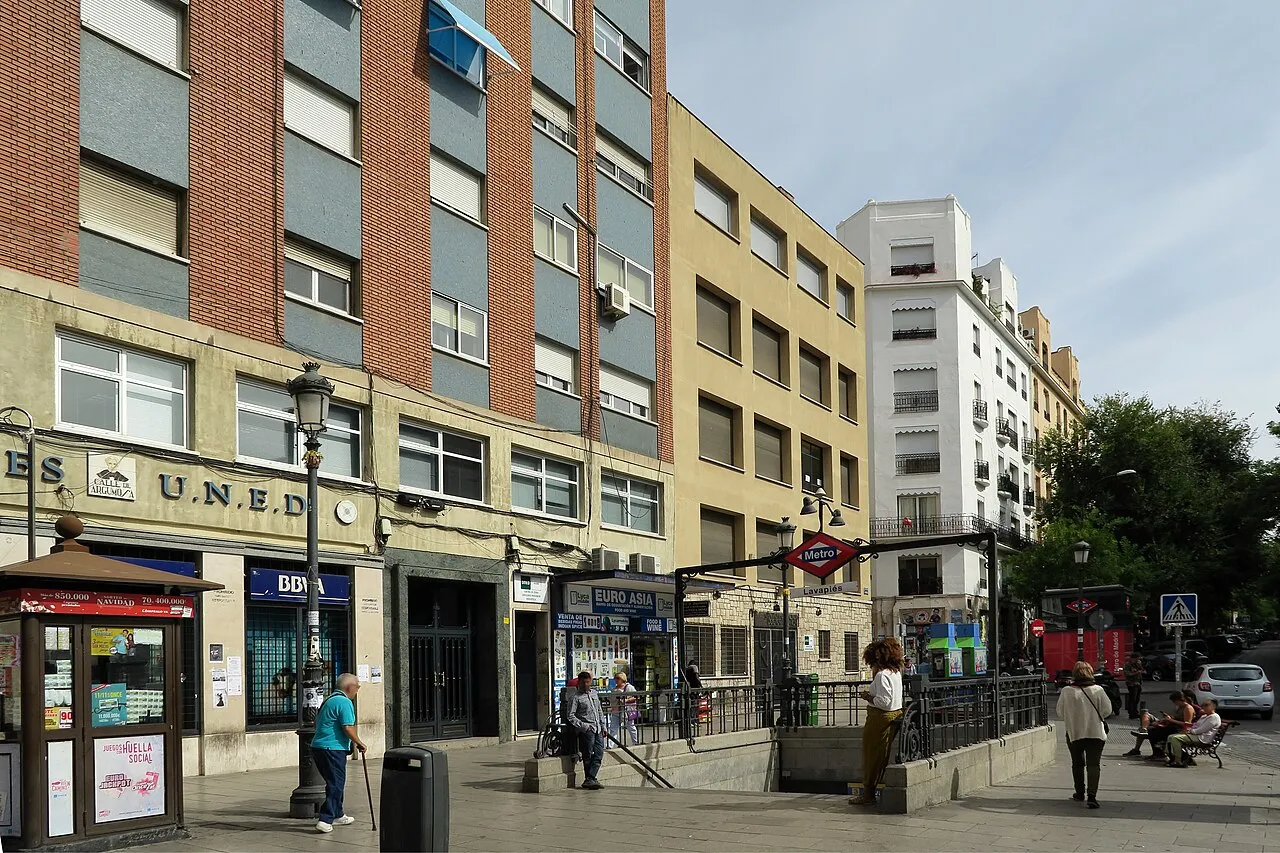
Locals call it “el Ave María” and it is, beyond argument, the most pleasant terrace street in the centre: the pavement widens, enormous plane trees form a green roof and the moment the sun comes out there is not a free chair. You drink vermut and eat from the bar at neighbourhood prices, with the wall of the Reina Sofía right opposite. It has had a bohemian reputation for decades: poets, penniless painters and eternal students have all passed through.

11San Fernando Market

San Fernando Market

📍 Embajadores, 41

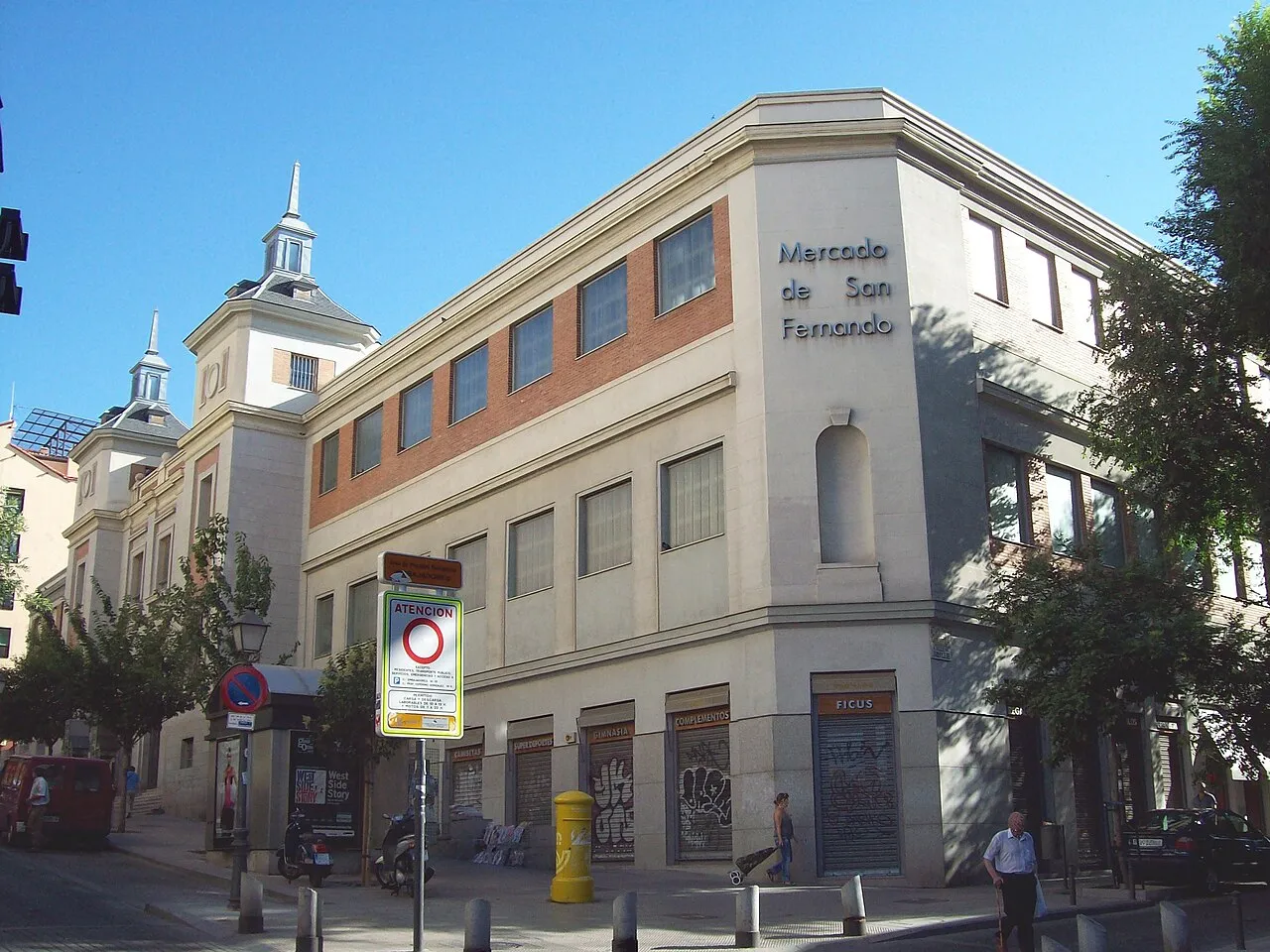
A neighbourhood market from 1944 that was on the point of dying around 2010 and saved itself by renting the empty stalls cheaply to residents and young projects. The result is unique: the same old greengrocer sits alongside a second-hand bookshop that sells books by weight, a craft-beer stall and a cheese counter where the owner cuts you a sliver to try before you buy. Ask for a board of three Manchegos at different stages of maturity and a local wine: 8-12 € and half an hour of conversation.

12Senegalese and Bangladeshi cooking

Senegalese and Bangladeshi cooking

📍 Lavapiés

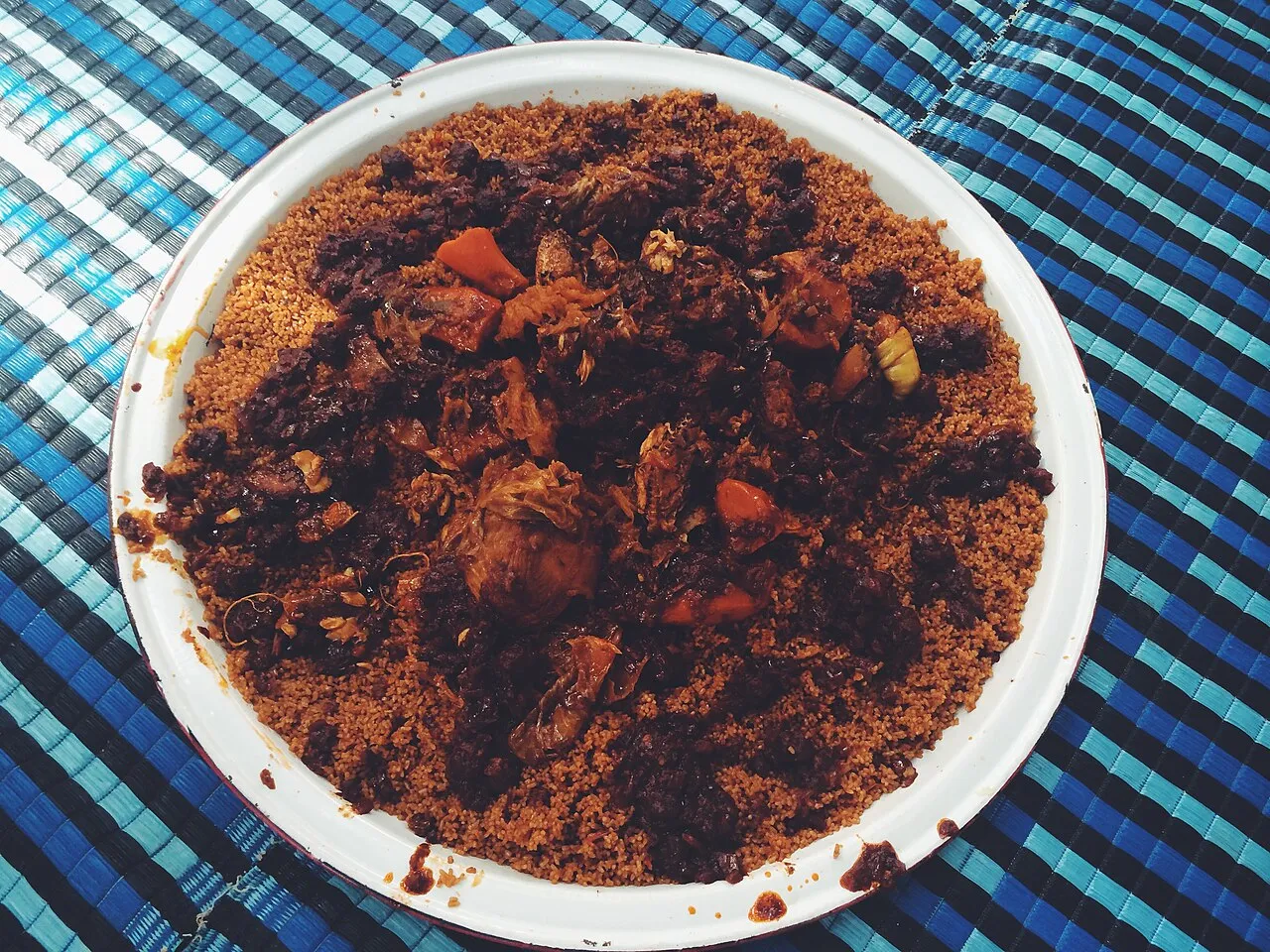
In the streets of Ave María and Amparo you eat the best thieboudienne in Madrid, Senegal's national dish — rice with fish and vegetables in sauce, declared Intangible Cultural Heritage of Humanity in 2021 — at long shared tables for 10-14 €. Wash it down with a bissap of hibiscus flower, purple and ice-cold. Two streets away, the Bangladeshi community, one of the largest in Spain, serves curries that will knock you sideways for similar prices. Go hungry and in no hurry.

13Mercado de San Ildefonso

Mercado de San Ildefonso

📍 Fuencarral, 57

Now in Malasaña, three floors of street food designed for grazing on your feet: home-made croquetas in a paper cone, ham sliced to order, mini-bocadillos and draught beer with a proper head. The building is modern, but the name revives that of a popular market that stood here in the nineteenth century. Take your caña up to the top terrace and stay watching calle Fuencarral, which is still the spontaneous catwalk where Malasaña and Chueca show each other their clothes.

Vermut in the Plaza del Dos de Mayo
To finish

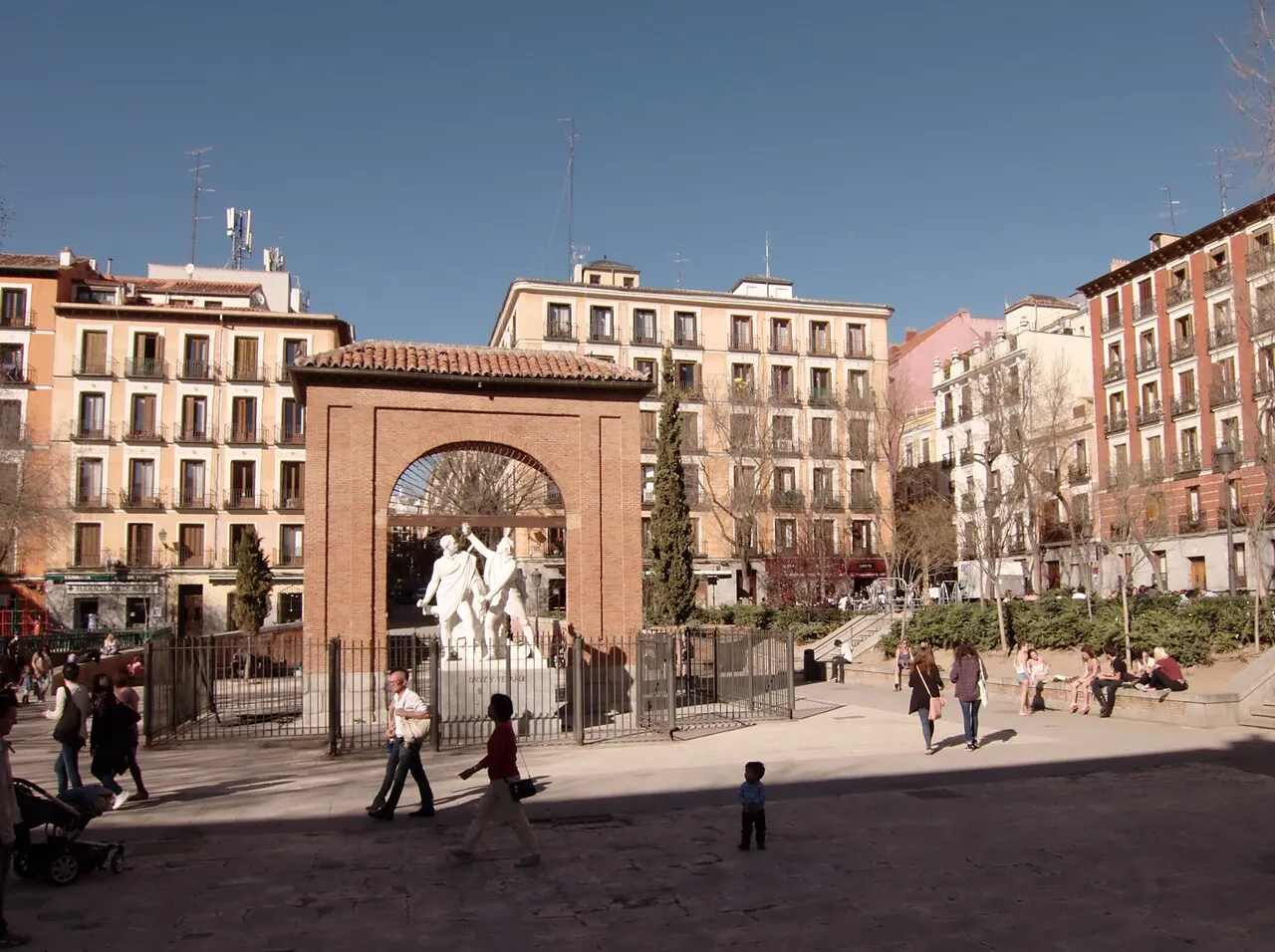
Vermut in the Plaza del Dos de Mayo

On Sunday at lunchtime, the square at the heart of Malasaña becomes the neighbourhood's living room: full terraces, children in the sandpit and a beer that lasts two hours. Around it survive historic taverns — the one on calle Colón, famous for its tortilla, and the one on calle Madera, for its croquetas — where a caña with a tapa still costs under 4 €. And beneath your feet, the ground where on 2 May 1808 the locals faced Napoleon's army. Rebellion and vermut on the same square metre.

🎧 On the tour Malasaña & La Movida📍 View on Google Maps

Frequently asked questions

How much does going for tapas cost in Madrid?

Between 3 and 5 € per stop if you order a caña and a tapa, and between 10 and 16 € for a ración to share. A full four-stop route works out at 20-25 € per person, and with 35 € you dine handsomely. The weekday menú del día, another great option, costs between 14 and 18 € with a starter, main, drink and dessert.

Where are the best tapas in Madrid?

The Cava Baja, in La Latina, packs in more taverns per metre than any other street in Spain and is the classic route. The area around Sol has the oldest houses (Casa Labra, San Ginés), and Lavapiés and Malasaña offer the most varied and cheapest options. Avoid the terraces in the Plaza Mayor and the Puerta del Sol.

Are tapas free in Madrid?

Not always. Unlike Granada or León, in Madrid the tapa is usually charged for, although many classic bars still put something out with your drink: olives, crisps or a piece of tortilla. What is cheap is the unit price: a tapa costs between 2 and 5 €, so you eat very well for little money.

What time do people have dinner in Madrid?

Kitchens open from 20:30 to 23:30, and madrileños dine between 21:00 and 23:00. Before 20:00 almost no restaurant serves dinner, although you will find bars with tapas from 19:00. At midday, the lunch sitting runs from 13:30 to 16:00.

What do you absolutely have to try in Madrid?

The bocadillo de calamares in the Plaza Mayor, the battered cod at Casa Labra, the caracoles a la madrileña, tortilla de patatas (with or without onion, the country's greatest culinary war), vermouth on tap and chocolate con churros at San Ginés. And if you have a long lunch left, the cocido madrileño in three courses.

Can you do a tapas route with a guide and at your own pace?

Yes. With Viavoy you download the route “Tapas: La Latina & El Rastro” and do it whenever you like: it tells you the story of every street and every tavern as you go from bar to bar, with no group, no timetable and no connection needed. You stop to eat wherever you fancy and pick up again afterwards.

What it costs and which mistakes to avoid

The numbers, so there are no surprises. Caña: 1.50-3 €. Vermouth on tap: 2.50-4 €. Glass of wine: 2.50-4.50 €. Individual tapa: 2-5 €. Ración to share: 10-16 €. Bocadillo de calamares: 4-6 €. Chocolate con churros: 6-8 €. Weekday menú del día: 14-18 €. A four-stop route stays within 20-25 € per person, and with 35 € you dine more than well.

The three most typical mistakes. The first, sitting at a terrace in the Plaza Mayor or Sol: you will pay double for half the quality, and three streets away you eat far better. The second, ordering raciones when there are two of you: you fill up at the first stop and ruin the route; order tapas or medias raciones. And the third, dining at half past seven: there are no kitchens open, so either adjust your clock or resign yourself to the first terrace you find.

A couple of final notes. Almost all the classic taverns take cards, but carrying some cash helps at the smallest bars. If you have allergies or are coeliac, say so when ordering: Spanish cooking is very much about frying and batter, and at the bar it is not always labelled. And if you want the Madrid dish par excellence, book a cocido at lunchtime: it is served in three vuelcos, or courses — soup, chickpeas with vegetables, meats — costs between 22 and 30 € and is never eaten at dinner.

How to plan it

Route 1 · La LatinaPlaza de la Cebada → Cava Baja bar by bar → Casa Amadeo in Cascorro → Mercado de San Miguel → Arco de Cuchilleros. About 700 m, 2-3 hours.
Route 2 · The Austrias quarterCasa Labra (Tetuán, 12) → Cava de San Miguel → bocadillo de calamares in the Plaza Mayor → chocolate con churros at San Ginés. About 600 m, 1.5-2 hours.
Route 3 · Lavapiés and MalasañaCalle de Argumosa → Mercado de San Fernando → Senegalese cooking on Ave María → Mercado de San Ildefonso → vermut in the Dos de Mayo. 2 km, an afternoon.
The Sunday planRastro in the morning (9:00-15:00), vermut on the Cava Baja at half past one and a compulsory siesta. It is the complete Madrid ritual.

Practical information

Bar hoursAperitif and lunch from 12:30 to 15:30; evenings from 20:00. Dinner is eaten between 21:00 and 23:00.
PricesCaña 1.50-3 €. Tapa 2-5 €. Ración 10-16 €. Menú del día 14-18 €. Cocido madrileño 22-30 €.
Getting thereMetro La Latina (L5) for route 1, Sol (L1·L2·L3) for route 2, Lavapiés (L3) and Tribunal (L1·L10) for route 3.
BookingNot needed for tapas standing up; needed for sitting down to eat on the Cava Baja at the weekend and for Botín, weeks in advance.
VocabularyCaña (small beer), doble (large), corto or zurito (very small), vermut de grifo (vermouth on tap), tapa, media ración, ración, pincho.
Watch out forTerraces in the Plaza Mayor and Sol, ordering raciones when there are two of you, and groups of more than four at the narrow bars.
On the map

🎧 With Viavoy

Walk Madrid and listen at your own pace

Download Viavoy and walk Madrid offline, whenever you like.

from 2,99 €· one-off payment
City Pass · 9,99 €3 days, all the tours in Madrid
Find out more about Viavoy →
Viavoy app

Keep reading

More articles

Neighbourhoods

La Latina and the Rastro: a guide to Madrid at its most castizo

Itineraries

A weekend in Madrid: from Friday to Sunday

Neighbourhoods

Malasaña: what to see and do in the neighbourhood of the Movida

Festivals & traditions

San Isidro: the most Madrid day of the year