Segovia in a day: from the aqueduct to the Alcázar
A straight twenty-minute axis that crosses two thousand years without a gap. With the walk down into the valley that almost nobody does and the exact hour to see the aqueduct's dry joints.
Segovia has the easiest geography to read of all the Spanish heritage cities: a spur of rock between two rivers, with the aqueduct at one end and the Alcázar at the other. Between those two points there are twenty minutes on foot and everything else. A day is enough, and the only thing that separates a good visit from an excellent one is going down into the valley at the end of the afternoon.
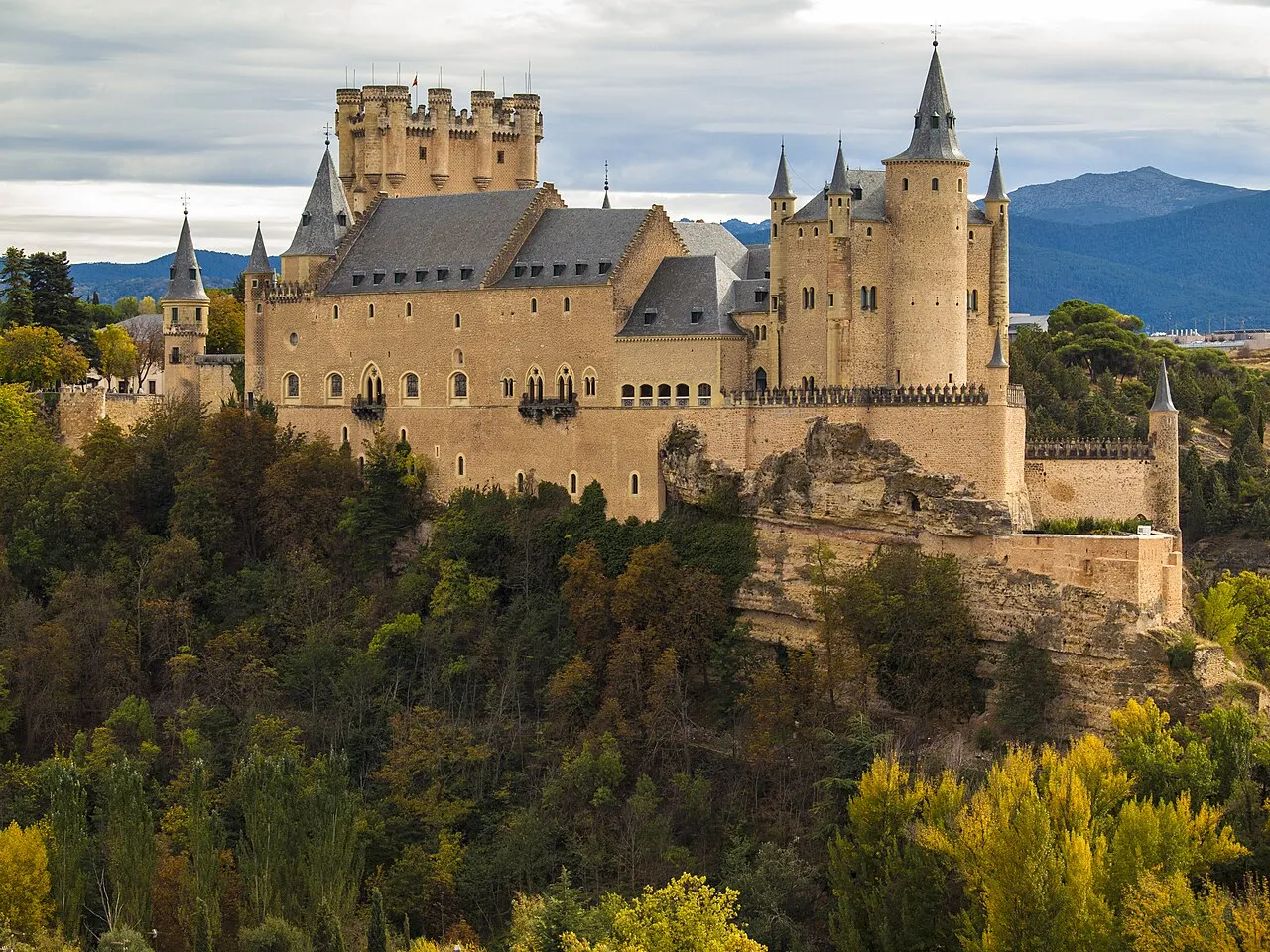
The classic view of the Alcázar as the prow of a ship is not taken from the castle but from below, in the Eresma valley. It is twenty minutes downhill and almost no day visitor gets there.
Morning: the aqueduct and the climb
Start at the Azoguejo, early.
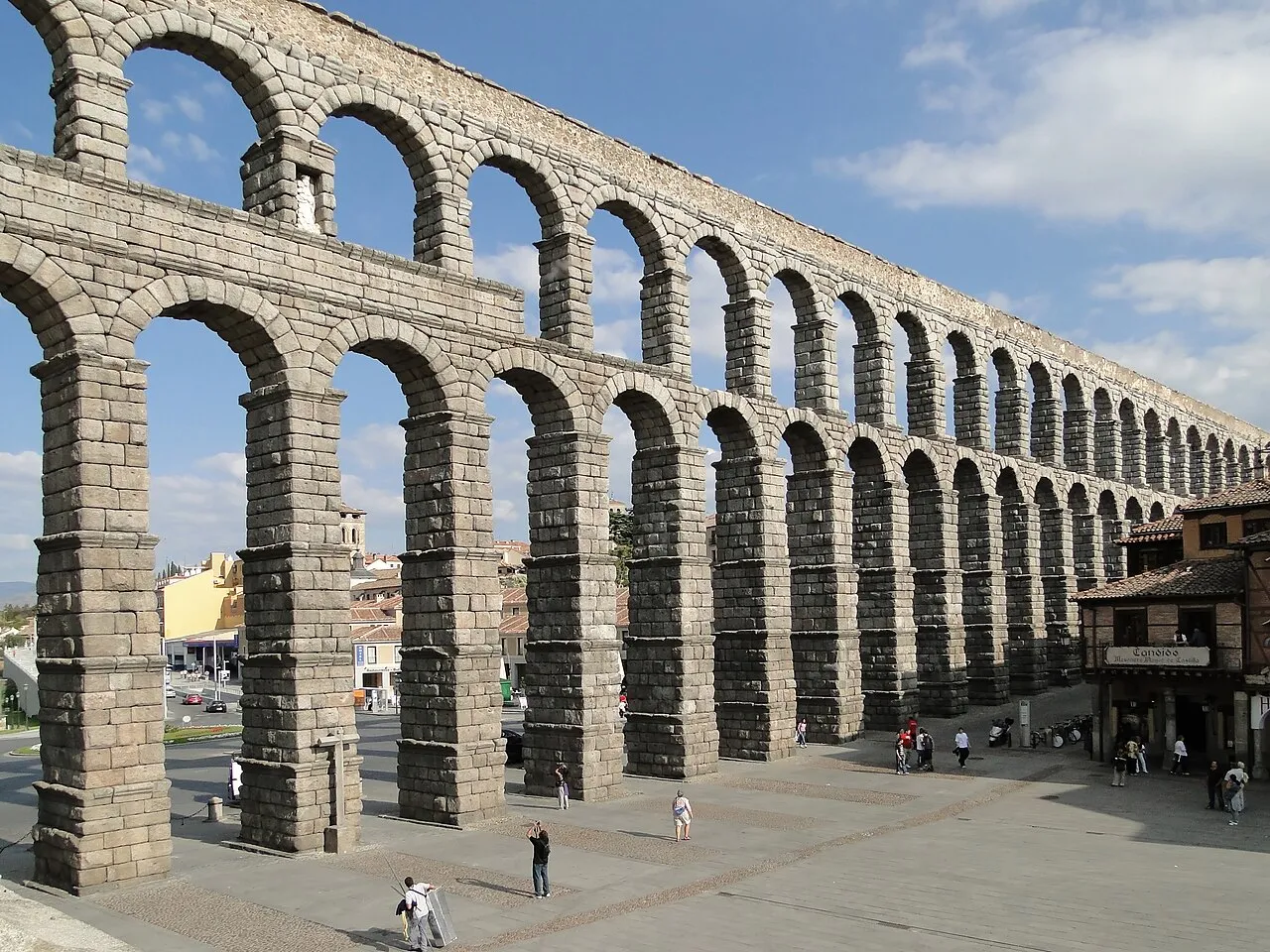
Get to the Plaza del Azoguejo and go up to a pier before you look at anything else. Find the joint between two blocks: there is nothing there. No mortar, no cement, no clamps. These are more than twenty thousand granite blocks fitted dry, held up by their weight alone, and they have been like that for almost two thousand years.
The aqueduct solved a problem of levels: water came down from the sierra de Guadarrama along a channel with a gradient calculated to the millimetre, and on reaching this valley the height had to be held without losing it. The solution was two tiers of arches that at the deepest point reach almost twenty-eight metres.
Look at the upper part, above the centre: there are two empty niches with holes where bronze letters were fixed. That inscription was lost, and with it the name of whoever had it built. That is why the dating — late first or early second century — is a deduction and not a fact.
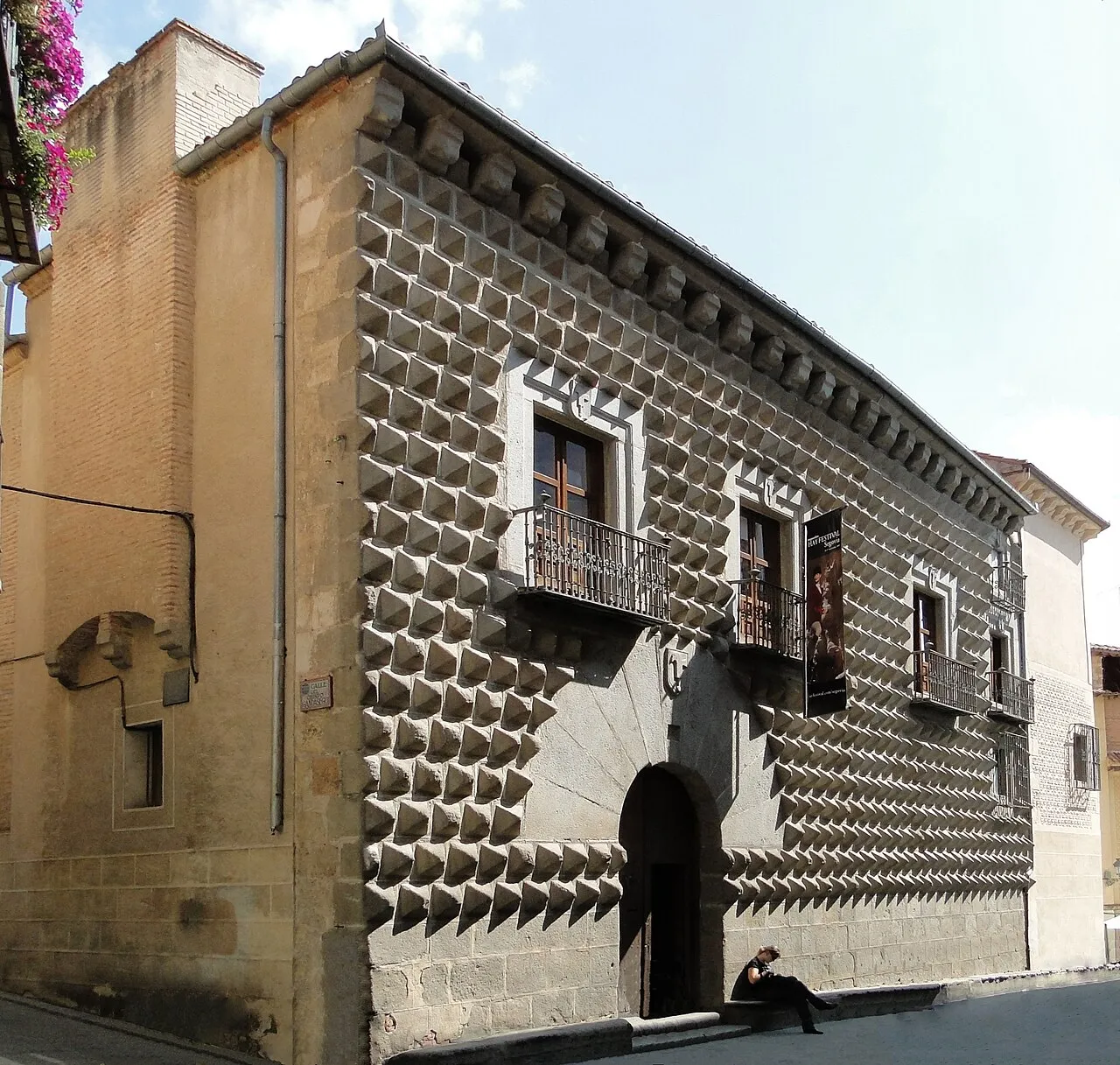
Then go up the side stairway towards the Postigo and enter the old town. On the way you come across the Casa de los Picos, with its façade of pointed blocks, and the sgraffito façades typical of the city, with those geometric patterns scratched into the render.
It really worked: it carried water to the city until a little over a century ago. It stood mutilated for four centuries after an attack in 1072, until Isabella the Catholic rebuilt it around 1484 respecting the Roman layout. If you look closely you will see that the blocks in that section are slightly more regular.
A fifteenth-century façade covered with more than six hundred blocks carved in diamond point, unique in Spain. Legend says it was done to cover up a shameful nickname the house had; the more likely explanation is simply guild ostentation. Today it houses the art school.
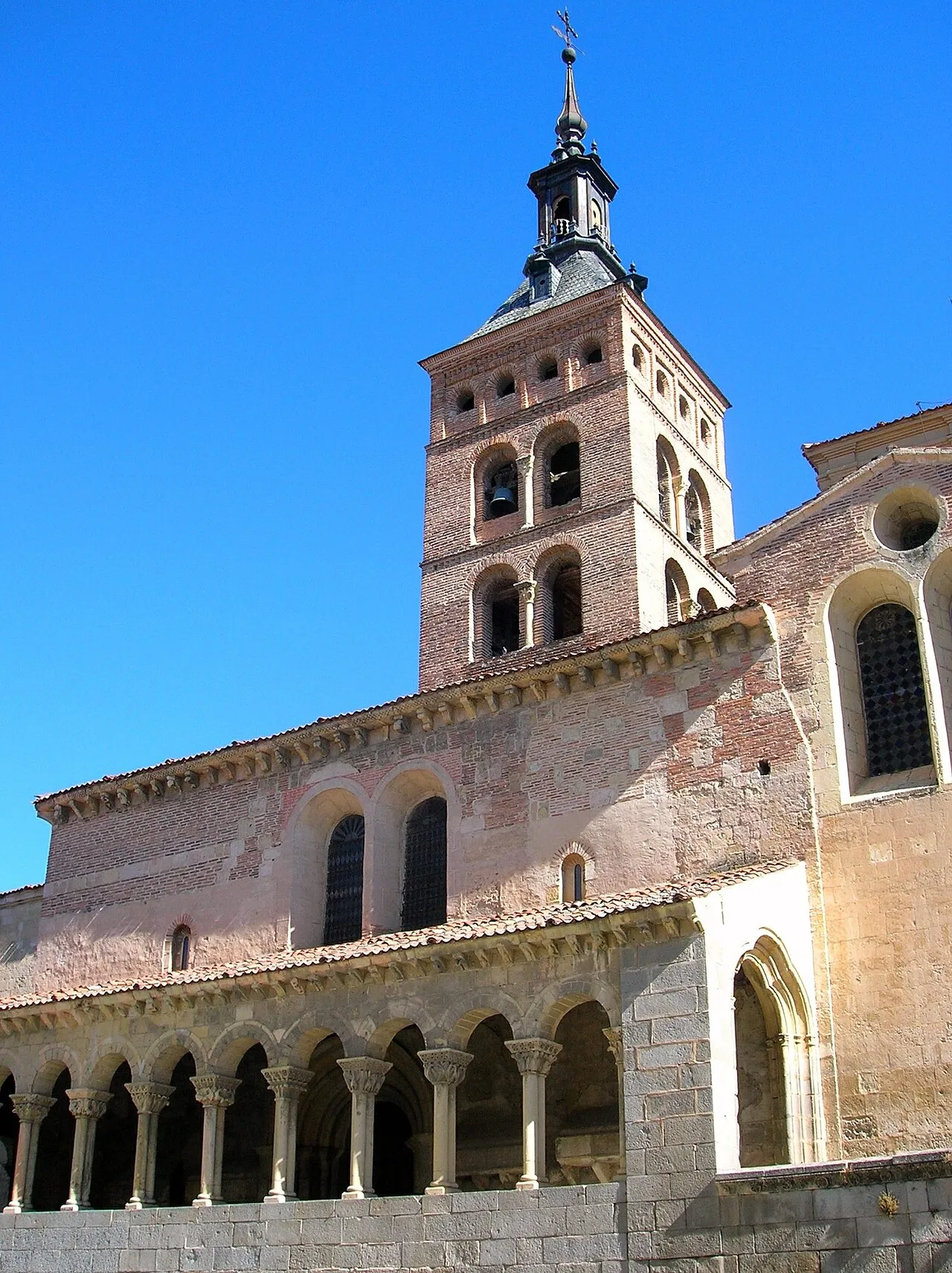
One of the finest urban Romanesque churches in Spain, with an arcaded gallery on three of its sides: those arcades served as a meeting place for the town council and as shelter from the cold. Segovia preserves a dozen churches like this, and it is probably the greatest concentration of Romanesque in the country.
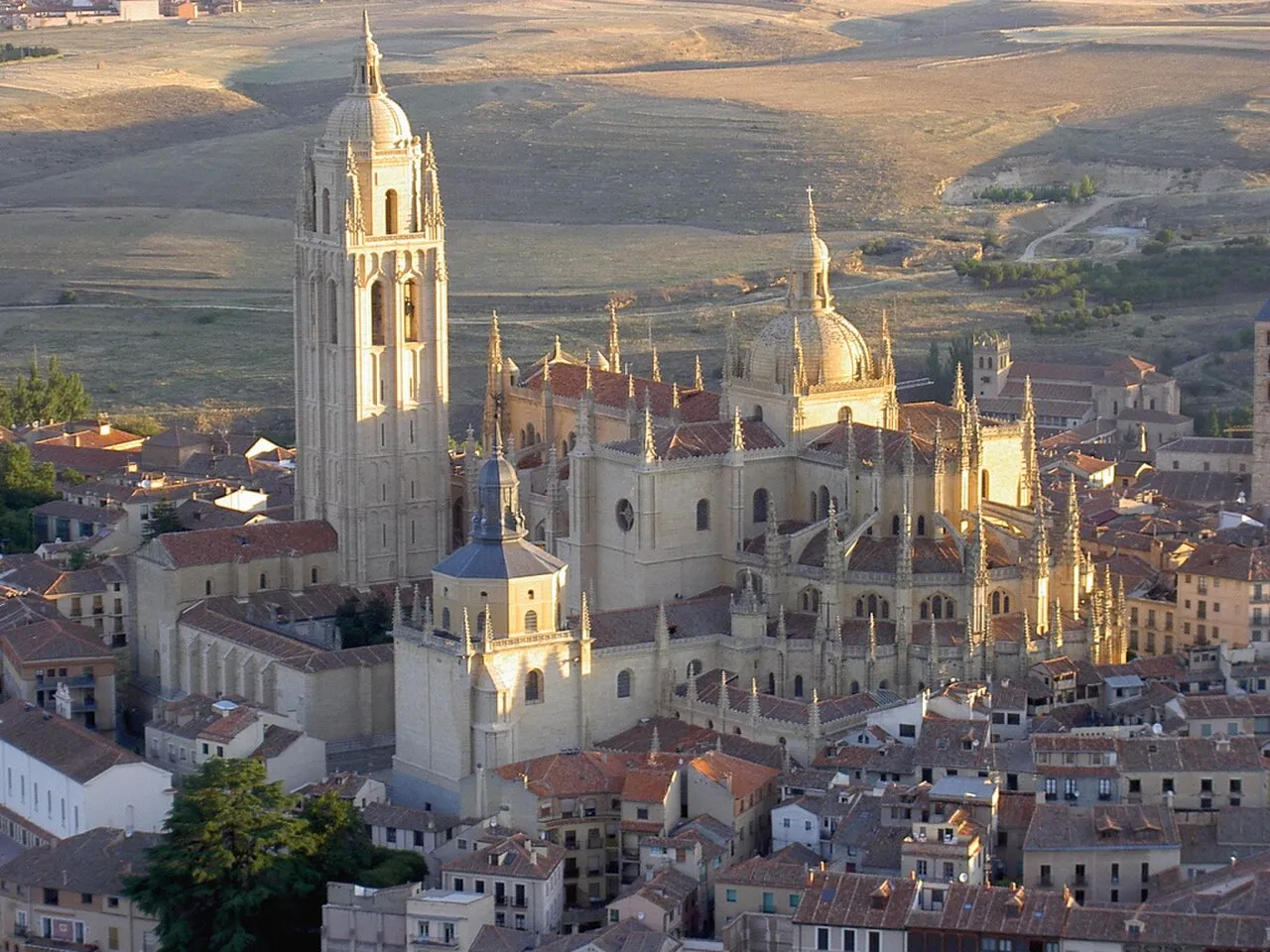
The cathedral presides over the Plaza Mayor and is known as the Lady of Cathedrals for its slender silhouette, all pinnacles and lacework. But what is truly singular is when it was built: work began in 1525, when the rest of Europe was already building in the Renaissance style, and it is the last Gothic cathedral in Spain.
That conservative decision was taken by the Gil de Hontañón family, father and son, the last great masters of the Gothic. Nor was the site an accident: the previous cathedral stood next to the Alcázar and was destroyed in 1520, when the comuneros used it as a parapet from which to attack the castle.
Inside, three naves with eighteen chapels and a cloister that is older than the church itself: it is the cloister of the old cathedral, dismantled piece by piece and rebuilt here with the same stones. Allow forty minutes.
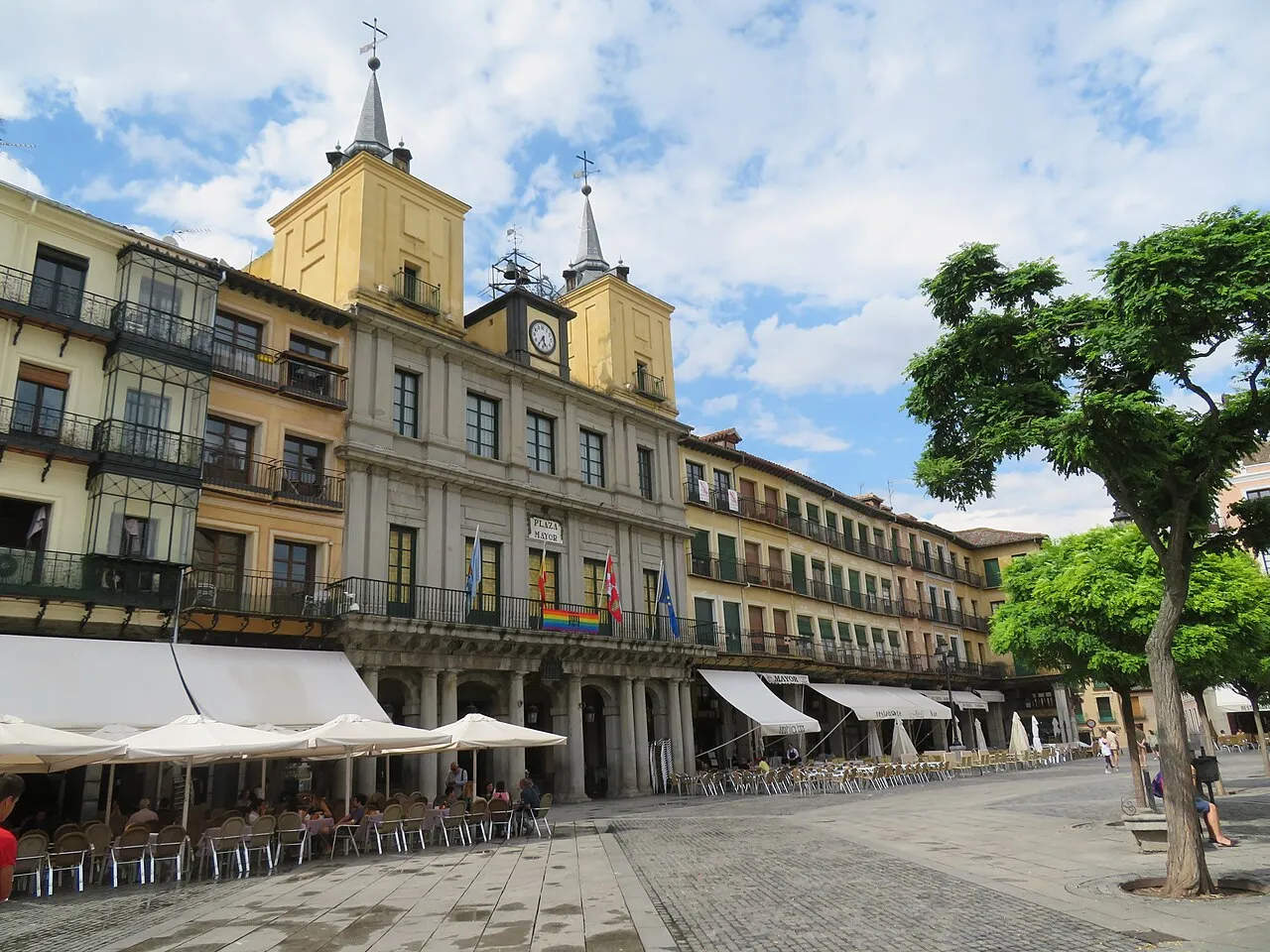
The Plaza Mayor has arcades, terraces and the town hall, and it is the best place to stop and eat. The classic suckling pig roasting houses are here and around the aqueduct, and it is worth booking at weekends.
Its tower originally ended in one of the tallest wooden spires in Spain, until lightning set it on fire in 1614 and it was rebuilt in stone, slightly lower. For generations the bell-ringer lived up there with his family, and they did not move out until well into the twentieth century.
The city's drawing room, with arcades, terraces, the town hall and the Juan Bravo theatre. Isabella the Catholic was proclaimed queen of Castile here in 1474, after leaving the Alcázar. It is the best midday stop and the point from which the rest of the day is organised.
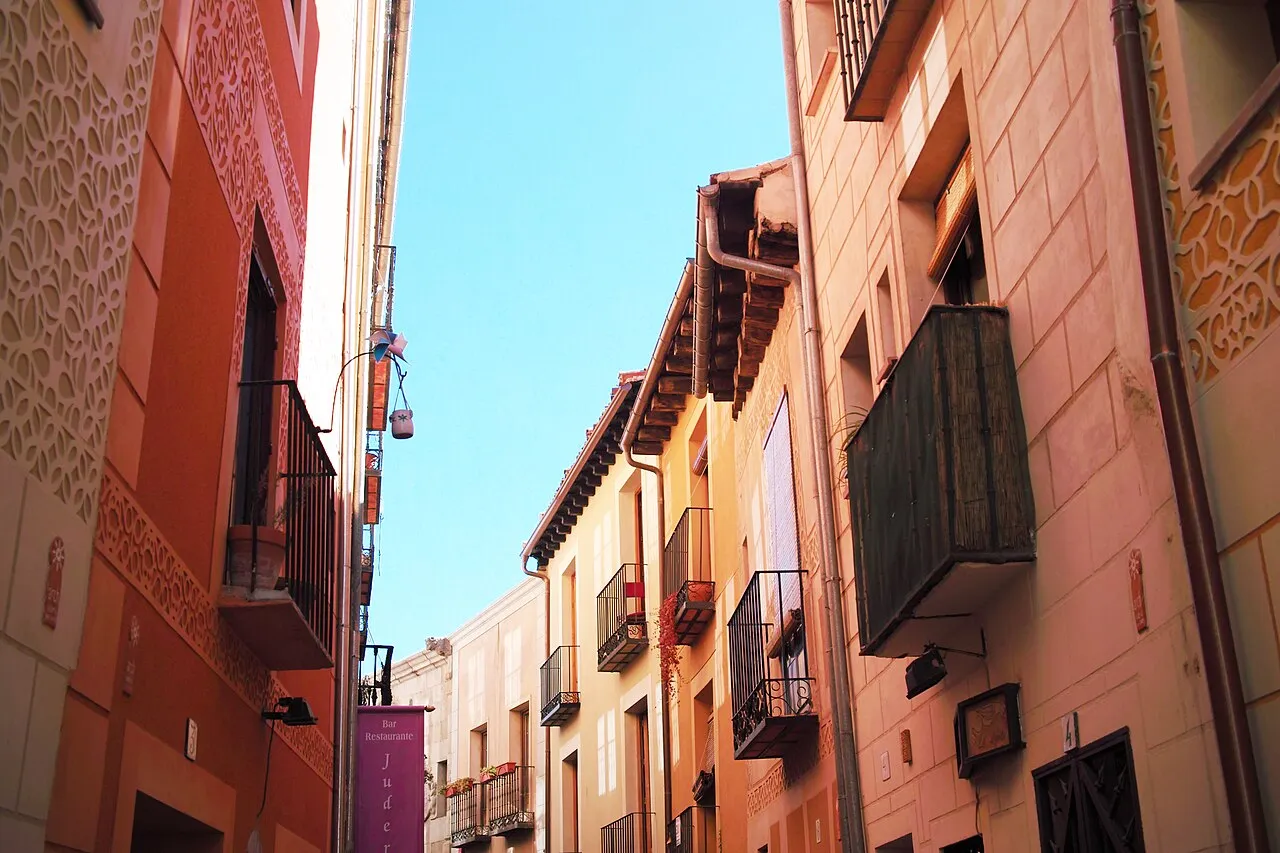
Go down from the square towards the south and enter the Jewish Quarter, one of the most important Jewish neighbourhoods Castile ever had. The medieval street pattern is intact: narrow, broken streets dropping towards the wall, with a silence that is startling two minutes from the bustle.
Abraham Seneor came from here: chief rabbi of Castile and treasurer to the Catholic Monarchs, one of the most powerful men in the kingdom. Everything broke in 1492, with the edict of expulsion, and the quarter emptied at a stroke. The Great Synagogue is today the church of Corpus Christi and preserves its original structure beneath that function.
Go out through the Puerta de San Andrés and look out over the Clamores valley: on the slope opposite is the Jewish cemetery, with anthropomorphic graves cut into the rock and plainly visible. It is the most eloquent point of the whole route and almost nobody goes down.
Finish at the Alcázar, at the end of the spur, where the two rivers meet and the ground falls sheer away on three sides. Isabella the Catholic left from here the day she went to be proclaimed queen, in 1474. And bear in mind that what you see is in good part reconstruction: a fire devoured it in 1862.
The Centro Didáctico de la Judería occupies what was Abraham Seneor's house and serves as an introduction before walking the quarter: it is small, cheap and very useful. Go late in the afternoon, when the quarter is empty and the light drops over the Clamores valley.
The Throne Room, the Hall of Kings with its frieze of Castilian monarchs, the Armoury and the Museo del Real Colegio de Artillería. The climb up the Torre de Juan II is paid separately and is some hundred and fifty steps of narrow spiral, with the valley and the sierra from the top.
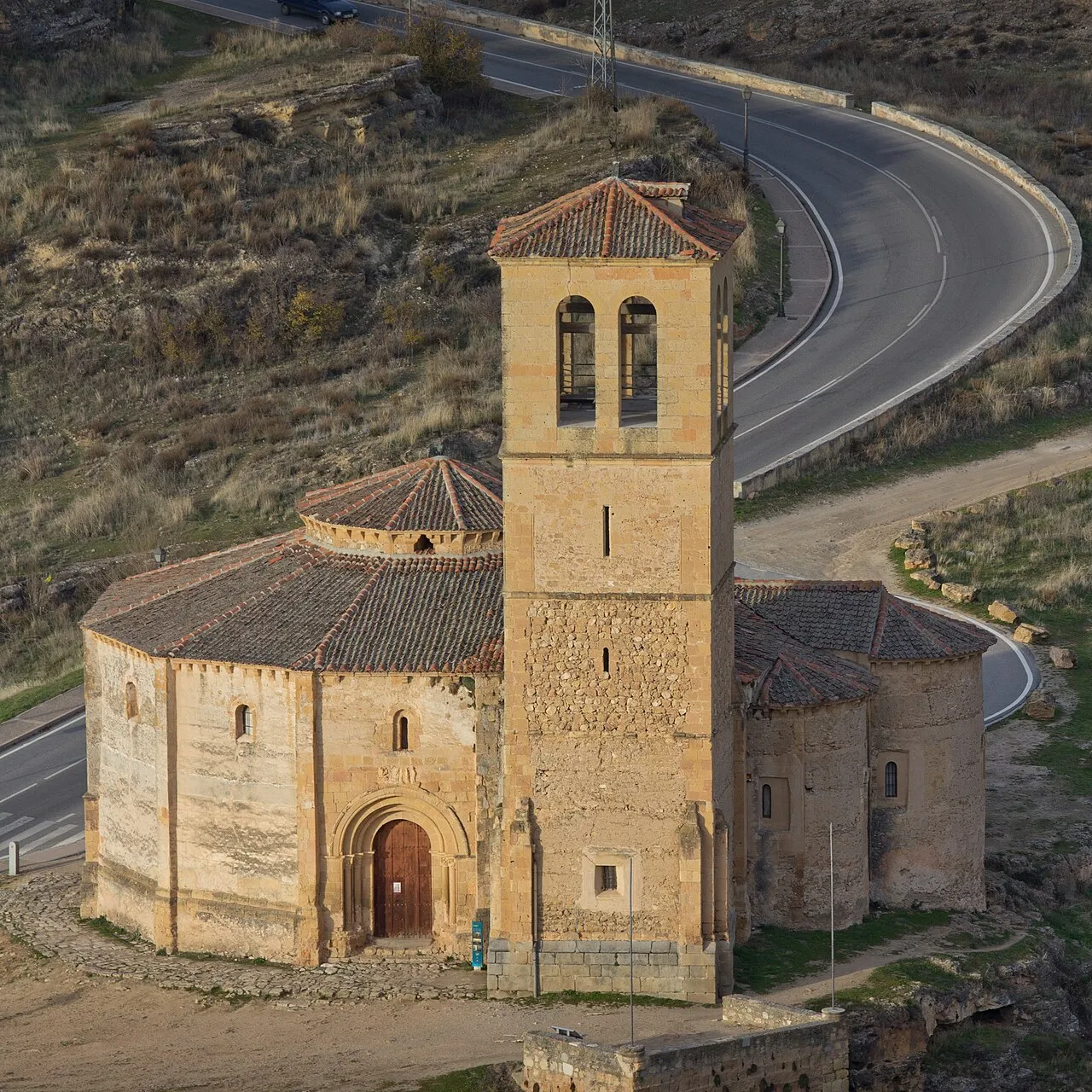
Twenty minutes downhill from the Alcázar, in the valley. A twelve-sided polygon raised around 1208 to reproduce the Holy Sepulchre in Jerusalem, with a two-storey aedicule in the centre. Reduced opening hours and closed on Mondays: check before you walk down.
Yes, with room to spare. The old town is a narrow spur you can walk end to end in twenty minutes, and everything essential sits on that axis: aqueduct, cathedral, Jewish Quarter and Alcázar. What usually gets left out is going down into the Eresma valley for the Vera Cruz and the view of the castle from below, which needs another hour and a half.
How do you get there from Madrid?
By high-speed train from Chamartín in under half an hour, although the station is on the outskirts and you have to take a city bus into the centre. By bus from Moncloa it takes a little over an hour but you arrive straight in the centre. It is the most convenient day trip from Madrid.
What is the best order for seeing Segovia?
East to west, following the natural axis: aqueduct at the Azoguejo, climb into the old town, cathedral and Plaza Mayor at midday, Jewish Quarter in the afternoon and the Alcázar at the end. That way you always walk in the same direction, eat at the midpoint and finish at the far end with the best light.
Is it worth going down into the Eresma valley?
Very much so, and it is what separates a good visit from an excellent one. It is twenty minutes downhill from the Alcázar, passing the monastery of El Parral, as far as the church of the Vera Cruz. From there the castle appears as a stone prow on the rock, which is the image almost nobody takes home. The way back is all uphill.
Where do you eat the best suckling pig?
The classic asadores are around the aqueduct and on the Plaza Mayor, and several have been roasting in wood-fired ovens for generations. It is worth booking at weekends. Besides the suckling pig, the judiones de La Granja are worth trying and, for pudding, ponche segoviano.
Do you need to book tickets?
For the Alcázar it is not usually essential except on public holidays and long weekends, although buying online pays off to avoid the queue. For the climb up the cathedral tower you do, because it is a guided visit with very few places and limited times. The aqueduct and the Jewish Quarter are free and need nothing.
Practical information
Getting thereHigh-speed train from Madrid-Chamartín in under half an hour; bus from Moncloa in a little over an hour.
Getting aroundAll pedestrian. From the aqueduct to the Alcázar is twenty minutes, always uphill.
FreeThe aqueduct, the Jewish Quarter and the viewpoints over the Clamores valley.
Best timeDawn or dusk at the aqueduct: the raking light picks out the dry joints.
EatingRoast suckling pig at the asadores on the Plaza Mayor and by the aqueduct. Book at weekends.
When to goSpring and autumn. It sits above a thousand metres: winter with snow, summer above 35 degrees.
On the map
🎧 With Viavoy
Walk Segovia and listen at your own pace
Download Viavoy and walk Segovia offline, whenever you like.
from 3,99 €· one-off payment
City Pass · 9,99 €3 days, all the tours in Segovia