The Alcázar of Segovia: the castle shaped like a ship's prow
What is medieval and what was rebuilt after the fire of 1862, what to see inside and where to take the view that has travelled the world. With the climb up the tower.
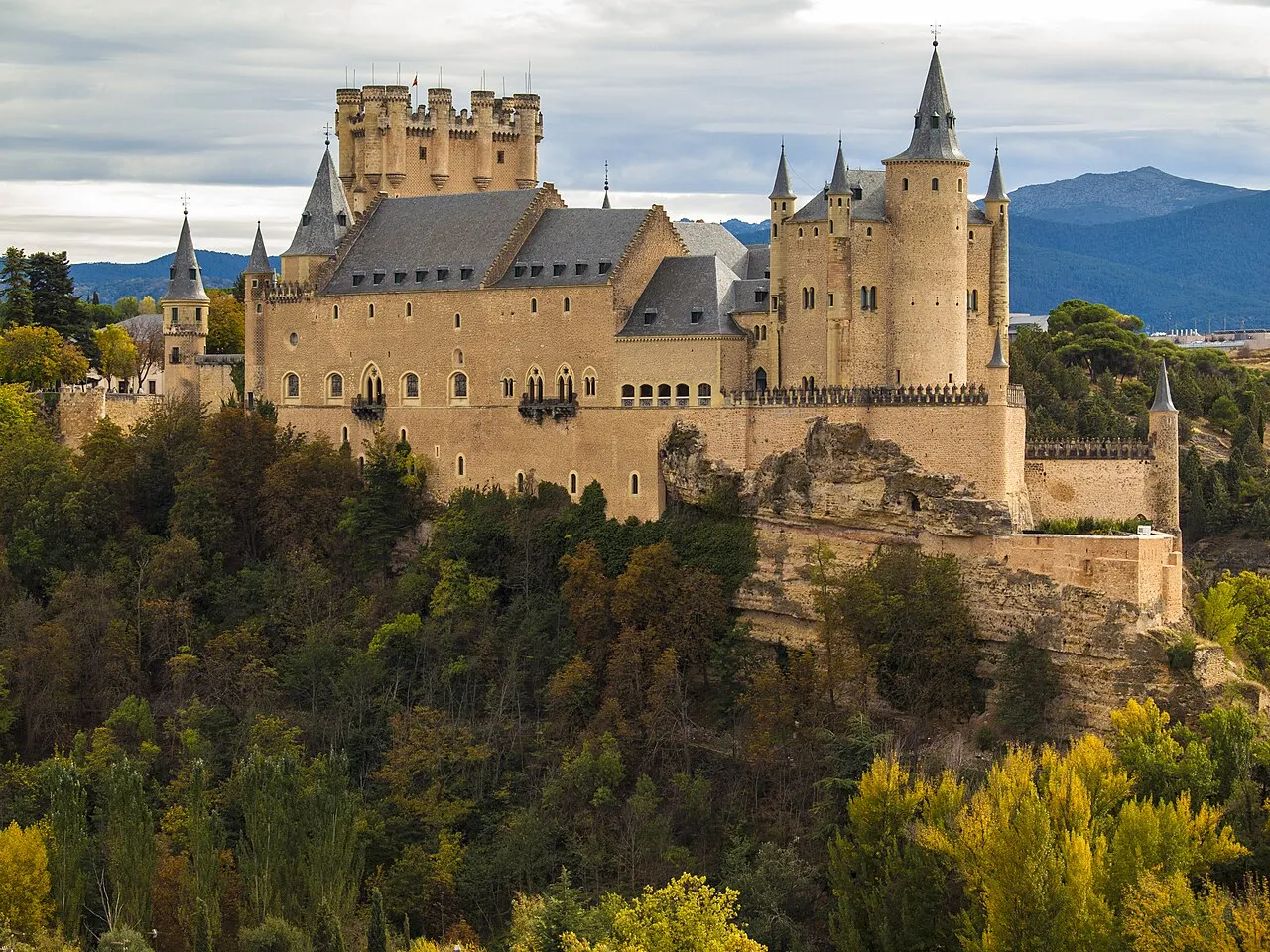
It is probably the most reproduced Spanish castle in the world, and the reason is where it sits: driven into the tip of a rocky spur where two rivers meet, with a sheer drop on three sides. From the valley it looks like the prow of a stone ship about to sail. What is worth knowing before you go in is that much of that fairy-tale outline is less than two centuries old.
The classic view is not taken from the castle but from below, in the Eresma valley, on the way down to the church of the Vera Cruz. It is a twenty-minute descent, and almost no day visitor makes it.
From fortress to palace, and on to military academy
A thousand years of uses laid one over another.
There has been a fortification here since Roman and Muslim times, for a reason you can see at a glance: the spur between the Eresma and the Clamores cannot be taken from three sides, and only one has to be defended. No defensive position in Castile is quite so obvious.
The Castilian kings turned it into a residence as well as a stronghold. John II raised the slender tower that bears his name, with its turrets projecting from the corners, and successive monarchs added halls, coffered ceilings and Mudéjar decoration.
It was from here that Isabella the Catholic set out on the day she was proclaimed queen of Castile in the main square, in 1474, one of the founding moments of the Spanish monarchy. The castle was then a working royal residence and not a symbol.
Then it lost rank: it was a state prison for two centuries and, from 1764, the Royal Artillery College. That military and academic use, rather than the residential one, fills most of its modern history, and explains why there is a museum of the corps inside.
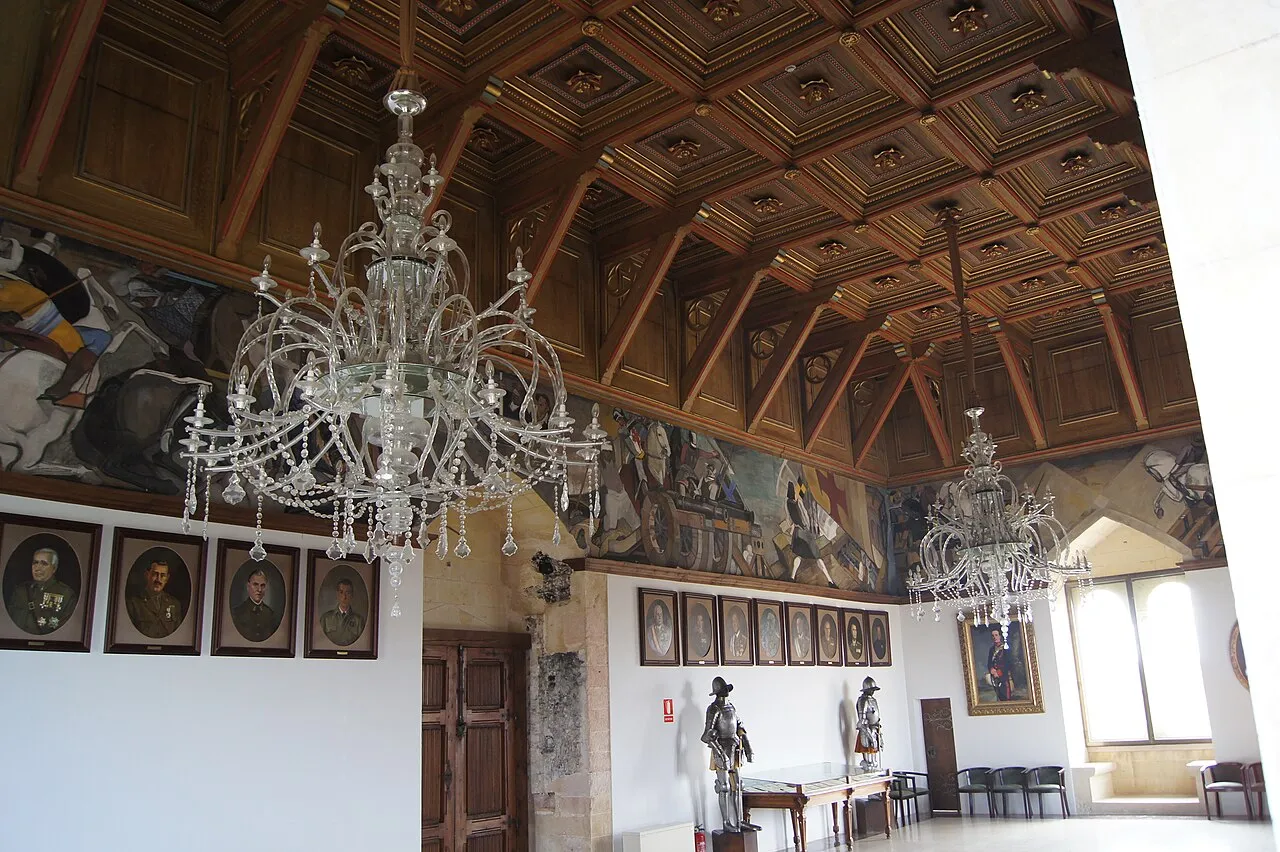
Admission around 9 €, museum included, with the Torre de Juan II charged as an extra. Inside you walk through the Throne Room, the Hall of the Kings with its frieze of Castilian monarchs, the Hall of Arms and the Museum of the Royal Artillery College. Reckon on an hour, an hour and a quarter with the tower.
It gutted the building and destroyed the roofs and interiors. What went up afterwards was not an archaeological restoration but a nineteenth-century Romantic recreation, with those sharp slate spires that are today its image around the world.
The fire of 1862 is the date to keep in mind if you want to look at this building properly. It gutted the interior and destroyed the roofs, and the rebuilding that followed obeyed not archaeological criteria but the Romantic taste of the moment, which was after the fairy-tale castle rather than the real one.
That is where the sharp slate spires come from, the ones that identify the Alcázar in any photograph anywhere. The originals were far more restrained, and the outline that has inspired so many images of fantasy castles is, in large part, a nineteenth-century invention.
The structure, the towers, the walls and the masses are medieval. And some interiors keep, or faithfully reproduce, the original Mudéjar coffered ceilings, above all in the Hall of the Kings, with its frieze of statues of the monarchs of Asturias, León and Castile.
Knowing this takes nothing away from the monument, but it changes what you are looking at: not an intact medieval castle but a medieval castle reread by the nineteenth century. And that double layer is, in fact, a good deal more interesting.
The tower, and the view from below
The climb up the Torre de Juan II costs extra and comes to some one hundred and fifty steps of narrow spiral staircase, not for anyone with mobility problems or claustrophobia. From the top you command the valley, the Sierra de Guadarrama behind it and the whole old town with the aqueduct at the far end.
But the view to go after is the opposite one: the castle seen from below. You get it by walking down into the Eresma valley along the path that starts beside the Alcázar, a twenty-minute descent past the monastery of El Parral and the poplar groves along the river.
From there, looking up, the castle stands out against the rock like a stone ship sailing above the valley, and in the last hour of the afternoon it turns golden. It is the image almost no day visitor takes home, because it needs an hour and a half and the way back is all uphill.
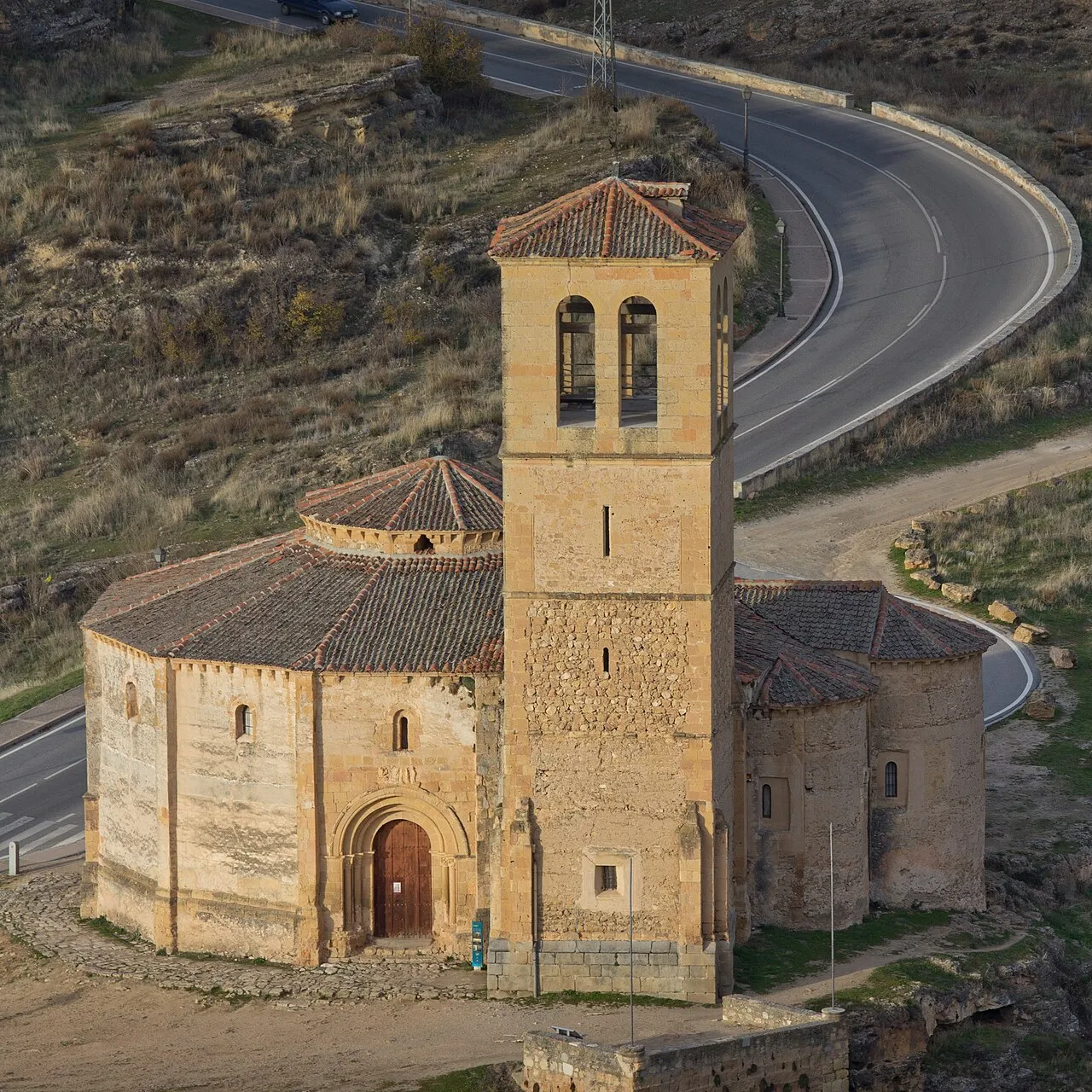
In that same valley stands the church of the Vera Cruz, a twelve-sided polygon built around 1208 to reproduce the shape of the Holy Sepulchre. If you go down, check its opening hours first: they are short and it closes on Mondays.
Twelve sides, almost a circle, with a two-storey aedicule in the centre where, by tradition, a knight kept vigil over his arms before being dubbed. From its tower, the best view of the Alcázar. It was long attributed to the Templars, though the knights of the Holy Sepulchre are the likelier builders today.
The path down passes the monastery of El Parral, founded in the fifteenth century and still home to Hieronymite monks, and the poplar groves along the river. It is the part of Segovia almost no day visitor sets foot in, and the way back is all climb.
It is often said, above all of the Cinderella castle, and the company has never quite confirmed it. What is certain is that its outline of sharp spires belongs to the rebuilding after the fire of 1862, a Romantic recreation that was after precisely the fairy-tale castle.
Which part of the Alcázar is original?
The structure, the towers, the walls and the masses are medieval. What was remade after the fire of 1862 were the roofs and much of the interior, following Romantic rather than archaeological criteria. The slate spires that identify the building the world over belong to that rebuilding.
Is the tower worth climbing?
If mobility, claustrophobia and vertigo are not a problem, yes: some one hundred and fifty steps of narrow spiral staircase, and from the top you command the valley, the sierra and the whole old town with the aqueduct at the far end. It costs extra on top of the general ticket. If time is short, the palace rooms are enough.
Where is the best view of the Alcázar?
In the Eresma valley, twenty minutes down the path that starts beside the castle and passes the monastery of El Parral. From there it appears as a stone prow on the rock, which is the classic image. Also from the viewpoint on the Zamarramala road, reachable by car.
How much time do you need?
An hour for the rooms and the museum, an hour and a quarter with the tower added. If you walk down into the valley for the view from below and the church of the Vera Cruz, add another hour and a half, bearing in mind that the way back is all uphill and that the Vera Cruz keeps short hours.
What is there to see inside?
The Throne Room, the Hall of the Kings with its frieze of statues of the monarchs of Asturias, León and Castile, the Hall of Arms with armour and historic weaponry, several halls with Mudéjar coffered ceilings, and the Museum of the Royal Artillery College, which occupied the building from 1764.
Practical information
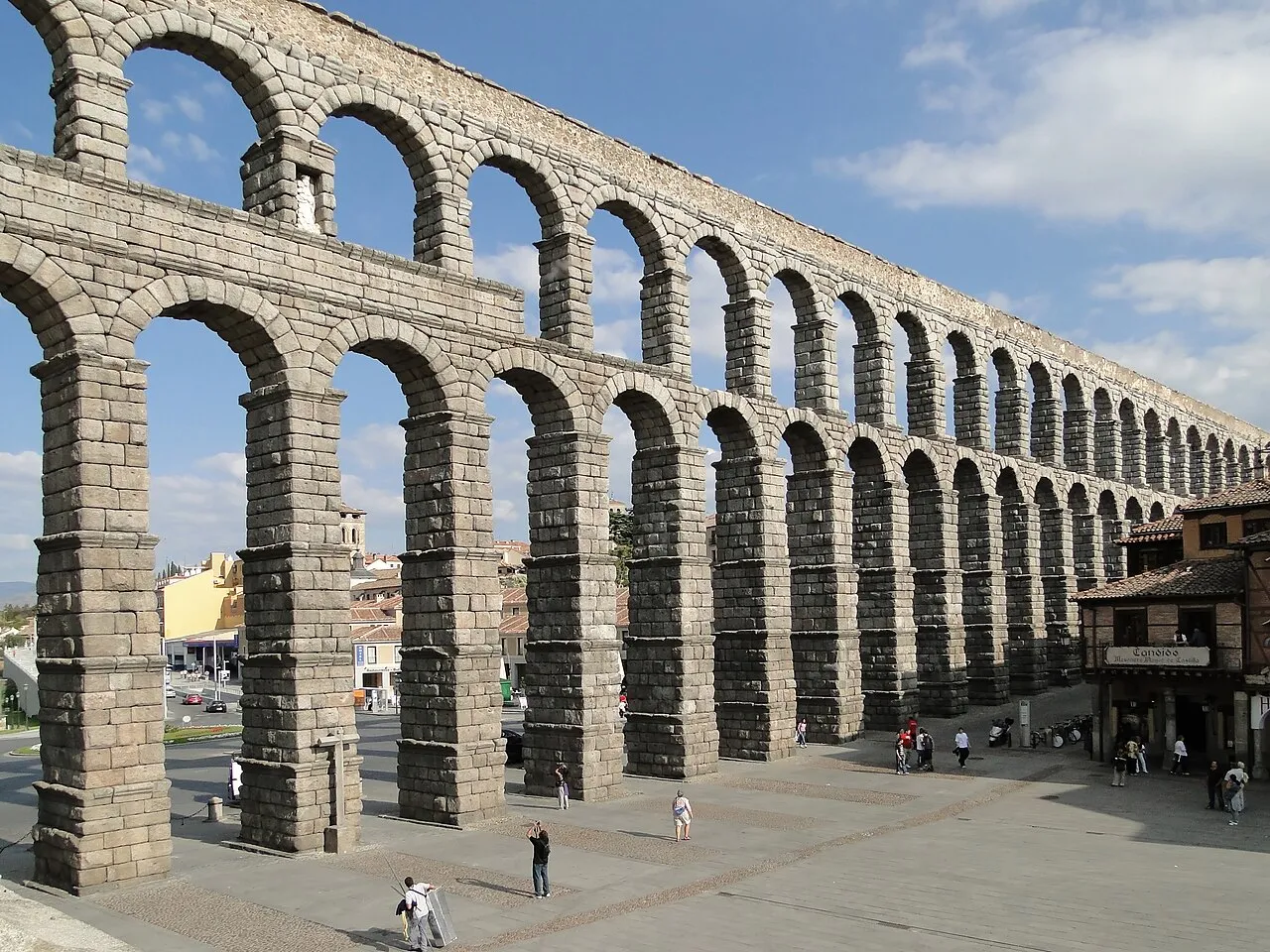
WhereWest end of the old town, 20 minutes on foot from the aqueduct.
TicketsAround 9 € with the museum. The Torre de Juan II costs extra.
DurationAn hour inside, an hour and a quarter with the tower.
The towerSome 150 steps of narrow spiral staircase. Not for everyone.
The viewFrom the Eresma valley, 20 minutes down. The way back is all uphill.
Best timeLate afternoon for the view from below, when the stone turns golden.
On the map
🎧 With Viavoy
Walk Segovia and listen at your own pace
Download Viavoy and walk Segovia offline, whenever you like.
from 3,99 €· one-off payment
City Pass · 9,99 €3 days, all the tours in Segovia