Pedregalejo and El Palo: the Málaga that looks out to sea
A wooden promenade over a necklace of little coves, fishermen's houses door to door with English villas, and the boats with an eye painted on the bow. The afternoon almost no visitor does.
Twenty minutes by bus from the centre another city begins. The eastern coast of Málaga was for centuries a succession of fishing villages that had nothing to do with the capital, and it still shows: low houses, boats hauled up on the sand, merenderos with three generations behind them and a rhythm that is nothing like the one on Larios. It is the afternoon most visitors miss.
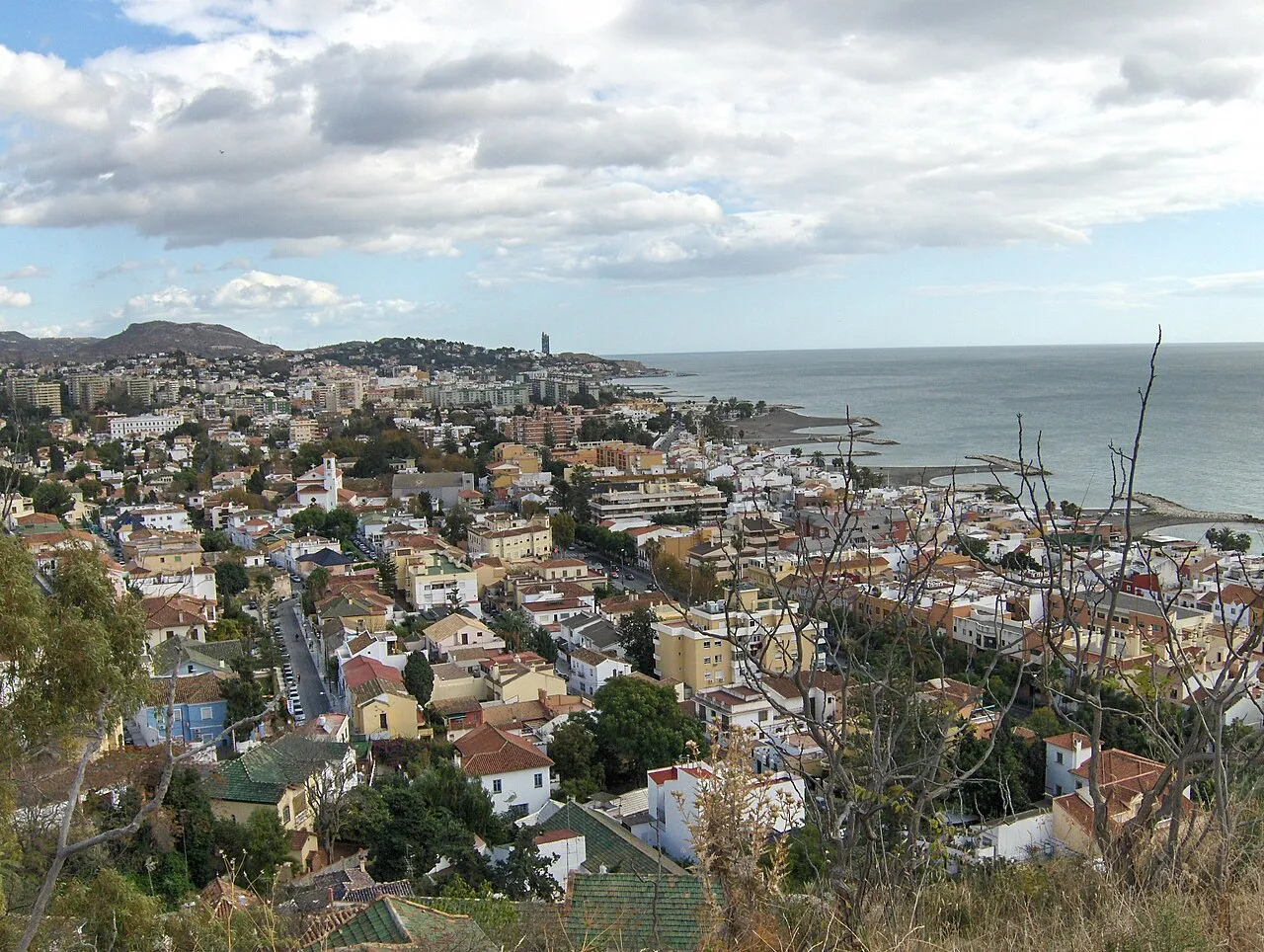
Walk along the street parallel to the promenade, not only along the promenade. Only from up there do you see the contrast between the fisherman's house and the little mansion with palm trees, one beside the other.
Pedregalejo: from stony ground to bathing resort
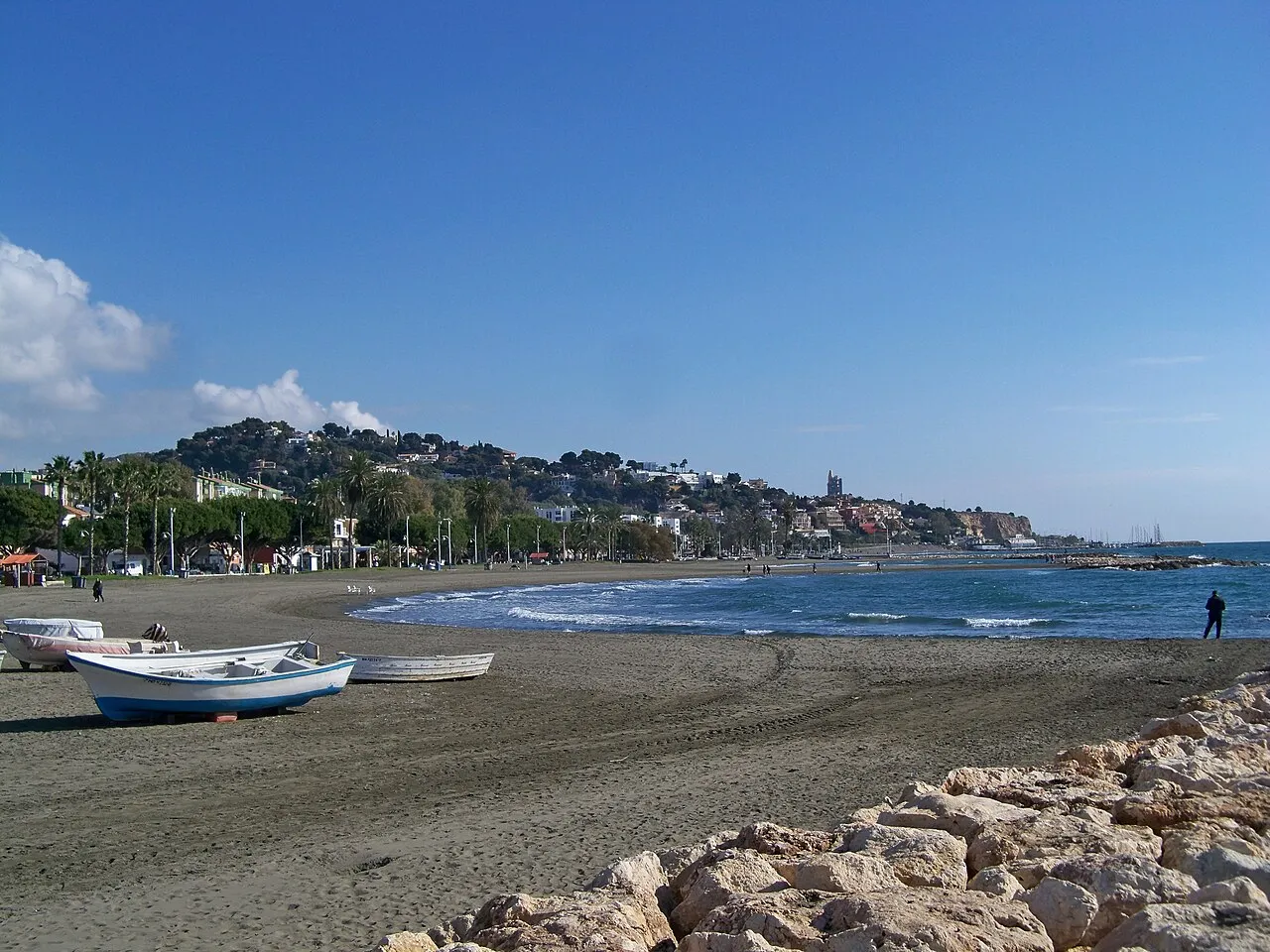
A necklace of little beaches separated by groynes.
The name does not lie: Pedregalejo comes from pedregal, from stone. Little more than a century ago this was neither a neighbourhood nor a holiday place, it was the end of the countryside, a place of market gardens and poor fishermen on the outskirts, with an unimproved coast and almost no sand.
What transformed it was a medical fashion. In the nineteenth century sea bathing was practically a prescription: doctors prescribed it for the nerves, the skin or the lungs, and people came for their health rather than for pleasure, with separate hours for men and women and a good deal of modesty involved.
The technical trigger was the tram. At the beginning of the twentieth century a line linked the centre with El Palo skirting this whole coast, and all at once the little coves were a short ride from home: you could spend the day bathing and go back to sleep in the city. That journey turned the stony ground into the private bathing resort of the Málaga middle class.
The stone groynes that split the coast into hundred-metre beaches were built to slow the swell and hold the sand. That necklace shape is artificial, and it is what means there is never a sense of overcrowding here even when it is full in summer.
The oldest promenade in the city, boarded in wood and right beside the water. You walk it end to end in twenty minutes, or forty if you stop, which is what you should do. At dusk, with the sun going down behind you and the terraces filling up, it is one of the best plans in Málaga.
Frontages of three or four metres and houses that stretch a long way back inwards, with a central patio to bring in light and air. The shape answers to how land was taxed, by the metres it had facing the street. Whitewashed for hygiene and insulation, not for looks.
A bathing resort from 1918 with enormous eucalyptus trees that almost touch the water, today half abandoned and half in use as a terrace. It is one of those places in elegant ruin that the city cannot quite decide what to do with. At dusk, with the light coming through the trees, there is nothing like it in Málaga.
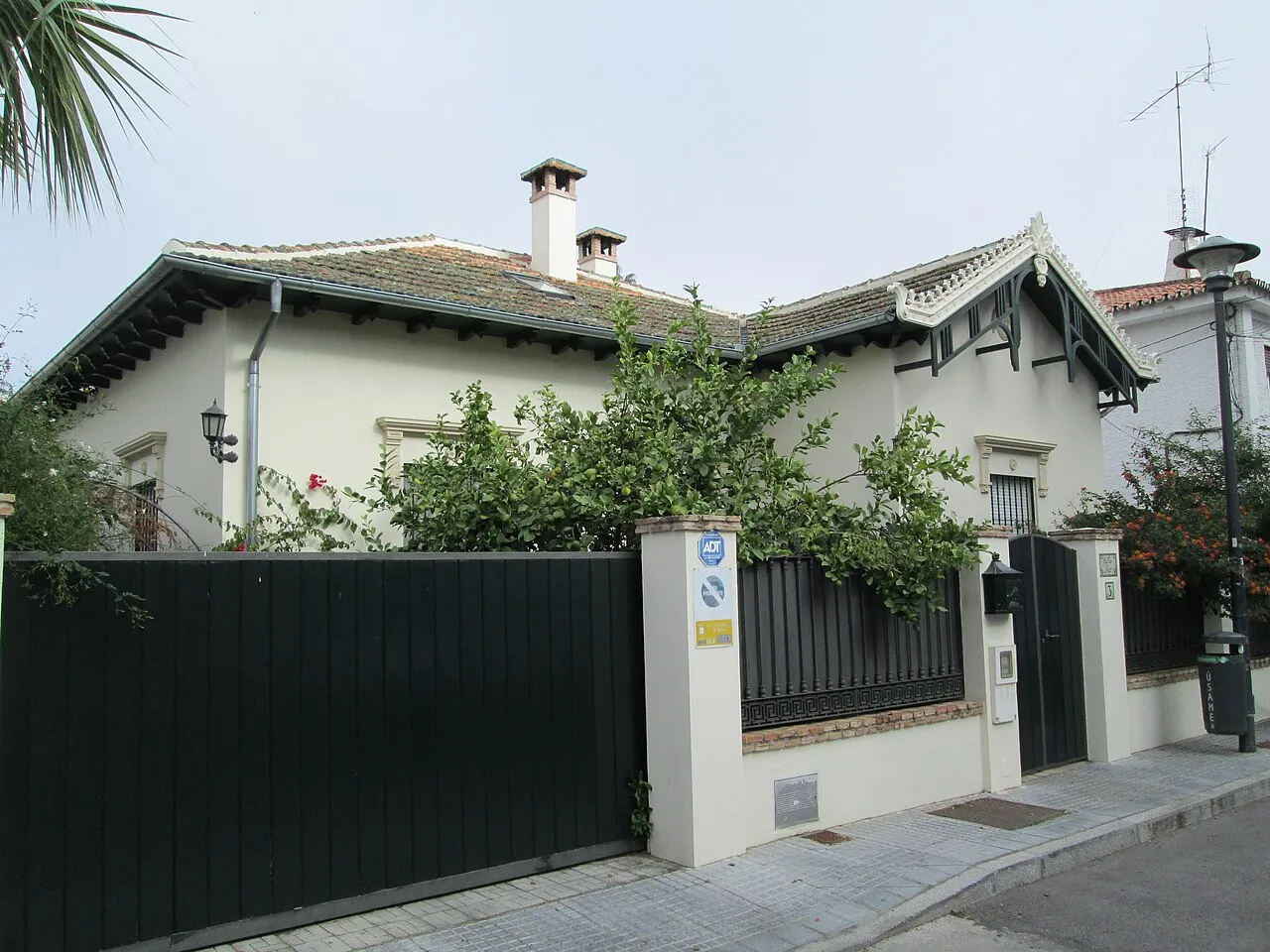
The detail that makes this walk different is one street up from the water. Among the fishermen's houses, whitewashed and humble, every few numbers there slip in villas from another world: glazed miradores, galleries, turrets, a garden with palm trees.
They are the old summer houses of the middle class, and their northern air has an explanation. Málaga in the nineteenth century was a rich and very cosmopolitan port, with colonies of merchants and industrialists arrived from abroad — families in wine, iron and sugar, many of them British or from northern Europe — who brought their way of building with them.
Walk shifting your gaze: fisherman's house, villa with palm trees, fisherman's house. The sequence tells the whole history of the neighbourhood without a single sign: those who fished and those who came to bathe, living door to door.
Between the two stands the parish church, the Corpus Christi, which looks more like the fishermen's houses than like the churches in the centre: whitewashed façade, a single nave and a simple bell tower, with no frills. It was built and kept up by people who lived from fishing, and it shows.
The parish church of the fishing neighbourhood, simple and unpretentious, still used for exactly what it was built for. Every 16 July they bring out the Virgen del Carmen, put her on a decorated boat and carry her over the water among flares: the great festival of this coast.
Carrying on east the neighbourhood changes again. El Palo is more working-class, less tidied up and more authentic: for centuries it was a fishing village separate from Málaga, with a life of its own and its jábegas going out at dawn, and even today boats go out to fish from this same sand.
Go up to the beached vessels and look at the bow. Almost all of them carry an eye painted on each side, an extremely old motif that can be traced back to the Phoenician vessels of the Mediterranean: it was there so the boat could “see” its course and ward off harm. The Phoenicians founded Málaga, and that detail is the oldest thing you can touch in the city without going into a museum.
The jábega is not only the boat: it gave its name to a fishing method in which two teams hauled the ropes of the net from the shore, with women and children on the line. It was work for a whole neighbourhood. Today it survives as a sport, and in summer there are rowing regattas with these very vessels, watched from the sand.
And this is where you eat. The merenderos follow one after another along the beach, some with more than a century of family history, and the fish may have been in the water that same morning. That is the real difference from any chiringuito in the centre.
Dark sand, brightly coloured boats hauled up, nets drying and the smell of espeto arriving from several merenderos at once. The most seafaring neighbourhood the city has left, and the place where Málaga still looks out to sea just as it did three thousand years ago.
Family establishments, many with three generations behind them, where the espeto is made on the sand over an old boat filled with sand with olive wood burning in it. They open at midday and several close one day during the week. You eat with your fingers and there is no need to ask for bread.
How do you get to Pedregalejo and El Palo from the centre of Málaga?
On city bus 11 from the Alameda, between fifteen and twenty minutes depending on the stretch. You can also go by bicycle along the lane that skirts the whole coast from La Malagueta, or on foot along the seafront promenade if you fancy a good hour beside the sea. You do not need a car.
What is the difference between Pedregalejo and El Palo?
Pedregalejo was the bathing resort of the Málaga middle class and it keeps the summer villas next to the fishermen's houses, with a boarded promenade and little coves separated by groynes. El Palo is more working-class and less tidied up, with the boats hauled up on the sand and the merenderos with more pedigree. They run one after the other, towards the east.
What is a jábega and why do they have an eye painted on them?
The jábega is the traditional rowing boat of this coast, with a narrow hull and a raised bow, designed to go out and come in straight from the beach when there was no port. The eye painted on the bow is of Phoenician origin: it was there so the vessel could “see” its course and ward off harm. Today they are also used in rowing regattas in summer.
When do you eat espetos?
The local rule is the one about the months without an R: from May to August, when the sardine is at its peak of fat. In the months with an R it is leaner. They are made threaded onto a cane planted in the sand next to an old boat filled with sand where olive wood burns, and grilled by the side heat, never on top of the embers.
Is it worth it if I only have two days in Málaga?
Yes, and it pays to set aside the whole afternoon of the second day for it. It is the part of the city that least resembles what you expect of Málaga and the one most people miss. It also works very well as a closing act: beach, promenade and a fish dinner twenty minutes from the centre.
What are Los Baños del Carmen?
A bathing resort opened in 1918 between La Malagueta and Pedregalejo, with enormous eucalyptus trees that almost touch the water. Today it is halfway between ruin and use as a terrace, and the city has spent years not deciding what to do with it. At dusk, with the light filtering through the trees, it is one of the loveliest corners on the coast.
Practical information
Getting thereCity bus 11 from the Alameda, about 15-20 minutes. Also by bicycle along the coastal lane.
DurationA whole afternoon. It is not a quick visit.
The orderPedregalejo first coming from the city, El Palo afterwards. Finish with dinner there.
EatingSardine espeto from May to August. The merenderos open at midday.
Best timeDusk, with the sun going down behind the promenade.
Festival16 July: sea procession of the Virgen del Carmen at dusk.
On the map
🎧 With Viavoy
Walk Málaga and listen at your own pace
Download Viavoy and walk Málaga offline, whenever you like.