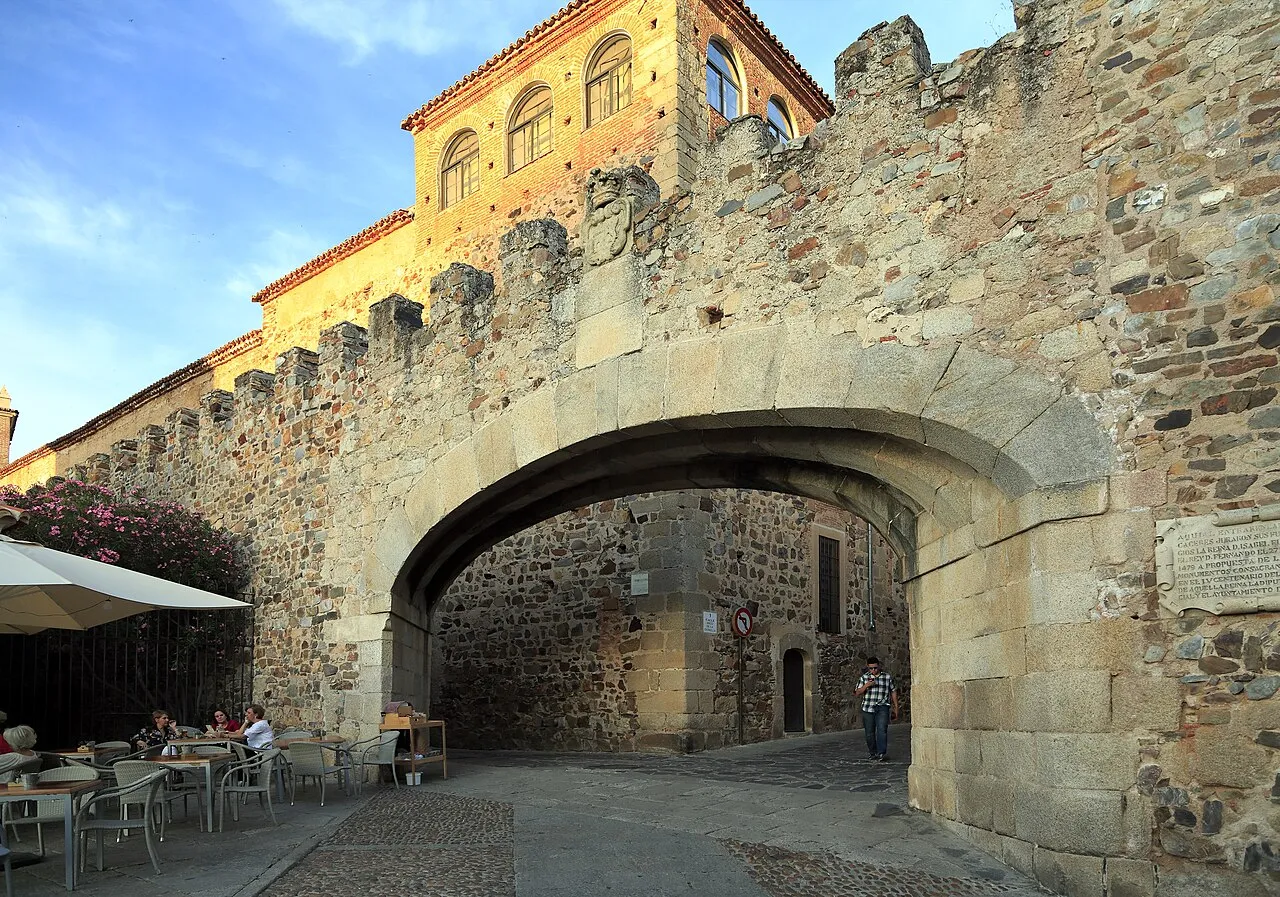
The monumental city of Cáceres: why it survived intact
An Almohad wall the Christians did not pull down, noble families who killed each other over a tower, and an economic decline that turned out to be the best possible conservation policy.
There are cities that preserve an old quarter and cities that preserve a whole town. Cáceres is one of the second kind: inside its walls lie ten hectares of medieval and Renaissance fabric with no advertising, no overhead cabling and almost no residents. That this has reached us today is not the fruit of a good heritage policy, but of a chain of decisions and accidents worth telling in order.
The monumental city survived, in good part, because Cáceres stopped being important. Money destroys historic centres far more efficiently than wars do.
The Almohads raise the wall, the Christians inherit it
The circuit you see today is Almohad, twelfth century, built in rammed earth: soil compacted with lime inside timber formwork, layer by layer. That is why the towers show regular horizontal bands, which are the seams between one lift and the next, and why the material has that earthy colour so unlike ashlar.
Rammed earth was cheap, quick and needed no quarry, which made it possible to fortify a large territory in a hurry. Its weak point is water, so it carried a lime render that had to be maintained. That it is still standing eight hundred years later says a good deal about how well they knew their trade.
When the city was finally taken in 1229, the Christian nobility who moved inside did something decisive: they did not demolish the walls. They reused them, and built their fortified houses leaning against them, absorbing towers of the Muslim circuit into their palaces. That is why Cáceres preserves an urban Almohad circuit that is practically complete, something exceptional on the peninsula.
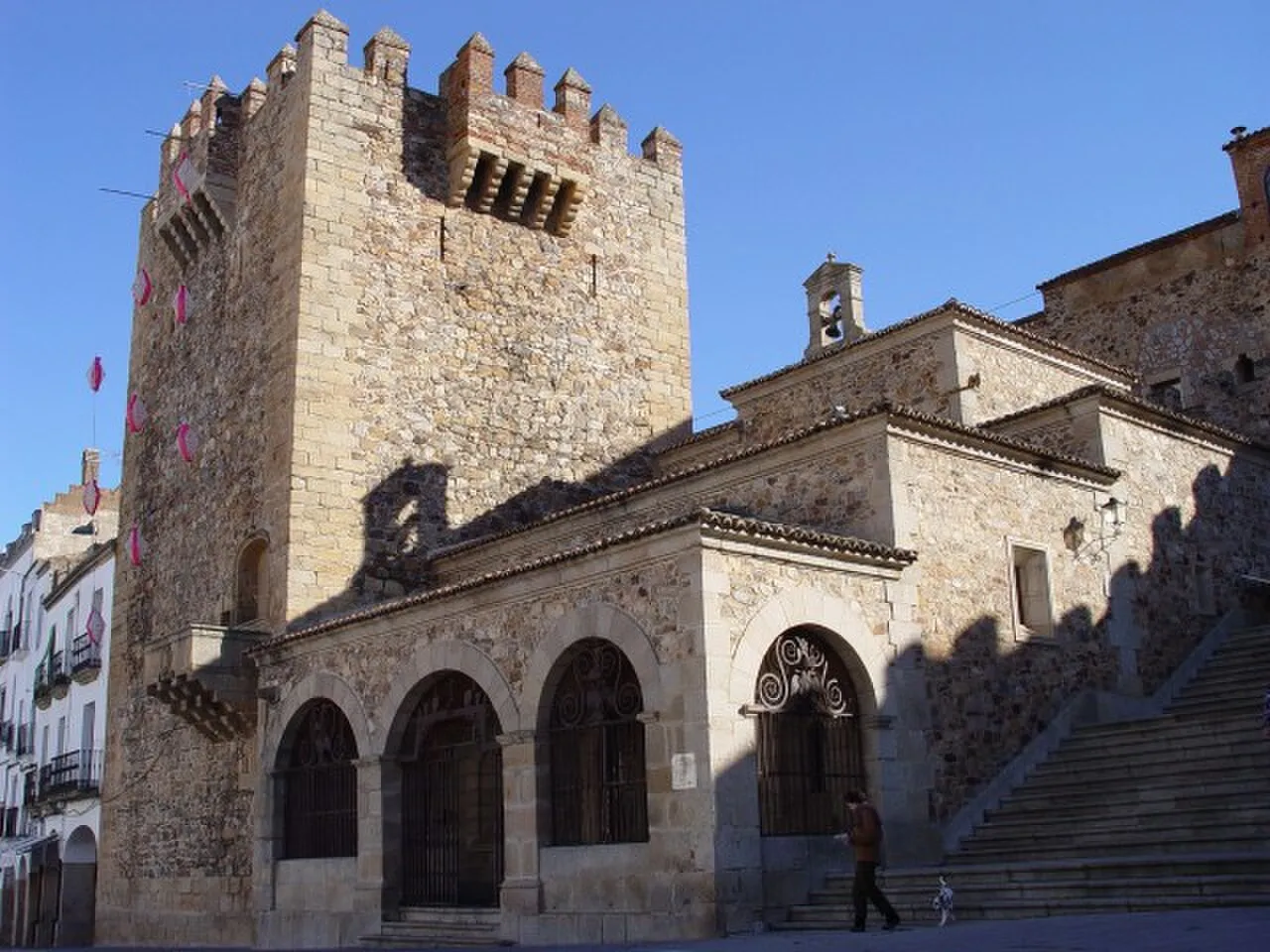
The finest example of Almohad rammed earth in the city, and the tallest. Its base, by contrast, is reused Roman ashlar from Norba Caesarina: the tower literally rests on the earlier city. You can climb it, and inside there is an interpretation centre for the walled circuit.
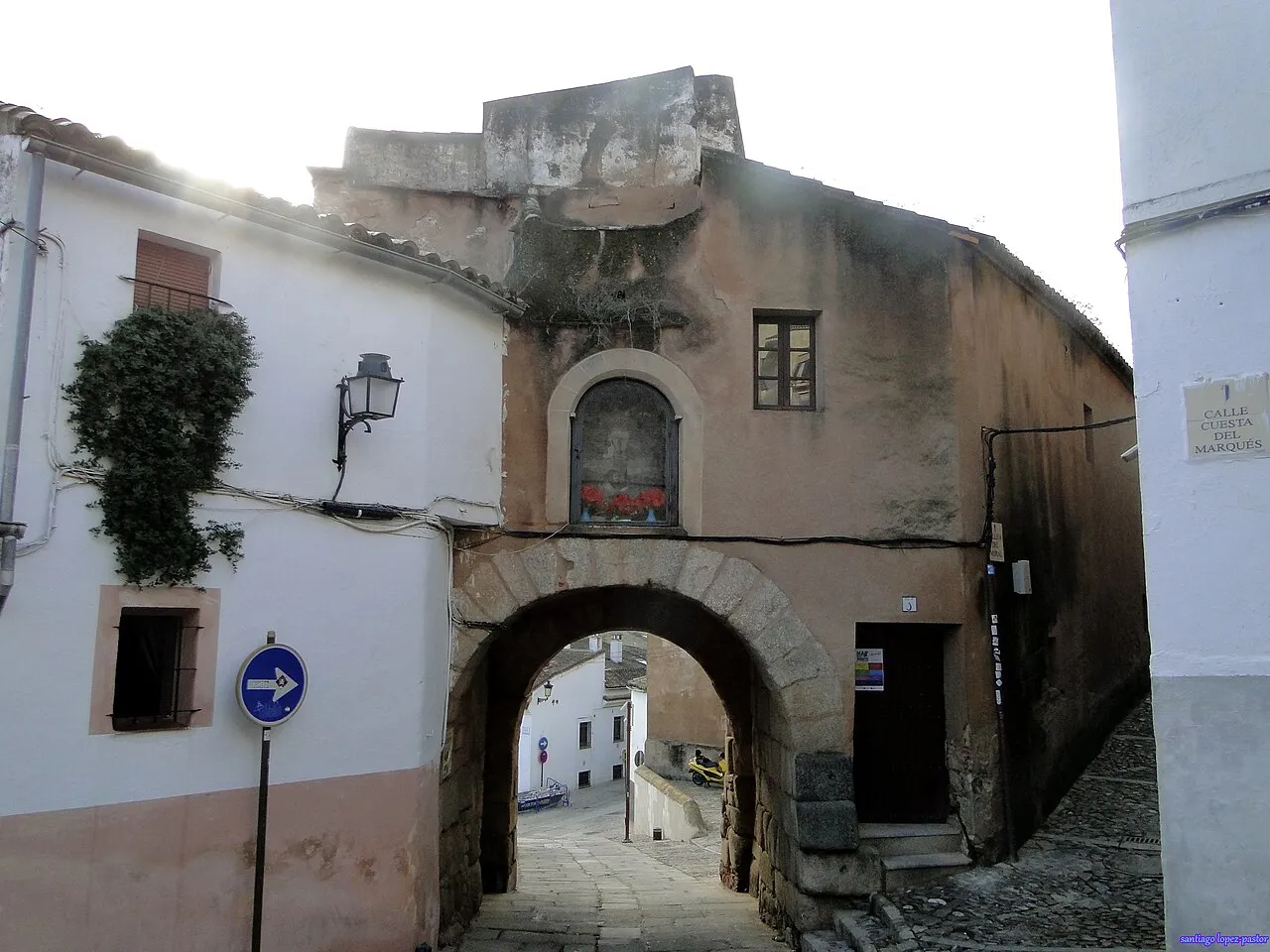
Before the Almohads there were Romans. This first-century gate is all that is left standing of Norba Caesarina, the colony founded around 34 BC. Its giant ashlars, next to the small medieval stonework, let you date two techniques a thousand years apart by eye alone.
The fourteenth and fifteenth centuries here were a permanent civil war between noble factions. The families — Golfines, Ovando, Ulloa, Carvajal, Saavedra — turned their houses into urban fortresses and their towers into instruments of intimidation: more height meant more power, more visual reach and a better position if it came to a fight.
The Catholic Monarchs applied the same measure here as in the rest of Castile: lopping. They ordered the noble towers to be cut down to disarm the competition between families, and that is why so many towers in the complex today end abruptly, sliced off horizontally with no crowning, with a strangely unfinished look that is in fact a political amputation.
The exception is the Torres de las Cigüeñas, which kept their height, and the privilege granted to the Golfín family of displaying their coat of arms on the façade, unique in the whole city. In a society obsessed with precedence, taking the tower from some and giving the coat of arms to another was not administration: it was a message.
The urban result of all that is what you walk through today: narrow streets between almost blind walls of granite ashlar, with few windows and those set fairly high, because every house was designed with the idea of withstanding an assault by the neighbours.
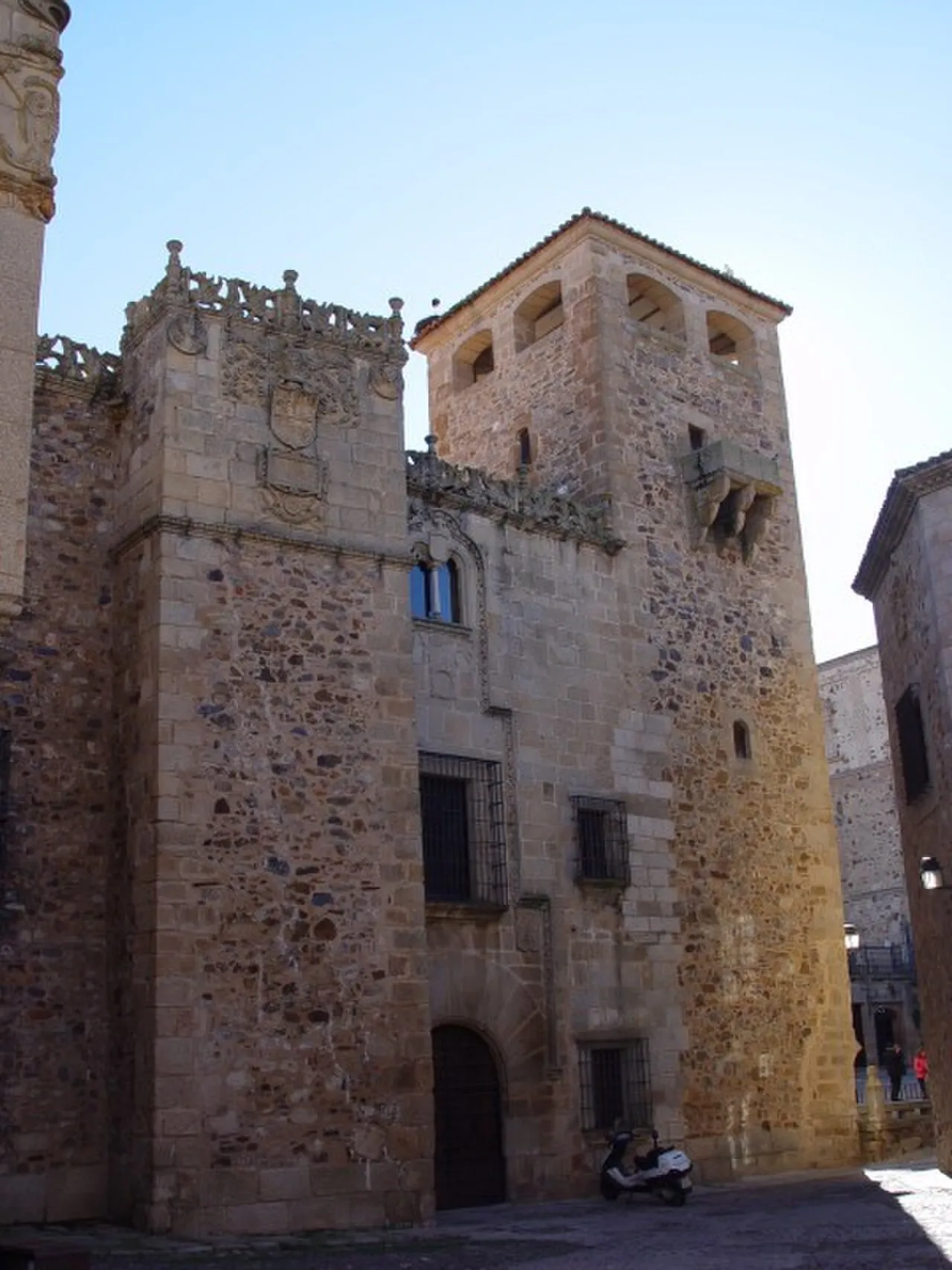
The building that sums up the whole operation: fifteenth-century fortified house at the base, openwork Plateresque cresting on top, and the only coat of arms authorised on a façade in the entire complex. The Catholic Monarchs stayed here. It is also the best interior open to visitors in the city.
And then nothing: the best conservation policy of all
In the sixteenth century the city prospered on money from the Americas — the Extremadura of Pizarro, Cortés and Orellana — and that money turned into Renaissance palaces. It is the last great building layer of the complex: afterwards, Cáceres lost economic and political weight and did not recover it until the twentieth century.
That decline was a stroke of luck for the heritage. There were no mass disentailments to flatten whole blocks, no industrialisation demanding that avenues be driven through, no speculation to justify demolitions. When the city grew again, it grew outwards, leaving the walled quarter untouched.
The twentieth-century councils finished the job with two simple and highly effective decisions: bury the cabling, and ban advertising and modern street furniture inside the walls. That is why today you can photograph any corner without a contemporary element creeping into the frame.
In 1986 UNESCO declared it a World Heritage Site, citing precisely that mixture of influences — Roman, Islamic, northern Gothic and Italian Renaissance — layered into a very small space. And that same fact is what has turned the city into a recurring film and television set.
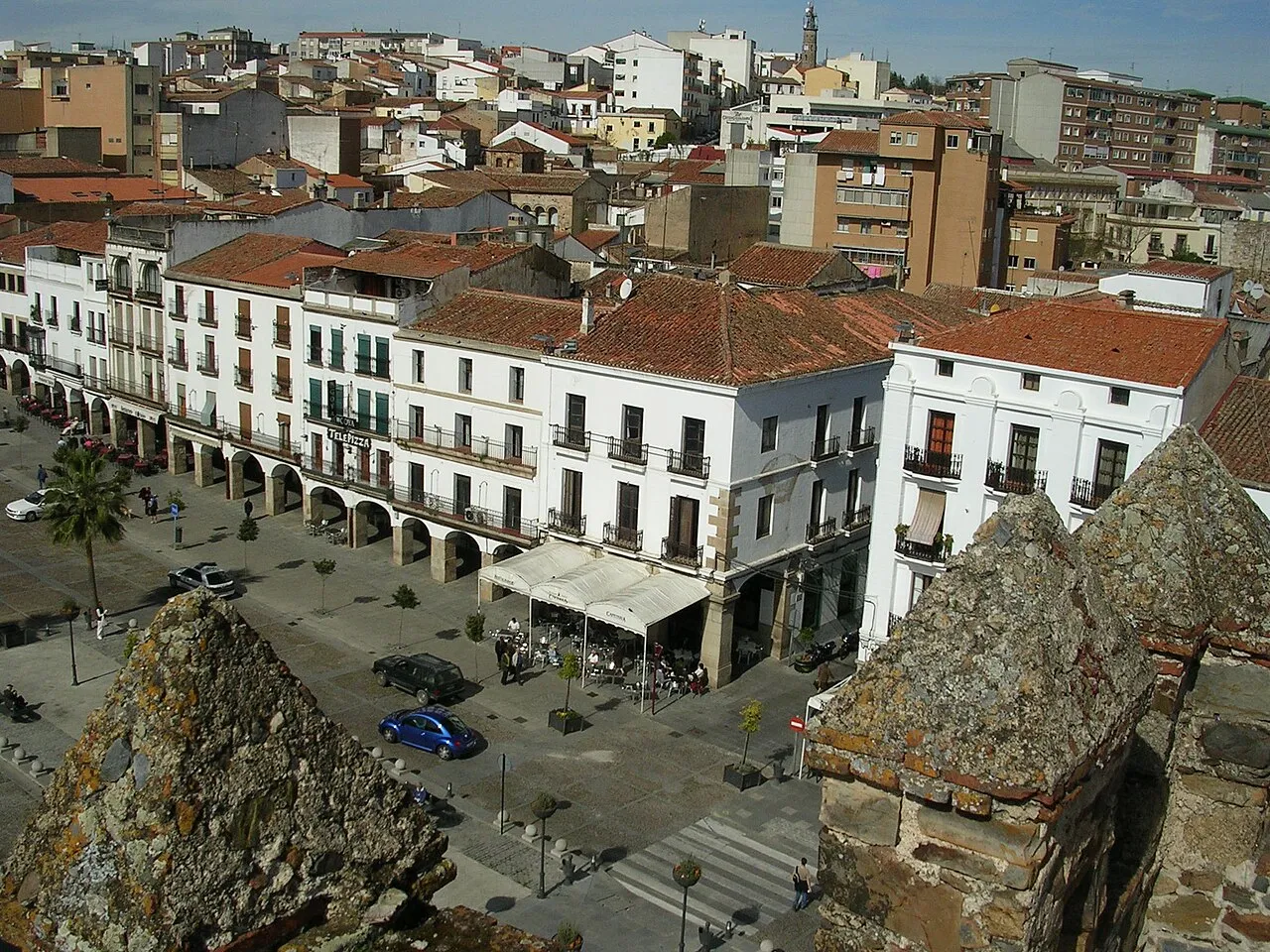
The other side of the story. Everything the noble city would not admit — market, fairs, trade, ordinary people — stayed outside the wall, and that is why the square is where Cáceres lives today. Inside, a stage set was preserved; outside, a city was.
Above all because Cáceres lost economic importance after the sixteenth century and did not regain it until the twentieth. There was no industrialisation demanding that avenues be driven through and no speculation to justify demolitions, and when the city grew it grew outwards. Money destroys historic centres far more efficiently than wars do.
Are the walls of Cáceres Roman or Muslim?
The ones you see are Almohad, twelfth century, built in rammed earth. There was an earlier Roman circuit, of which only the Arco del Cristo survives, and some of its ashlars were reused in the bases of the Almohad towers. After the conquest of 1229 the Christians did not demolish it: they reused it and leaned their fortified houses against it.
Why are some towers cut off at the top?
Because the Catholic Monarchs ordered them lopped. The noble families of Cáceres had been feuding for centuries and used their towers as an instrument of power and as a military position inside the city; cutting them down was the way to disarm that competition. Few were spared, among them the Torres de las Cigüeñas.
What is rammed earth?
A building technique that consists of compacting damp soil mixed with lime and gravel inside timber formwork, layer by layer. Once it sets, the formwork is struck and the mould raised for the next round, which is where the horizontal bands visible on the towers come from. It was cheap and quick, and needed neither a quarry nor the transport of stone.
How many people live inside the walls?
Very few, a few hundred. Most of the palaces are institutional headquarters, foundations, museums or private residences in occasional use. That explains why at night the complex is left practically empty while the Plaza Mayor, outside the walls, stays full.
How long has it been a World Heritage Site?
Since 1986. UNESCO valued the layering, in a very small space, of Roman, Islamic, northern Gothic and Italian Renaissance influences, and the fact that the complex preserves its street pattern and its atmosphere with no visible contemporary alterations.
Practical information
What it isAbout 10 walled hectares, a World Heritage Site since 1986.
The wallsTwelfth-century Almohad, in rammed earth, preserved almost complete because the Christians reused them.
The cut towersLopped by order of the Catholic Monarchs to disarm the noble lineages.
No cables, no advertsA twentieth-century council decision: cabling buried and advertising banned inside.
The routeWalkable end to end in a couple of hours, with no long climbs but plenty of slope.
ViewpointsThe Torre de Bujaco and the co-cathedral tower. The wall-walk is not open.
On the map
🎧 With Viavoy
Walk Caceres and listen at your own pace
Download Viavoy and walk Caceres offline, whenever you like.
from 3,99 €· one-off payment
City Pass · 9,99 €3 days, all the tours in Caceres