Eating in Cáceres: torta del Casar, ibérico and dehesa cooking
Food and drink · Cáceres

Eating in Cáceres: torta del Casar, ibérico and dehesa cooking

A cheese you eat with a spoon, the best acorn-fed ham in Spain at provincial prices, and a fine-dining scene out of all proportion to the size of the city.

8 min read · Updated for 2026
🎧 On the walk Monumental Cáceres: the intact medieval city

The cooking of Cáceres can be explained with a single word: dehesa. The landscape of holm oaks and pasture that surrounds the city produces two things — acorn-fed Iberian pork and sheep — and almost everything else comes from there. It is a cuisine of excellent produce and simple preparation, with one notable exception: Cáceres has a fine-dining scene that its size does not entitle it to.

Torta del Casar is not cut into slices. You open a lid in the top and eat it with a spoon or by dipping bread: inside, it is liquid.

Torta del Casar, and why it is the way it is

The cheese you have to try.

It is a cheese made from Merino and entrefina sheep's milk with a protected designation of origin, produced around Casar de Cáceres, and its oddity lies in the rennet: vegetable rennet is used, obtained from the cardoon Cynara cardunculus, instead of the usual animal rennet. That plant enzyme acts differently and produces a paste that never fully sets.

The result is a cheese with a firm rind and a creamy, almost liquid interior, with a characteristic bitter edge that comes precisely from the cardoon. It is served whole, you cut a circular lid in the top and eat it with a spoon or by spreading it on bread. Slicing it is impossible and makes no sense.

In the same area they also make torta de la Serena, very similar, from the district in southern Badajoz. And the province has more sheep and goat cheeses, less well known, that are worth seeking out, above all in the markets and produce shops in the centre.

A practical tip: if you are taking one home, bear it in mind when you travel. The torta is a living product, it improves at room temperature and does not survive many hours shut in a suitcase in summer.

1Plaza Mayor

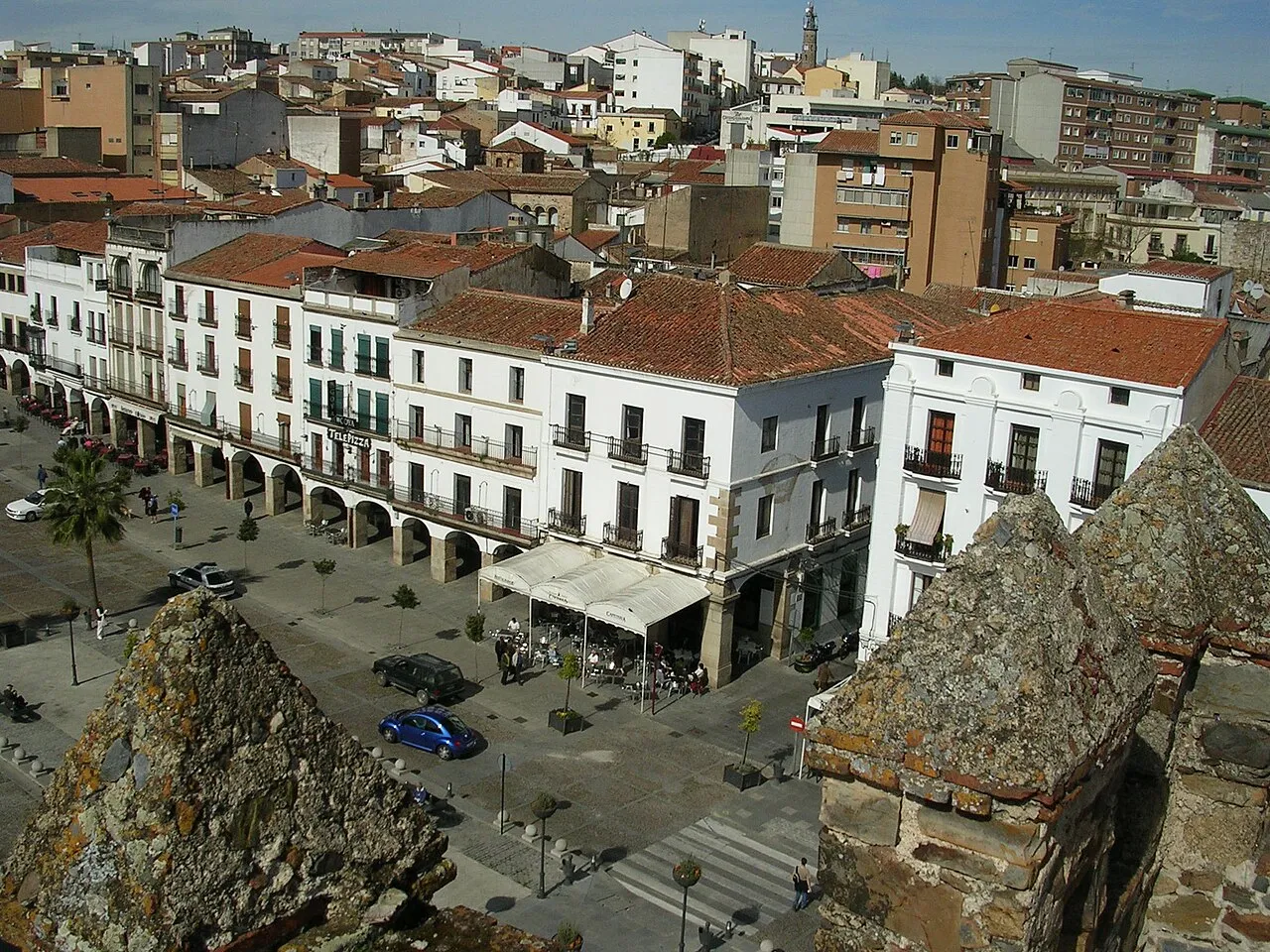
Plaza Mayor

📍 Outside the walls

Here and in the streets running off it you find a good share of the city's restaurants: terraces under the arcades, tapas bars and mesones. Inside the walled quarter the choice is far more limited, so almost all the eating and drinking in Cáceres passes through this square.

🎧 With Viavoy

Explore Caceres at your own pace

Download the app and discover Caceres offline, whenever you like. Take the walking tour Monumental Cáceres: the intact medieval city with a local guide in your ear.

Find out more about Viavoy →

Ibérico, migas and pimentón

Acorn-fed Iberian pork is the other great product. The Extremaduran dehesa is its natural habitat: the animal grazes freely during the montanera, between October and March, feeding on acorns, and it is that diet and that exercise that give the characteristic marbling and flavour.

Besides the ham there are the other cuts — presa, secreto, pluma, carrillera — cooked over coals, and in Extremadura they appear on menus far more often than in other regions. And then the cured meats: lomo, salchichón, chorizo and morcón, all from the same source.

Pimentón de la Vera, smoked over oak or holm oak wood, is the spice that runs through the whole cooking of the province and has a designation of its own. It is in the migas, in the stews, in the marinades and in the chorizo, and it is what gives Extremaduran cooking that recognisable flavour before you even know what you are eating.

The popular dishes are shepherds' food and food that wastes nothing: migas extremeñas with pimentón and torreznos, lamb caldereta, cochifrito, gazpacho extremeño and, in season, wild mushrooms and game from the sierra. None of this is light, but it is honest and very cheap for what it gives you.

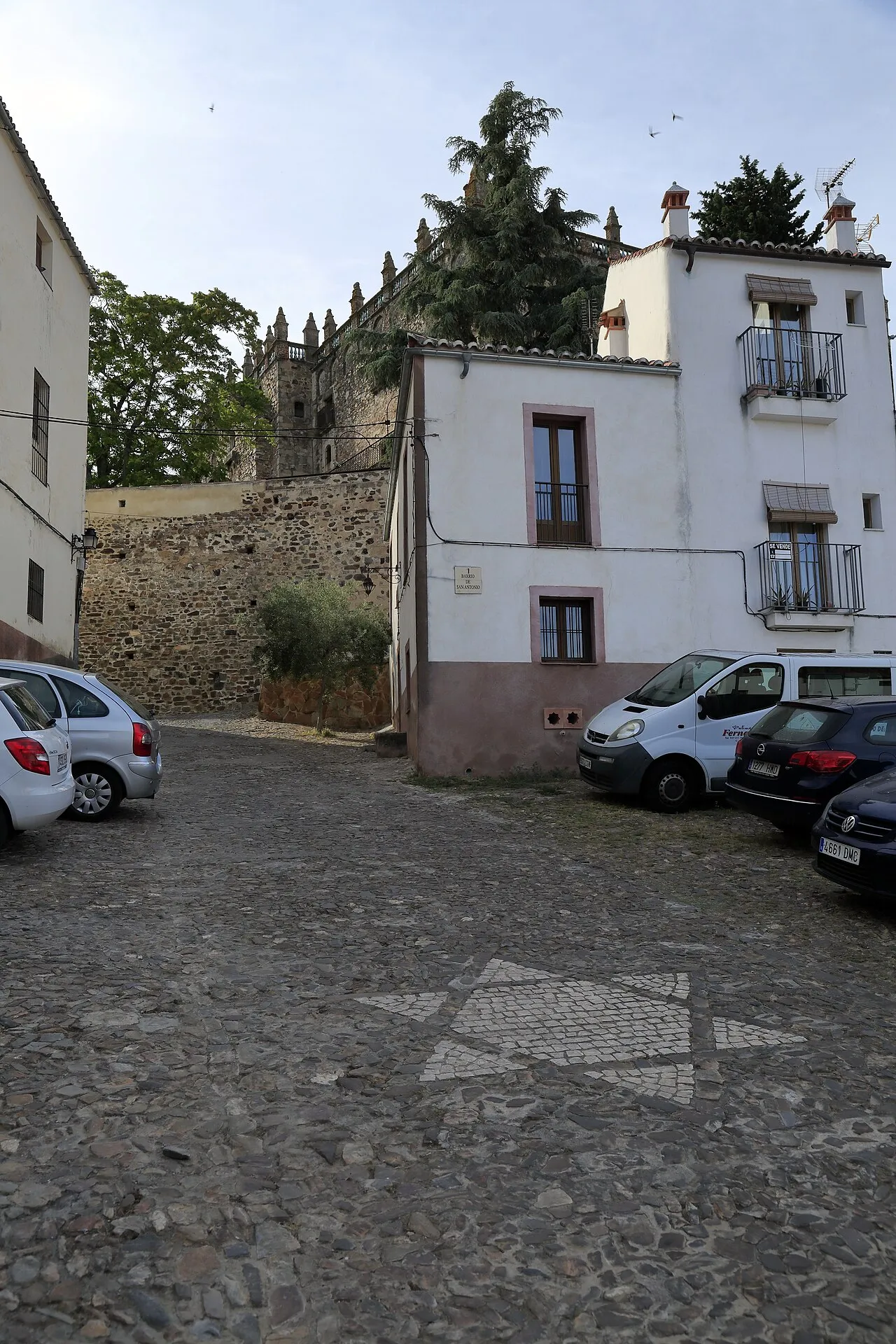
2Barrio de San Antonio

Barrio de San Antonio

📍 The old Jewish quarter

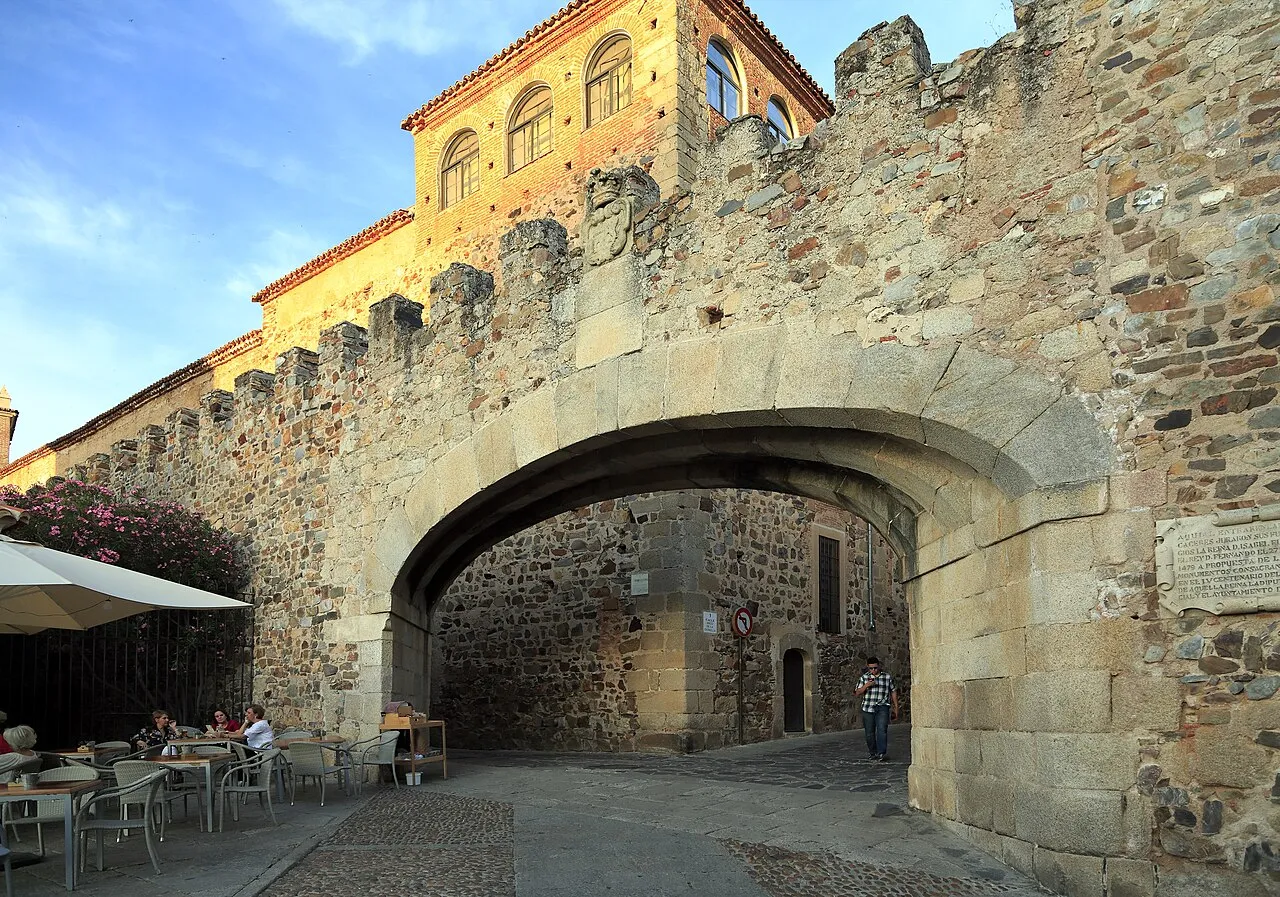
At the foot of the Arco del Cristo, the old Jewish quarter is an area of narrow streets and whitewashed houses where small food and wine places have gradually appeared. It is the alternative to the Plaza Mayor when the square is full, and the atmosphere is nothing like it.

Frequently asked questions

How do you eat torta del Casar?

It is served whole, you cut a circular lid in the top and eat it with a spoon or by spreading it on bread, because inside it is creamy, almost liquid. It is not cut into slices: it cannot be. And it improves at room temperature, so take it out of the fridge a while beforehand.

Why is torta del Casar liquid inside?

Because of the rennet. Instead of animal rennet, vegetable rennet obtained from the cardoon Cynara cardunculus is used, and its enzyme acts differently and does not fully set the paste. That is also where the cheese's characteristic bitter edge comes from, straight out of the cardoon.

What is pimentón de la Vera?

Paprika with its own protected designation of origin, made in the district of La Vera and dried over smoke from oak or holm oak wood, which gives it a smoky flavour other paprikas do not have. It runs through the whole of Extremaduran cooking: migas, stews, marinades and cured sausage.

Is Iberian ham worth it in Cáceres?

Very much so. The Extremaduran dehesa is the natural habitat of the Iberian pig and here you buy it and eat it at considerably better prices than in the big cities. And do not stop at the ham: the fresh cuts cooked over coals — presa, secreto, pluma, carrillera — are on menus far more than in other regions.

What is pitarra wine?

Wine made the traditional way in clay jars called pitarras, without modern winery technique. It is an old, domestic practice in Extremadura, with irregular but highly distinctive results. You find it in traditional taverns, and it is worth trying if only for the comparison.

Where should you eat in Cáceres?

Most of what is on offer is in the Plaza Mayor and the streets running off it, under the arcades. Inside the walled quarter there is considerably less, and at higher prices. The barrio de San Antonio, at the foot of the Arco del Cristo, has small places with a different feel. For fine dining, book ahead.

The other Cáceres: fine dining

And then there is what you do not expect. Cáceres, a city of fewer than a hundred thousand people, has sustained for years fine-dining restaurants with national and international recognition, with Michelin stars and with a way of handling Extremaduran produce that has changed how the region's cooking is perceived.

The approach is usually the same: local produce from the dehesa, the market garden and the hunt, contemporary technique and a reading of the Extremaduran recipe book that takes it somewhere else without abandoning it. Book well ahead, because these are small places with demand from outside the city.

For drinking, the province has its own designation, Ribera del Guadiana, with reds that have improved a great deal over the past two decades and very reasonable prices. There are also pitarra wines, made the traditional way in clay jars, found in old taverns and a different experience altogether.

On areas: the Plaza Mayor and the streets running off it hold most of what is on offer, with terraces under the arcades. Inside the walled quarter there is considerably less, and at higher prices. And the barrio de San Antonio, at the foot of the Arco del Cristo, has gradually filled with small places with a different feel.

Practical information

The cheeseTorta del Casar, sheep's milk with vegetable cardoon rennet. Opened at the top and eaten with a spoon.
The productAcorn-fed ibérico from the dehesa: ham, presa, secreto, pluma and cured meats.
The spicePimentón de la Vera, smoked, with a designation of its own. It is in almost everything.
DishesMigas extremeñas, lamb caldereta, cochifrito and gazpacho extremeño.
WineRibera del Guadiana, and pitarra wines in clay jars in traditional taverns.
AreasPlaza Mayor and around; barrio de San Antonio for a different feel. Book ahead for fine dining.
On the map

🎧 With Viavoy

Walk Caceres and listen at your own pace

Download Viavoy and walk Caceres offline, whenever you like.

from 3,99 €· one-off payment
City Pass · 9,99 €3 days, all the tours in Caceres
Find out more about Viavoy →
Viavoy app

Keep reading

More articles

Itineraries

Cáceres in a day: an itinerary through the monumental city

History

The monumental city of Cáceres: why it survived intact

Art & architecture

The palaces of Cáceres: how to read a city of lineages

Themed routes

Cáceres and Game of Thrones: where King's Landing was filmed