Holy Week in Granada: the silence of the Albaicín and the Cristo de los Favores
Festivals and traditions · Granada

Holy Week in Granada: the silence of the Albaicín and the Cristo de los Favores

Processions that climb cobbled slopes up to Sacromonte, a whole square on its knees at three o'clock sharp and the only city where the floats cross woodland.

8 min read · Updated for the season
🎧 On the walk The Realejo: Jewish Granada, Street Art and Tapas

Holy Week (Semana Santa) in Granada has a topographical advantage no other has: the city is built on hills, and that turns the processions into something different. Here the pasos, the processional floats, climb cobbled slopes, cross the woods of the Alhambra, squeeze into alleys in the Albaicín where they barely fit and reach Sacromonte before dawn. The staging is not supplied by the city: it is supplied by the terrain.

The most striking moment is not a procession: it is Good Friday at three o'clock sharp, when the whole Campo del Príncipe kneels in silence before the Cristo de los Favores.

A Holy Week on a slope

Granada has more than thirty brotherhoods and a Holy Week declared of International Tourist Interest, but what sets it apart is not the number or the sculpture: it is the route. The brotherhoods of the Albaicín and Sacromonte climb cobbled streets of considerable gradient, with the costaleros, the bearers, carrying uphill for hours.

There are floats that cross the woods of the Alhambra, others that come out of whitewashed hermitages at the top of the Albaicín and some that go down alleys so narrow that the float brushes the walls on both sides. That millimetre-perfect fit between wood and stone is one of the spectacles of the week.

The carrera oficial, the official route, runs through the centre, between the Plaza del Carmen and the cathedral, and that is where the stands and the seats are concentrated. But anyone who knows the city does not watch Holy Week there: they watch it at the departures and the returns, on the slopes and in the neighbourhood squares.

1Campo del Príncipe

Campo del Príncipe

📍 El Realejo

On Good Friday at three o'clock in the afternoon sharp, the whole square kneels in silence before the Cristo de los Favores to ask for three wishes. It is a popular gathering held up by custom, with no great organisation and no staging, with thousands of people silent in a neighbourhood square. It is the most striking moment of the whole week.

2Plaza Larga

Plaza Larga

📍 Upper Albaicín

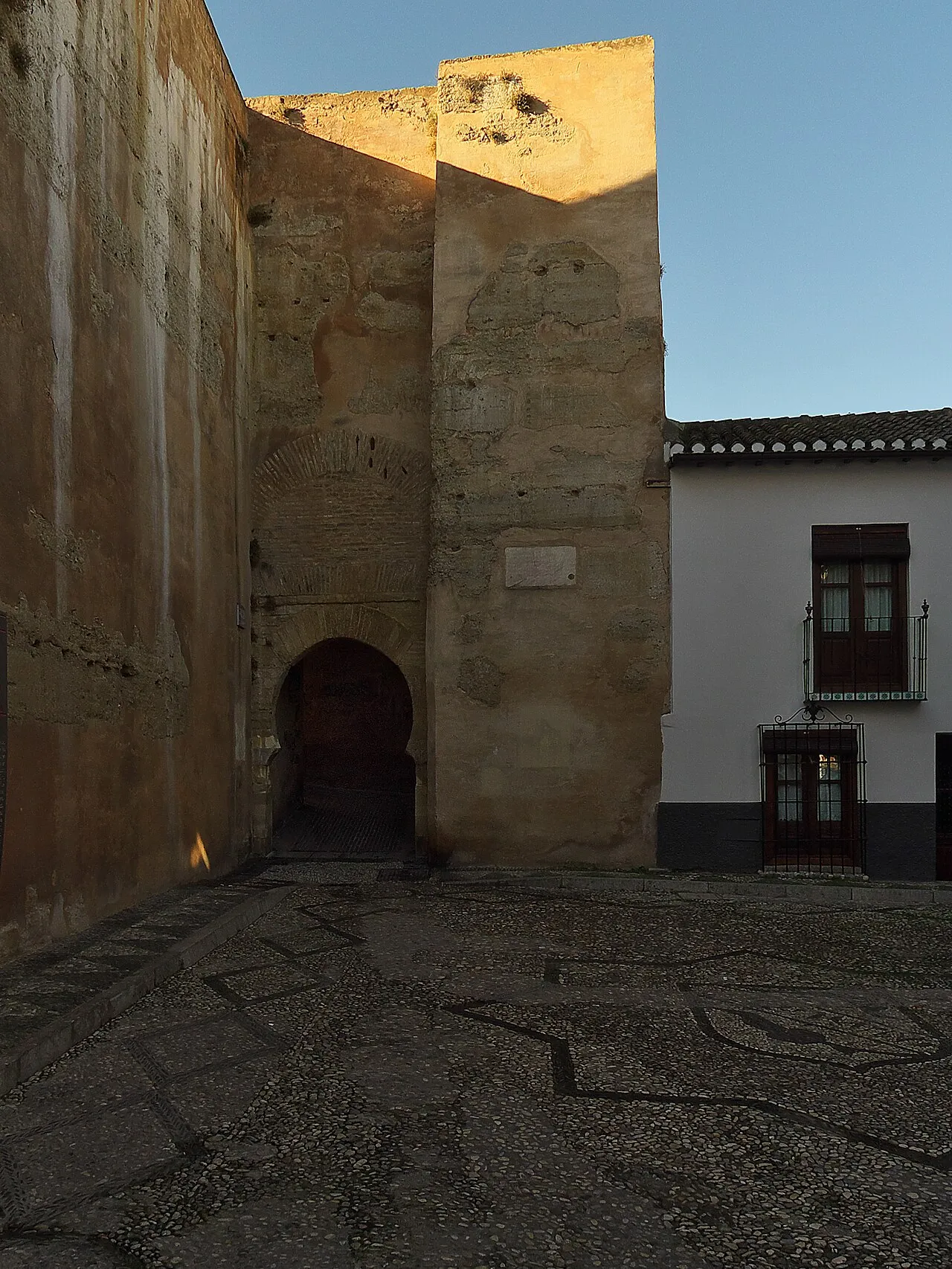
The brotherhoods of the Albaicín pass through here on their way down to the centre and on their return before dawn, crossing the Nasrid arch of the Puerta de las Pesas. Watching a float go through an eleventh-century gate, with the arch a few centimetres from the wood, is one of the images that belong to this city.

3Granada Cathedral

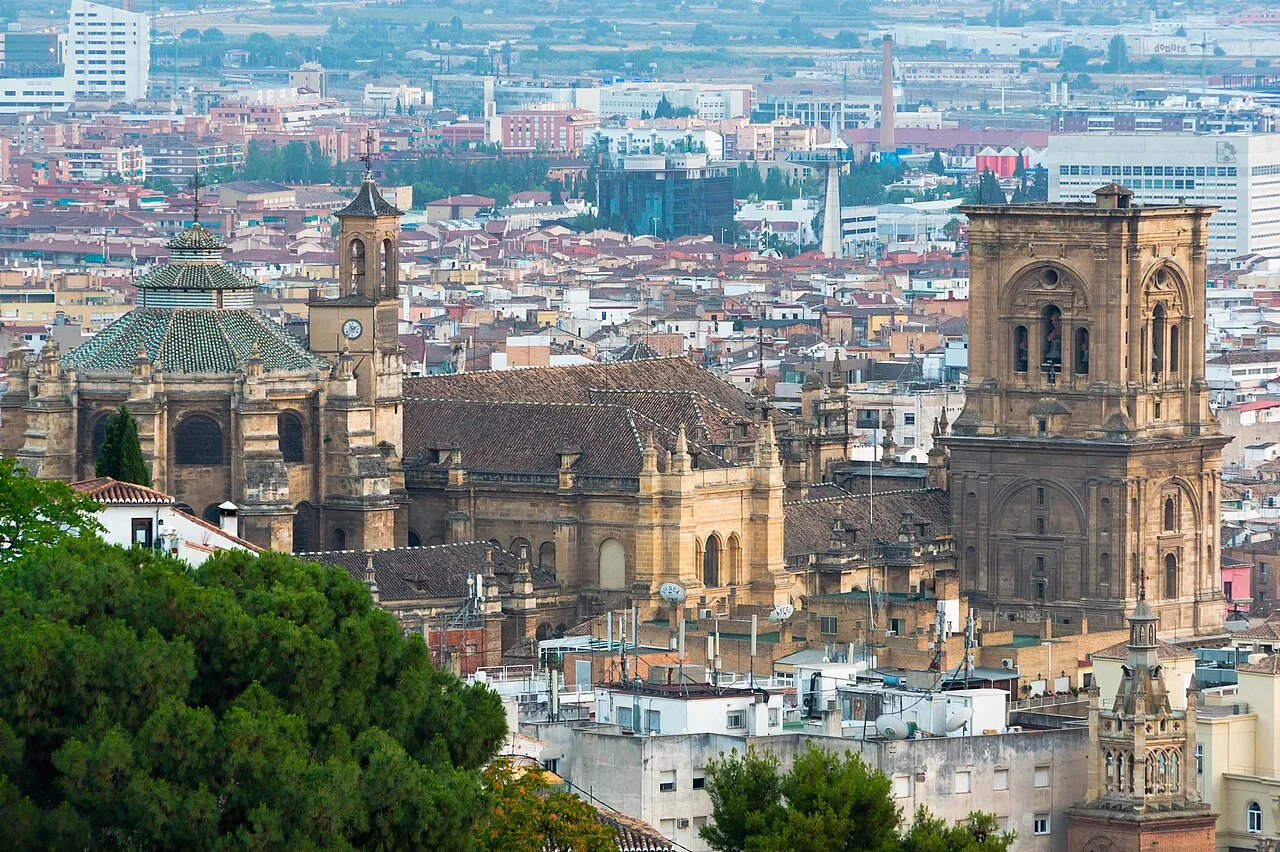
Granada Cathedral

📍 Gran Vía de Colón

The end of the official route and the point every brotherhood passes. Its surroundings hold the stands, the paid seats and the largest crowds. It is the most comfortable part to watch from and also the least characteristic: Granada's Holy Week is defined on the slopes, not here.

🎧 With Viavoy

Explore Granada at your own pace

Download the app and discover Granada offline, whenever you like. Take the walking tour The Realejo: Jewish Granada, Street Art and Tapas with a local guide in your ear.

Find out more about Viavoy →

The moments to look for

None of them is on the official route.

The Cristo de los Favores, Good Friday at fifteen hundred hours in the Campo del Príncipe. The square fills, people kneel and an absolute silence falls for a few minutes. There are no bands, there is no procession: only a silent crowd. It is the scene remembered most by anyone who has lived it.

The Cristo de los Gitanos, on Holy Wednesday, climbing to Sacromonte before dawn along the abbey road between bonfires lit on the hillside and saetas, the sung laments, from the caves. It is the most unusual procession in the city and the one that demands most stamina: it ends in the small hours and the climb is long.

The Virgen de las Angustias, patron of Granada, whose brotherhood is one of the oldest and most crowded. And the Soledad de San Jerónimo, on Holy Saturday, on a route of absolute silence.

And for anyone after calm: the departures of the Albaicín brotherhoods, in the middle of the afternoon, with the float coming out of a small church into a narrow square and the neighbours leaning out of their balconies. Almost no visitors are there.

4San Nicolás Viewpoint

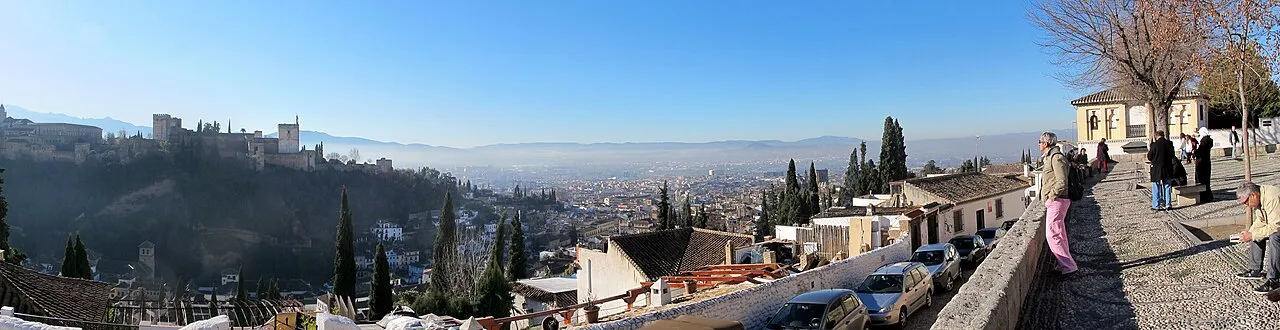
San Nicolás Viewpoint

📍 Albaicín

During Holy Week, some of the Albaicín brotherhoods make a station here, and seeing a float with the Alhambra lit up behind it is an image that exists in no other city. It is also the best point for getting your bearings on the routes: from here you see the lights of the processions moving through the centre.

5Monastery of San Jerónimo

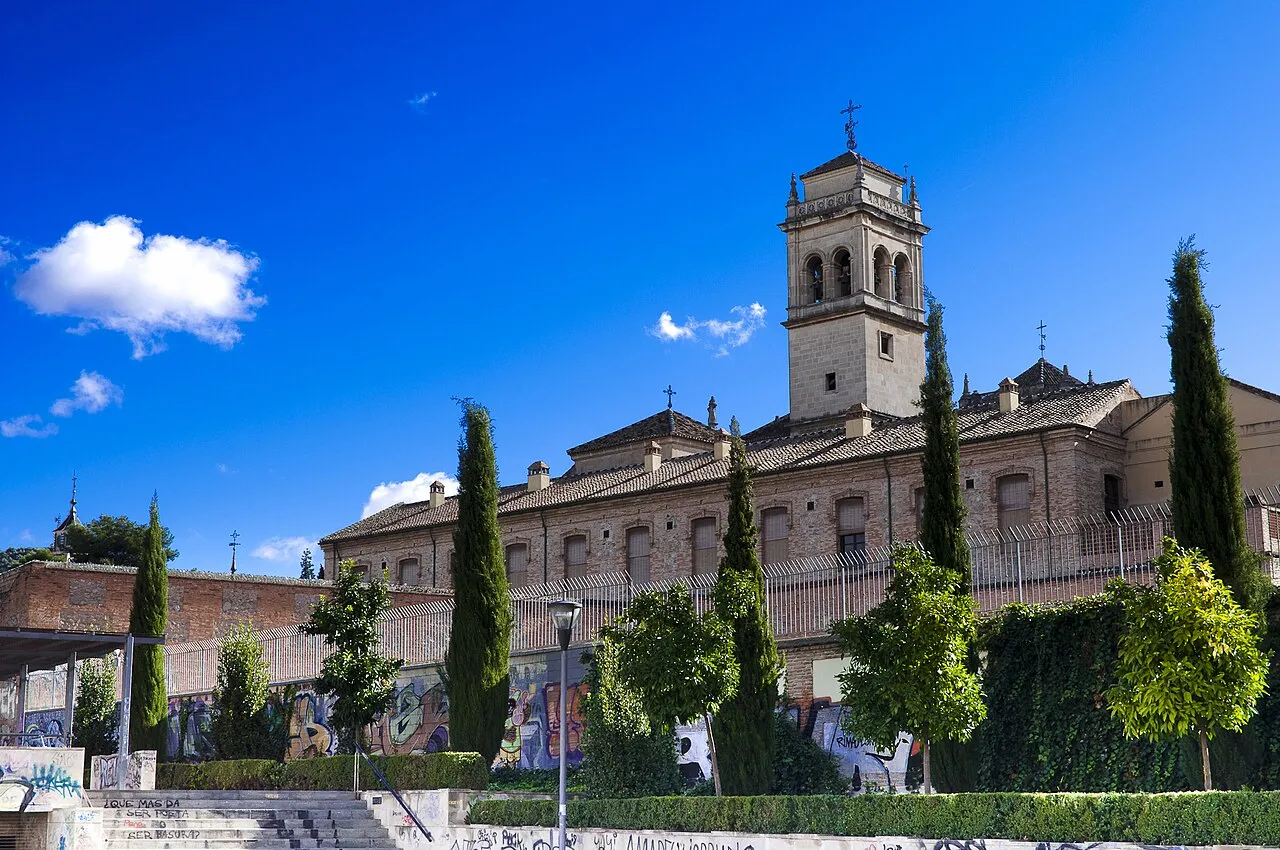
Monastery of San Jerónimo

📍 Calle Rector López Argüeta

The Soledad leaves from here on Holy Saturday, on one of the strictest silent routes in the city. The monastery, with its gilded main altarpiece and its orange-tree cloister, is also an excellent visit the rest of the year and one of the least busy in Granada.

6Gate of Justice

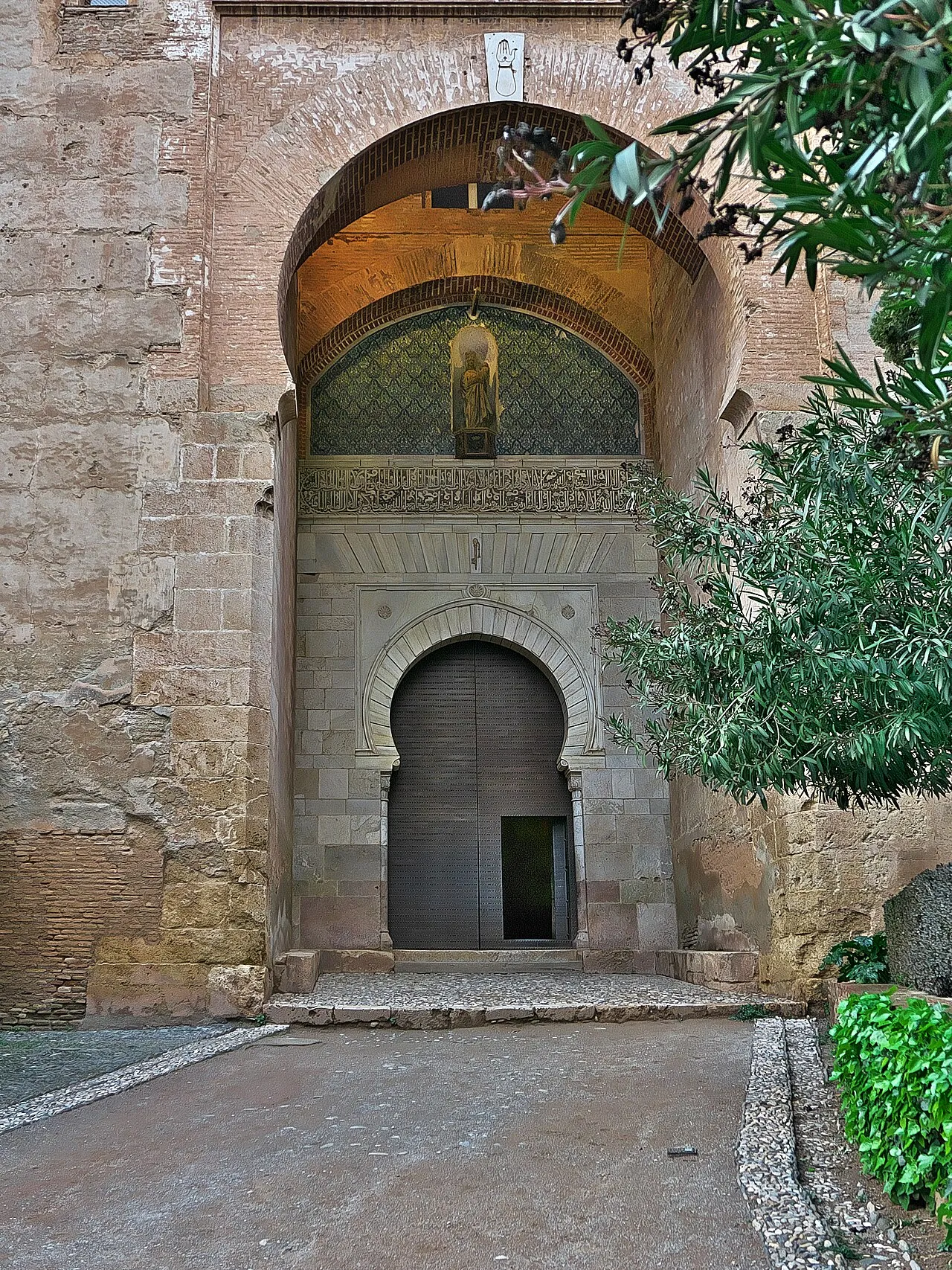
Gate of Justice

📍 Alhambra complex

Some brotherhoods cross the woods of the Alhambra and pass under its gates, which turns a procession into a walk through a fourteenth-century monument. It is a Granada peculiarity with no equivalent: in no other Spanish city do the floats cross a World Heritage Site.

Frequently asked questions

What is special about Holy Week in Granada?

The topography. Granada is built on hills, and that turns the processions into something different: the floats climb cobbled slopes, cross the woods of the Alhambra, squeeze into alleys in the Albaicín where they barely fit and reach Sacromonte before dawn. In no other Spanish city do the floats cross a World Heritage Site or climb up to a cave neighbourhood between bonfires lit on the hillside.

What is the Cristo de los Favores?

A seventeenth-century crucifix in the Campo del Príncipe, in El Realejo, before which every Good Friday at three o'clock in the afternoon sharp — the hour at which tradition places the death of Christ — the whole square kneels in silence to ask for three wishes. It lasts a few minutes, there are no bands and no procession, and for anyone who has lived it, it is the most memorable scene of the whole of Granada's Holy Week.

Which is the most striking procession in Granada?

The Cristo de los Gitanos, on Holy Wednesday, climbing to Sacromonte before dawn along the abbey road, with bonfires lit on the hillside and saetas sung from the caves. It is the most unusual and also the most demanding for the spectator: the climb is long and it ends in the small hours. The Virgen de las Angustias, patron of the city, and the Soledad de San Jerónimo on Holy Saturday are the other two great occasions.

Do you have to pay to see Holy Week in Granada?

You do not. The seats and stands on the official route, between the Plaza del Carmen and the cathedral, are sold in advance and offer the comfortable option of watching every brotherhood go by sitting down. But the best way to see this particular Holy Week is free: following the departures and the returns in the neighbourhoods, above all in the Albaicín and El Realejo, standing and from the pavement.

Can you visit the Alhambra during Holy Week?

Yes, and it runs normally, although it is worth booking further ahead than usual because it is one of the weeks of highest demand of the year. What does change is how you organise the day: the procession routes cut off the centre for hours and getting about takes far longer. The practical recommendation is to visit the Alhambra in the morning and leave the afternoons and evenings for the street.

What should you wear for Holy Week in Granada?

Comfortable shoes with a good sole, because here you follow the processions climbing uneven cobbled slopes, sometimes before dawn, and a coat. In Granada the March and April nights are cold — Sierra Nevada is half an hour away and usually has snow — and the night processions mean hours standing or walking slowly. It is one of the Spanish Holy Weeks where you are most grateful for a jacket.

How to watch it

The seats and stands on the official route are sold in advance and are the comfortable option: you sit down and every brotherhood goes past. It is also the least characteristic way of seeing this particular Holy Week, which is played out somewhere else.

The free and better alternative is to follow the departures and returns in the neighbourhoods. Check the day's itinerary and timings — they are published in local guides and on the website of the federation of brotherhoods — and choose a brotherhood from the Albaicín or El Realejo. You watch standing, from the pavement, and you pay nothing.

Footwear, once again, matters: here you follow a procession climbing cobbled slopes, sometimes before dawn. And a coat too, because in Granada the March and April nights are cold, with the mountains next door.

One note on planning your trip: during the week the routes cut off the centre for hours and getting about takes far longer than usual. The monuments do open, but it is best to visit the Alhambra in the morning and leave the afternoons and evenings for the street.

Practical information

WhenHoly Week, dates varying between March and April. Declared of International Tourist Interest.
The momentGood Friday at 15:00 in the Campo del Príncipe, before the Cristo de los Favores.
The most unusualThe Cristo de los Gitanos, Holy Wednesday, climbing to Sacromonte between bonfires.
Where to watch it freeDepartures and returns in the Albaicín and El Realejo. Standing, from the pavement and paying nothing.
What to bringFootwear for cobbled slopes and a coat: the March nights are cold with the mountains next door.
PlanningVisit the Alhambra in the morning. In the afternoons and evenings the centre is closed off.

On the map

🎧 With Viavoy

Walk Granada and listen at your own pace

Download Viavoy and walk Granada offline, whenever you like.

from 2,99 €· one-off payment
City Pass · 9,99 €3 days, all the tours in Granada
Find out more about Viavoy →
Viavoy app

Keep reading

More articles

Itineraries

Granada in 2 days: the Alhambra, the Albaicín and everything that fits in between

Culture

The Granada of the Catholic Monarchs: 1492 and what was built afterwards

Neighbourhoods

El Realejo: Jewish Granada, street art and the best tapas

Neighbourhoods

El Albaicín: the neighbourhood where Granada is still Andalusi