The best viewpoints in Madrid: where to see the city from above
What to see · Madrid

The best viewpoints in Madrid: where to see the city from above

Ten rooftops, terraces and hills for seeing the sky Velázquez painted, with prices, opening hours and the best time to go up.

10 min read · Updated for 2026
🎧 On the walk Gran Vía & Modern Madrid

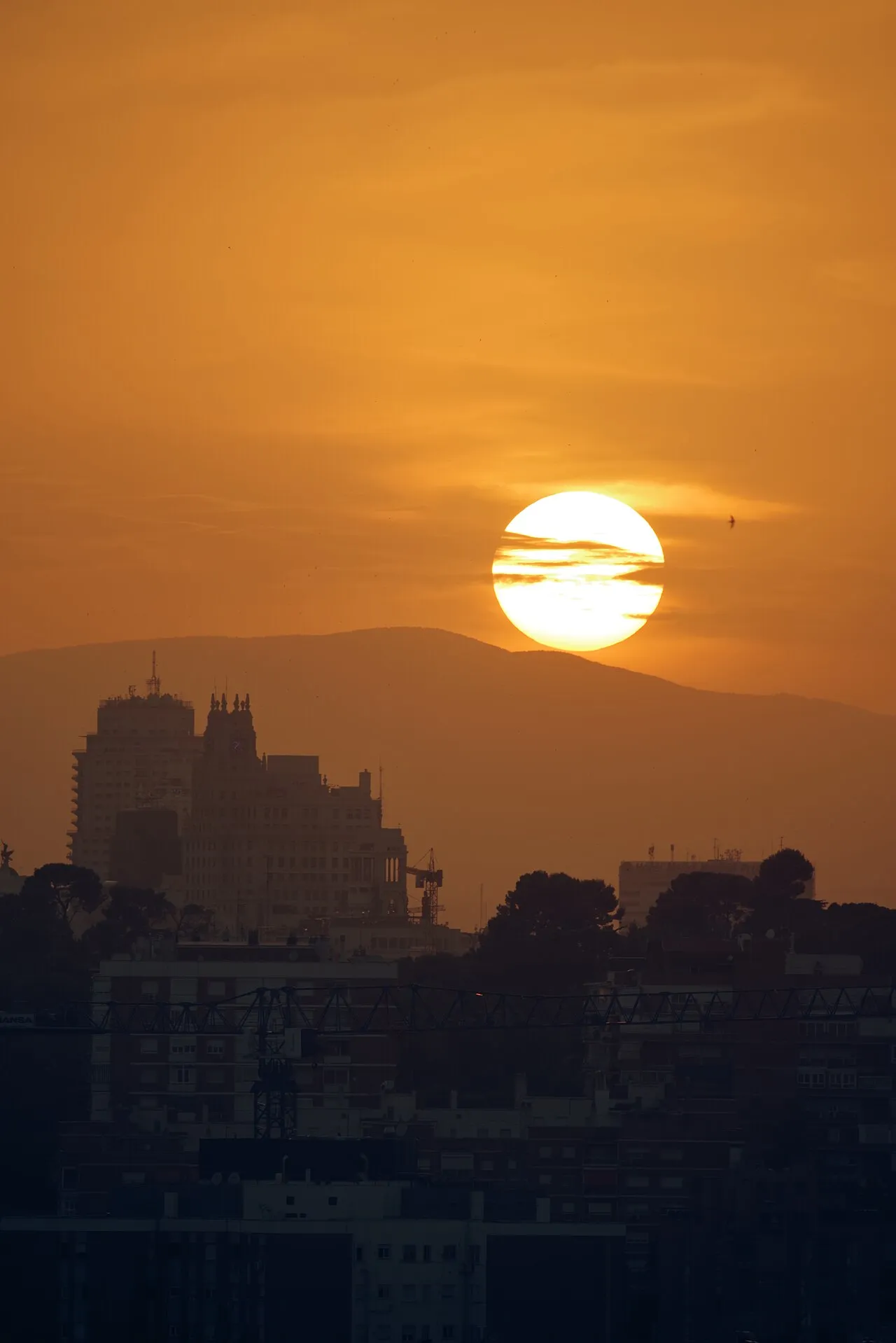
Madrid sits 650 metres above sea level, is the highest capital in continental Europe and has a dry air that makes sunsets last and last. That is where the local obsession with looking at the city from above comes from: the skies Velázquez painted as the background to his portraits are exactly these, and they are still there every evening. This guide gathers the ten best viewpoints in the city — from the rooftop that charges six euros to the hill in a park that costs nothing — with what you need to know to choose yours.

The golden hour rules: go up between 45 and 20 minutes before sunset. In summer that means nine in the evening; in December, half past five.

What you see from above in Madrid

Before choosing, it helps to know what you are looking for. From the centre of Madrid you see three things: the sea of rooftops and towers of the old town, with the slate spires of the Austrias quarter and the domes of Gran Vía; the line of skyscrapers along the Castellana to the north, with the Cuatro Torres silhouetted at the far end; and, on clear days, the Sierra de Guadarrama to the north-west, with snow from December to April. The best viewpoints give you all three at once.

There are two families. On one side, the paid rooftops: terraces of hotels and cultural institutions, in the centre, with a bar and views of dense city. On the other, the free natural viewpoints, on the edges: the river cornisa to the west and the hills to the east, more open, clearer and with the mountains straight ahead. If you have a single evening, choose a rooftop in the centre; if you have two, save the second for an open-air hill.

A practical warning: hotel rooftops work on a drinks-minimum basis and many charge entry at weekends; the institutional ones have opening hours and a ticket. Almost all of them close or restrict access if it rains or is very windy, and in summer they fill up from eight onwards. Book if you can, and if you cannot, go up early.

🎧 With Viavoy

Explore Madrid at your own pace

Download the app and discover Madrid offline, whenever you like. Take the walking tour Gran Vía & Modern Madrid with a local guide in your ear.

Find out more about Viavoy →

The rooftops of the centre

Paid, with a bar and with Gran Vía at your feet.

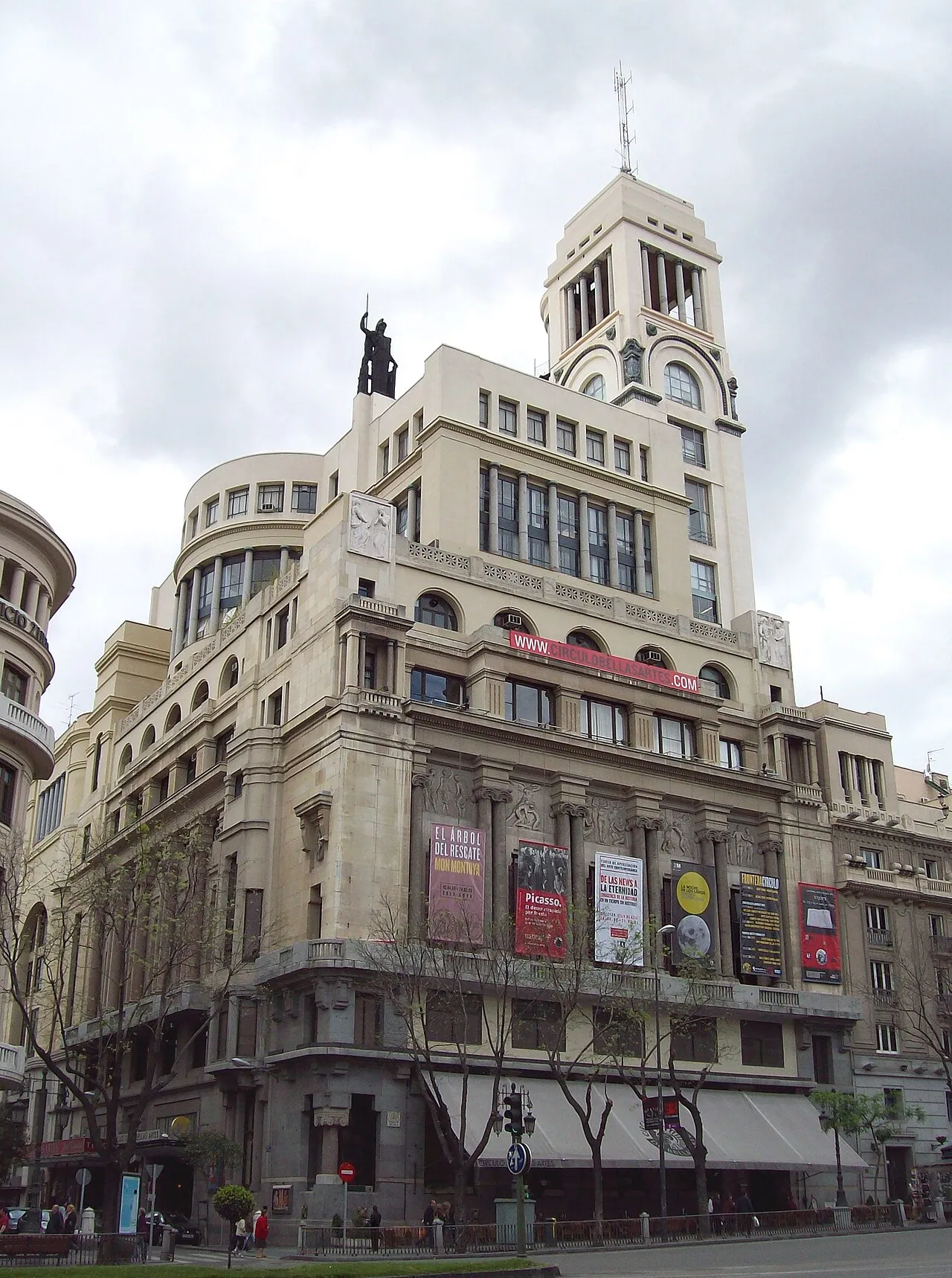
1Rooftop of the Círculo de Bellas Artes

Rooftop of the Círculo de Bellas Artes

📍 Alcalá, 42

The best viewpoint in the centre and the most famous, in a building by Antonio Palacios completed in 1926 that hides salons inside, a legendary café called La Pecera and even a swimming pool. From the seventh floor, Gran Vía unrolls like a serpent of rooftops, the golden dome of the Metrópolis is almost within reach and the mountains close the horizon. Entry is around 6 € and is paid on the ground floor; there is a bar and sun loungers. Go up an hour before sunset and stay to watch the neon signs come on.

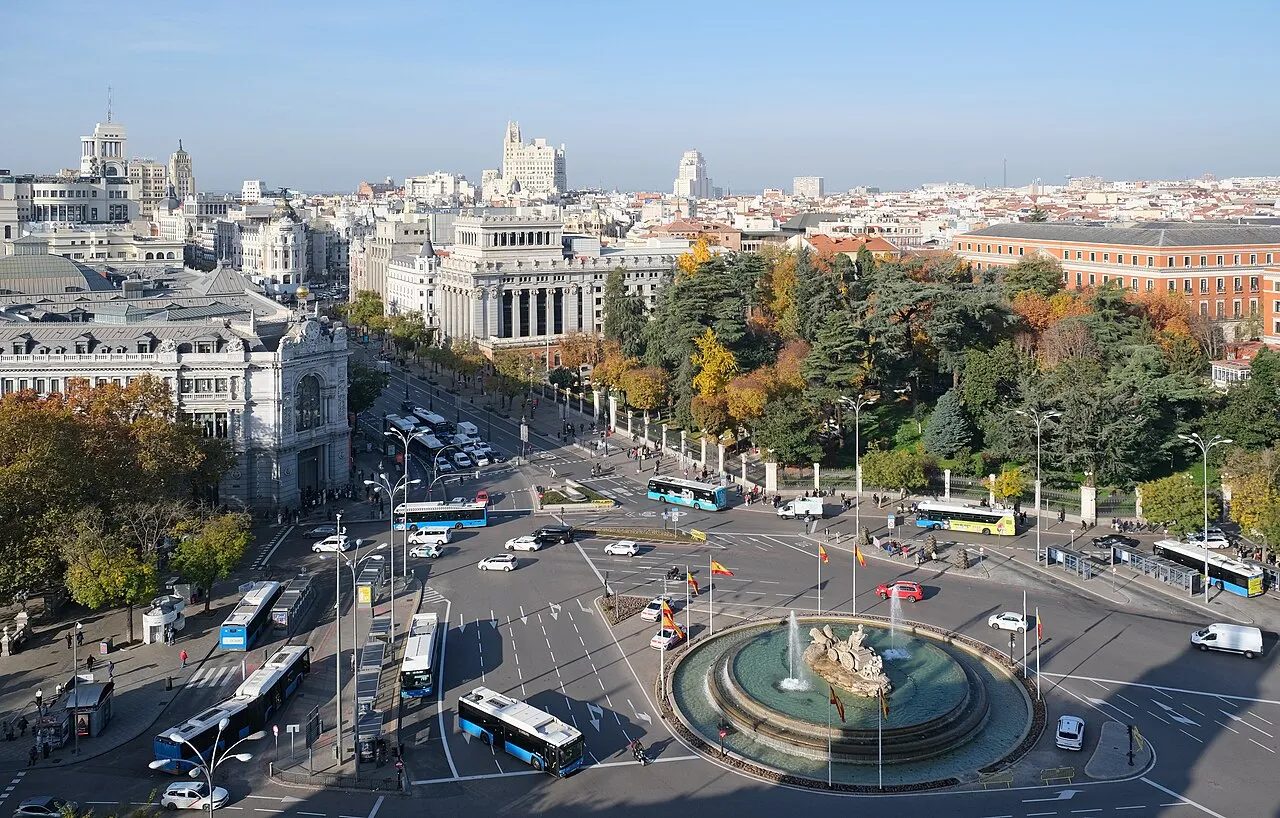
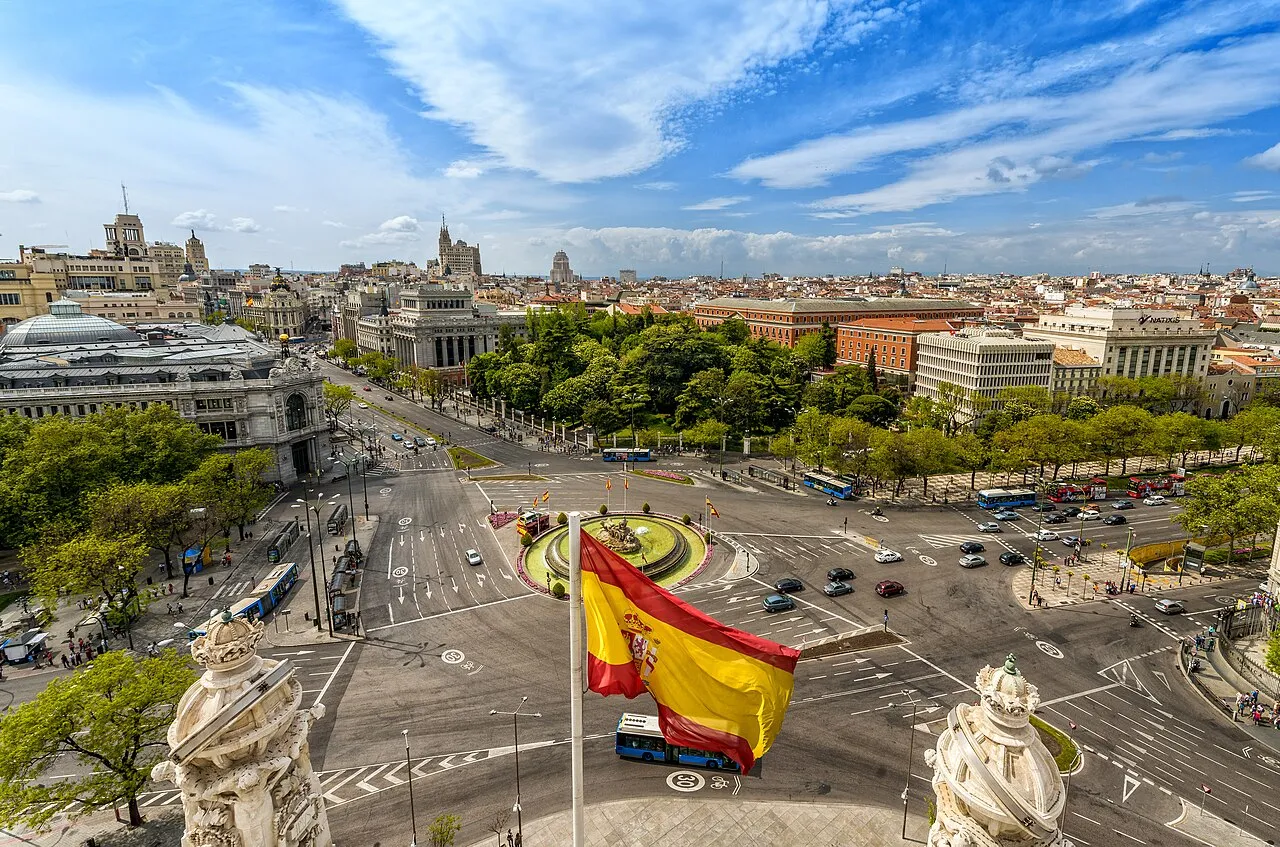
2Viewpoint of the Palacio de Cibeles

Viewpoint of the Palacio de Cibeles

📍 Plaza de Cibeles, 1

At 70 metres up, in the central tower of the white palace that was the Post Office and is today City Hall. It is the best-value viewpoint in the city: around 3 € for a clean view of the whole Paseo del Prado, the Puerta de Alcalá and the Retiro, with the Plaza de Cibeles right below. Closed on Mondays, it works with timed entry slots and in the same building there is a café with a terrace one floor down. Buy tickets online at weekends.

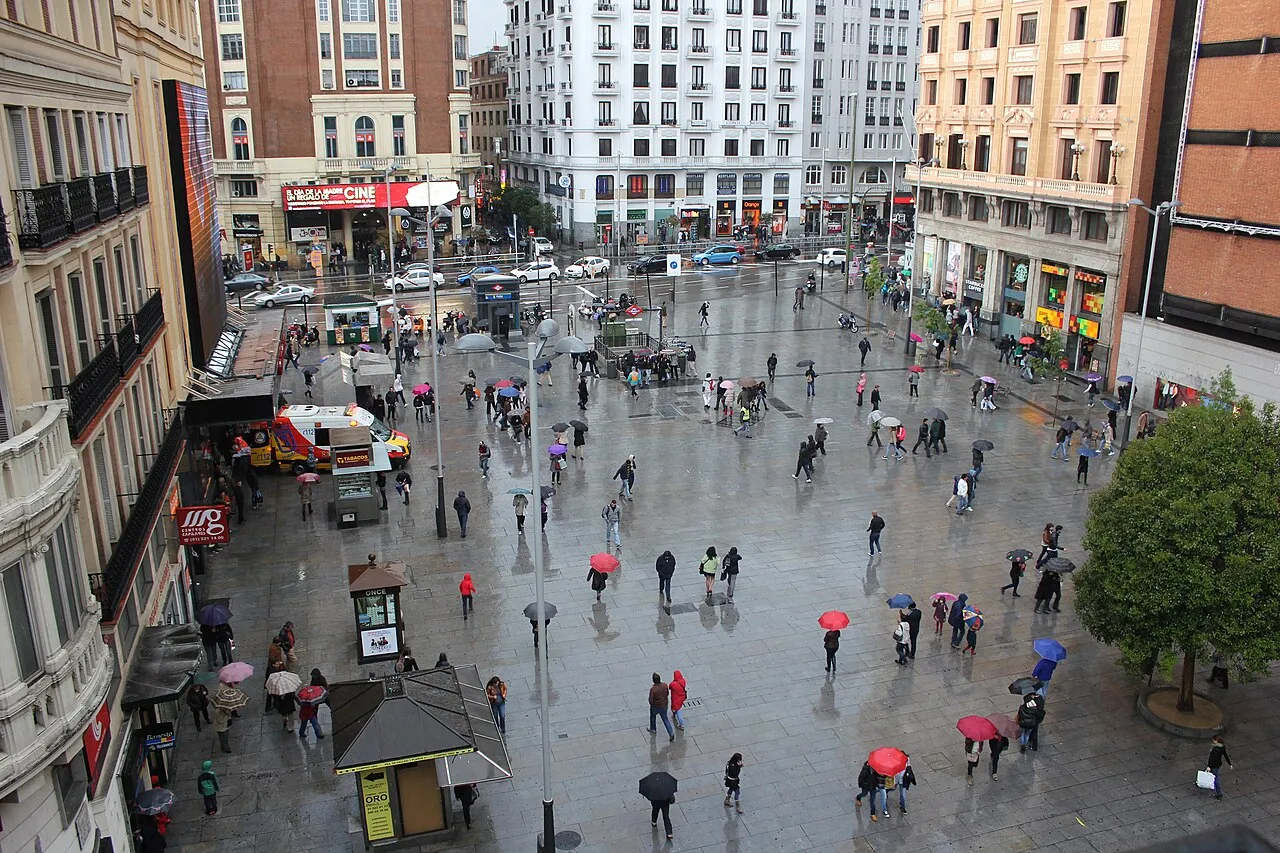
3Gourmet Experience at Callao

Gourmet Experience at Callao

📍 Plaza del Callao, 2

The worst-kept secret in the centre: the ninth floor of El Corte Inglés at Callao is a food terrace with big windows and an open balcony over Gran Vía, and access is free. You only pay for what you consume, and not even that is compulsory to lean out. From here you see the canyon of neon signs along the avenue in perfect perspective, with the Edificio Carrión and the Schweppes billboard straight ahead. At sunset it is packed, but people move on quickly.

4The rooftops of Plaza de España

The rooftops of Plaza de España

📍 Plaza de España

The two brick giants guarding the square — the Edificio España, from 1953, and the Torre de Madrid, from 1960, once the tallest reinforced-concrete building in the world — have been converted into hotels with rooftops open to the public. The highest is around the 27th floor and offers the most complete panorama of western Madrid: Debod, the Casa de Campo, the cornisa and the mountains. Paid entry ranges between 8 and 15 €, often with a drink included, and it is worth booking.

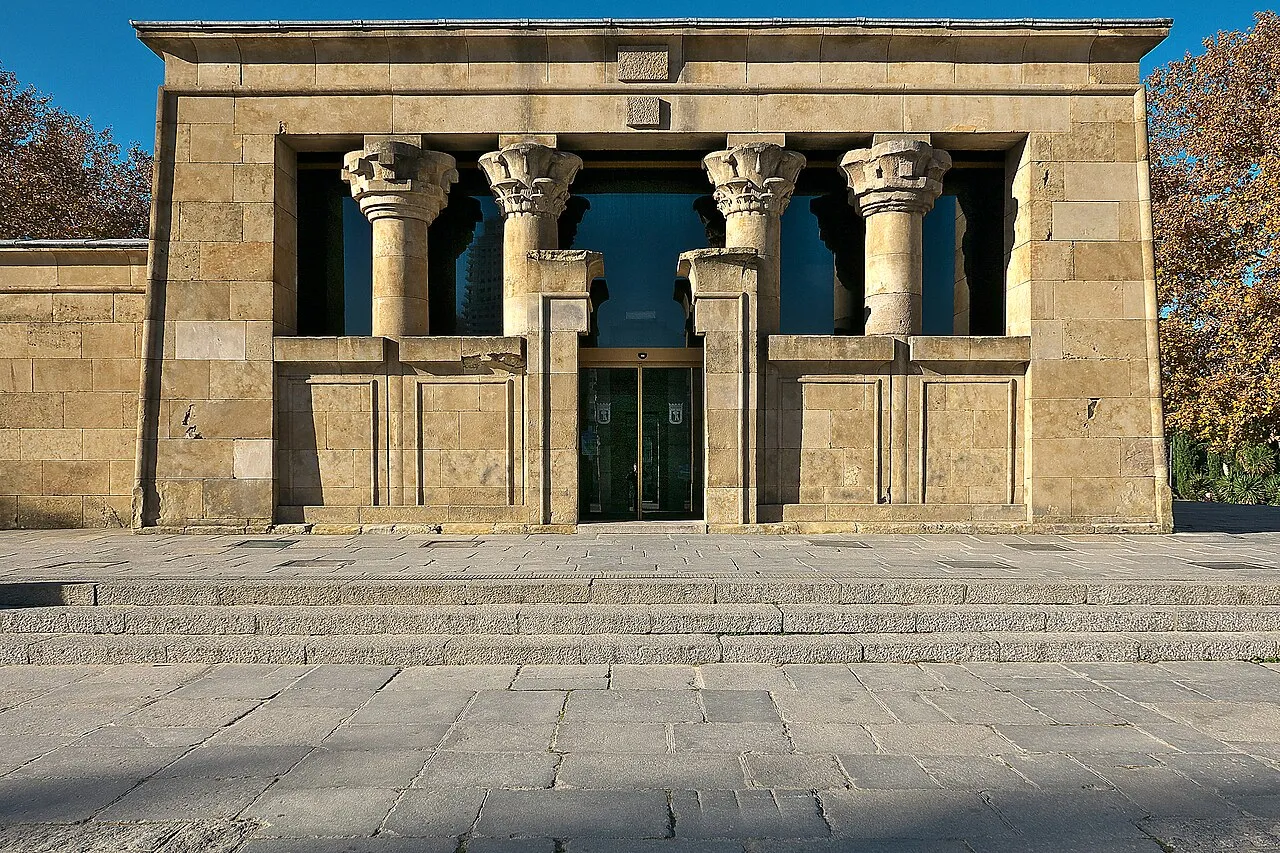
Sunset at the Templo de Debod
The most famous

Sunset at the Templo de Debod

It is not a rooftop, but it is the definitive viewpoint of Madrid and it costs nothing. A 2,200-year-old Egyptian temple, given by Egypt in 1968 and rebuilt here in 1972, placed to mimic its original orientation on the Nile: which is why at sunset the light passes through it and sets it ablaze in orange above the sheet of water. Behind it opens the Parque del Oeste and, in the distance, the mountains. Arrive half an hour before sunset, find a spot on the grass on the west side and do not move. The outer enclosure is always open; the interior closes on Mondays.

🎧 On the tour Gran Vía & Modern Madrid📍 View on Google Maps

The free viewpoints, in the open air

The river cornisa, the hills to the east and the gardens with views.

This is where madrileños go. There is no queue, no minimum spend and the views are more open, even if they are a little further from the centre.

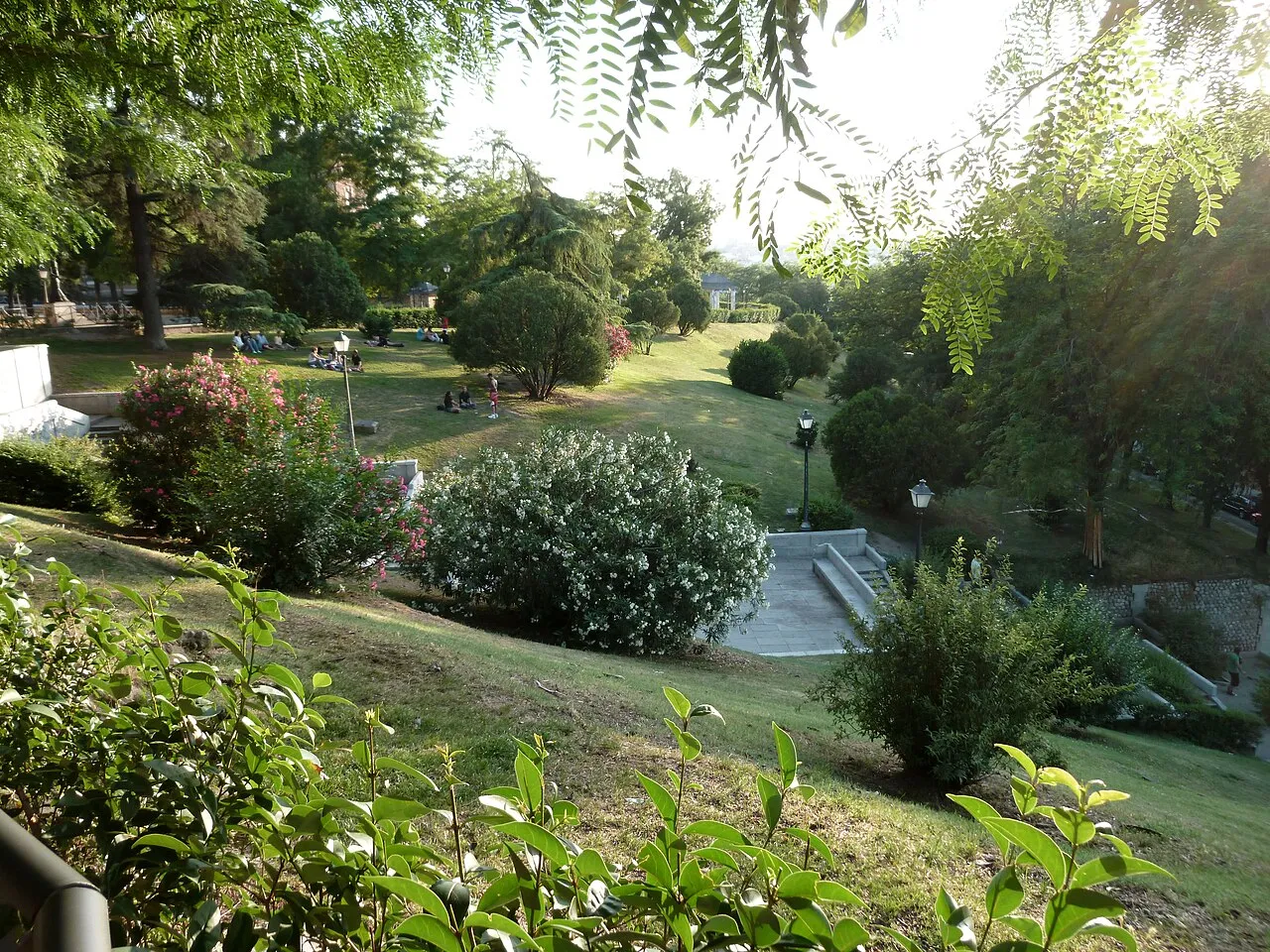
5Jardines de Las Vistillas

Jardines de Las Vistillas

📍 La Latina

The castizo viewpoint par excellence, perched on the cornisa, with the Almudena Cathedral to one side, the viaduct over calle Segovia below and the mountains in the distance on clear days. It has kiosks, terraces and benches, and on summer nights — above all during the San Isidro festivities, in May — it fills with barrel organs, orchestras and dancing. It is one of the few places where the Madrid of the zarzuela still beats. Free, always open and five minutes from the Cava Baja.

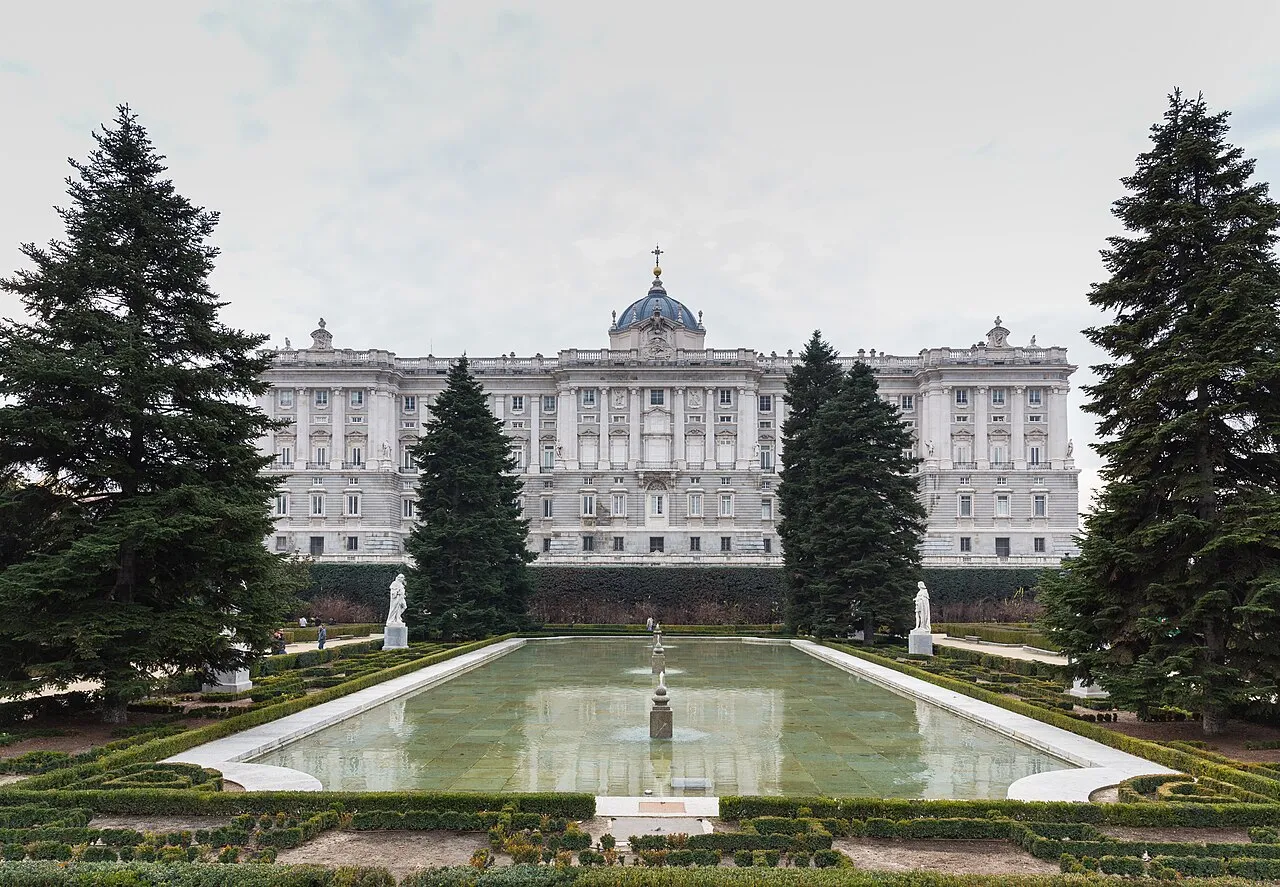
6Jardines de Sabatini

Jardines de Sabatini

📍 Bailén, next to the Royal Palace

Geometric gardens of clipped hedges and a sheet of water facing the north façade of the Royal Palace, on the site of the old stables. They look Baroque but are from the twentieth century, deliberately designed in classical style to match the palace: an elegant stage set that works wonderfully. At sunset the sun drops right behind and the façade turns golden. Free entry, they close at dusk, and it is one of the best places in Madrid to sit and do nothing.

7Cerro del Tío Pío

Cerro del Tío Pío

📍 Vallecas · Parque de las Siete Tetas

The favourite viewpoint of madrileños and the one that appears in no foreign guidebook. A park of rounded hills to the south-east, nicknamed “las siete tetas”, from whose tops you see the whole Madrid skyline with the sun setting right behind it: the centre, the towers of the Castellana and the mountains lined up in a single image. It is free, always open and reached by metro (line 1, Buenos Aires or Portazgo) in twenty minutes from Sol. Bring something to nibble and sit on the grass.

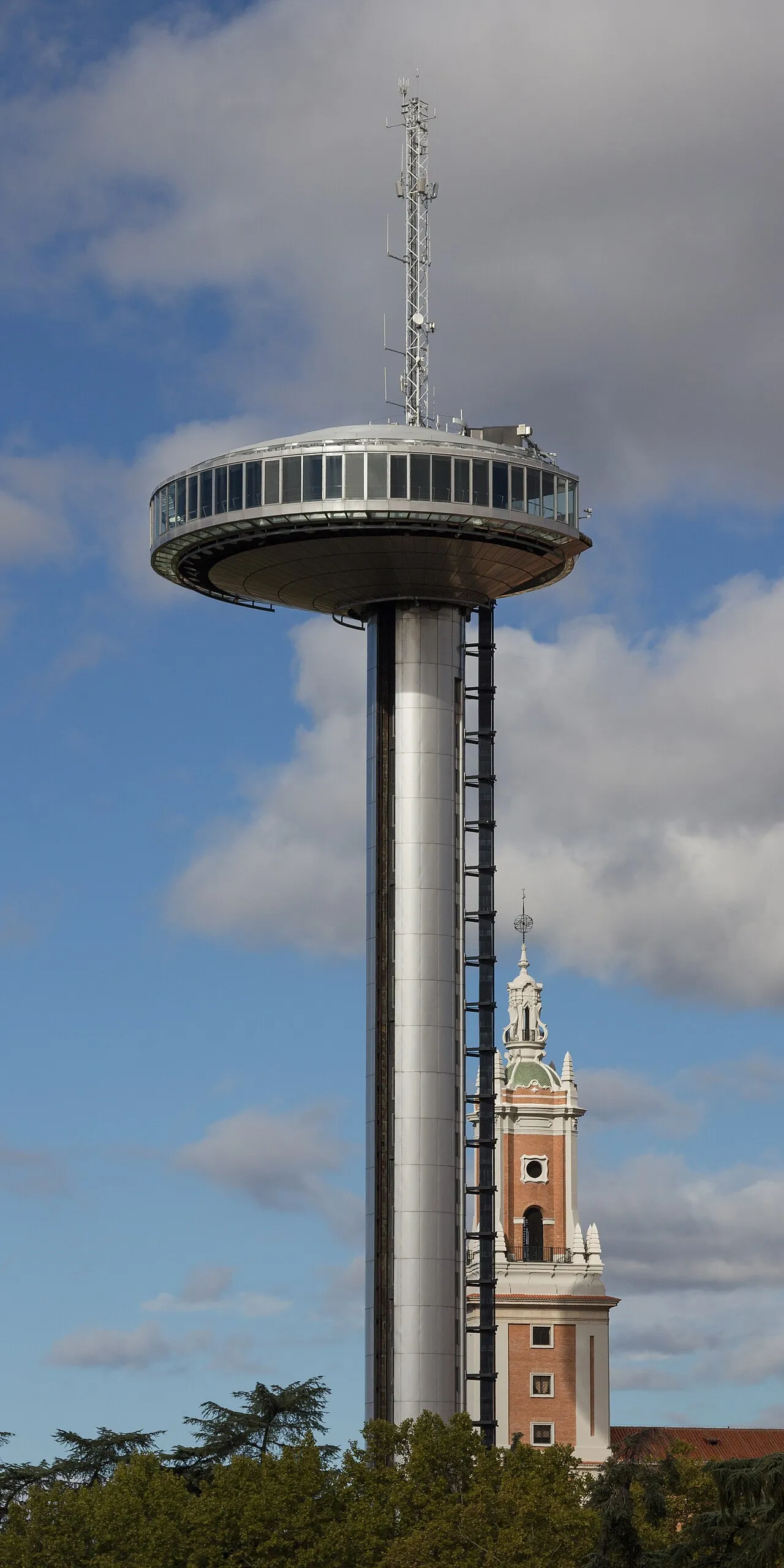
8Faro de Moncloa

Faro de Moncloa

📍 Avenida de la Memoria, 2

A 92-metre lookout tower next to the Arco de la Victoria, with a glazed cabin and a panoramic lift. It is the highest accessible point in the western part of the city and the only one from which you see, all at once and unobstructed, the Ciudad Universitaria, the Casa de Campo, the historic centre and the Sierra de Guadarrama. Entry is around 4 €, it closes on Mondays and has reduced hours in winter. Combine it with a visit to the Templo de Debod, fifteen minutes' walk downhill.

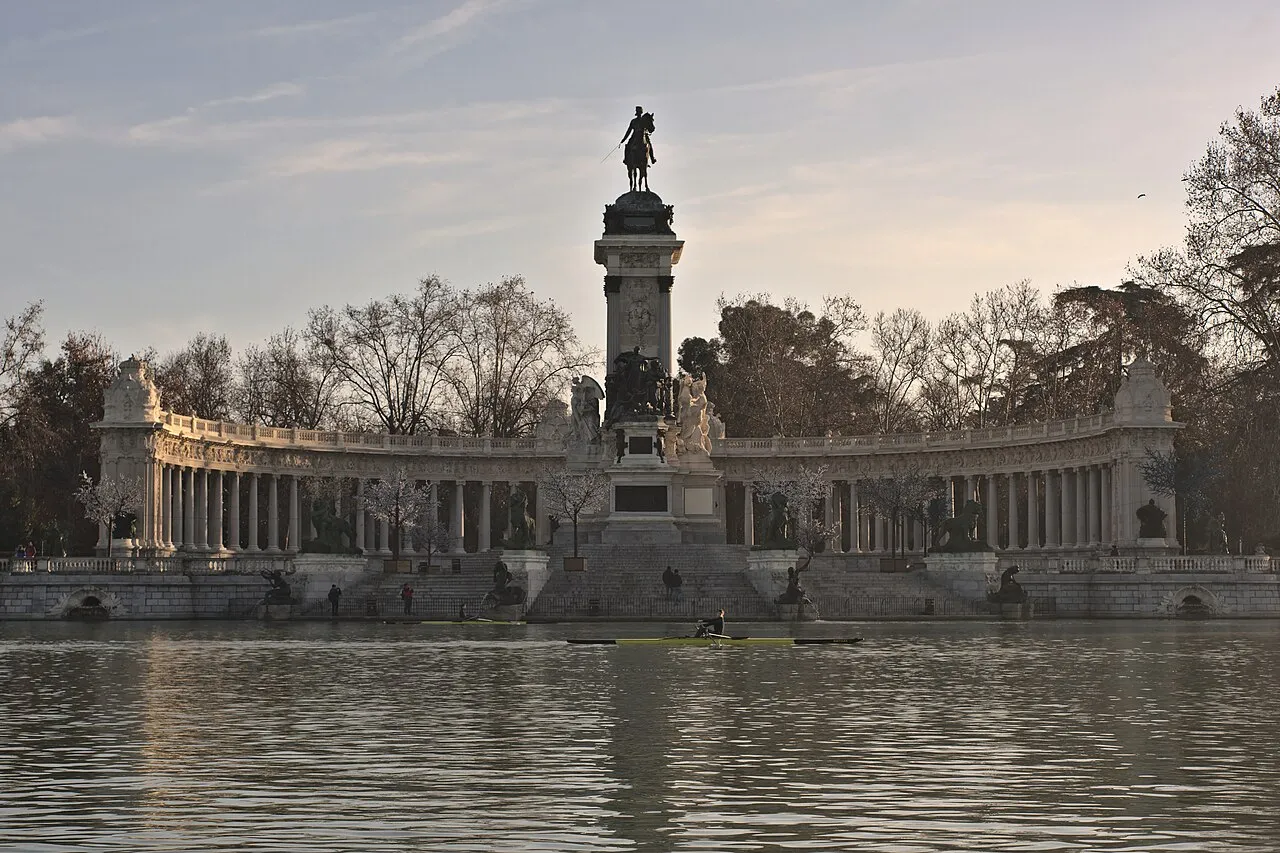
9The Retiro cornisa and the Fallen Angel

The Retiro cornisa and the Fallen Angel

📍 Parque del Retiro

The Retiro is not high, but it has its own viewpoints: the balcony over the Estanque Grande, with the colonnade of Alfonso XII reflected in the water, and the esplanade of the Ángel Caído, one of the very few statues in the world dedicated to the devil, standing — so the plaque says — at 666 metres above sea level. It is the most serene view on this list, ideal first thing in the morning, when there are only runners and ducks. Free, open from six in the morning to midnight in summer.

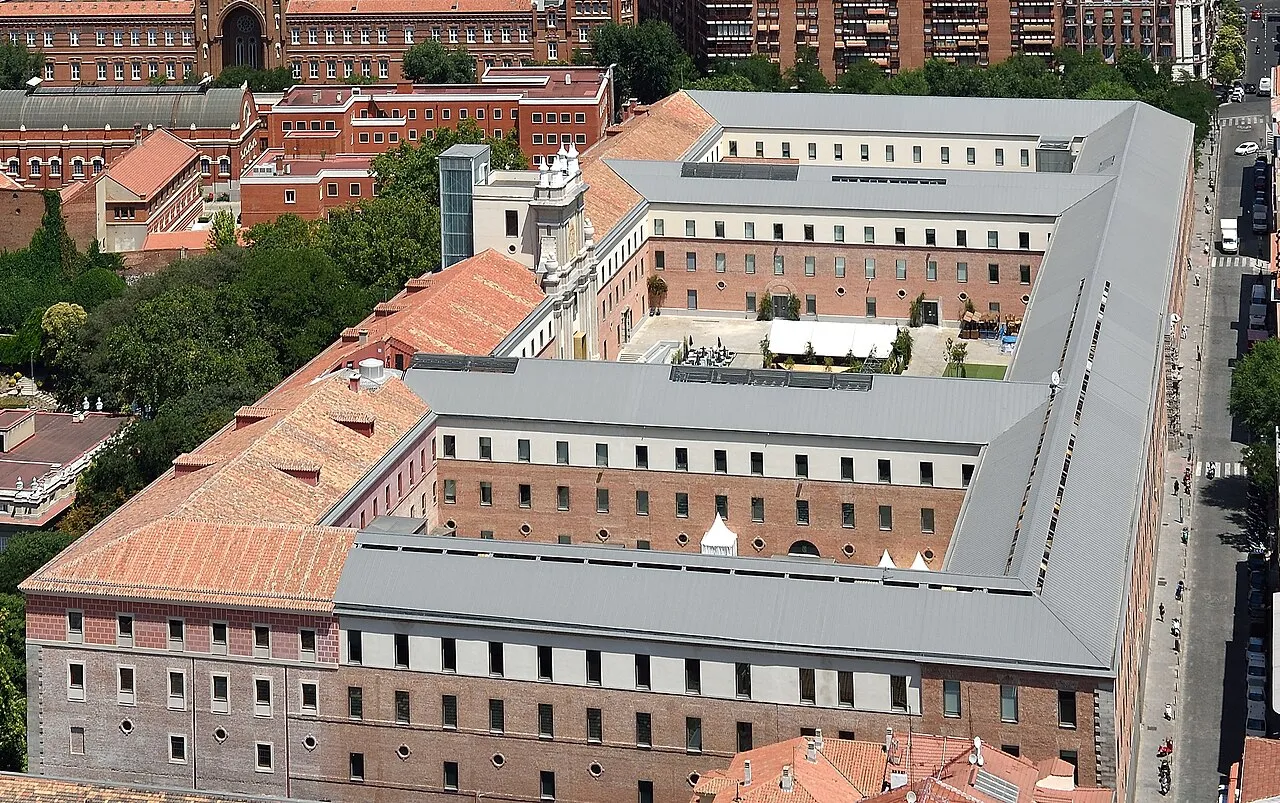
10Rooftop of the Cuartel del Conde Duque

Rooftop of the Cuartel del Conde Duque

📍 Conde Duque, 11

A royal guards' barracks from 1717, the work of Pedro de Ribera, with one of the most spectacular Baroque doorways in Madrid, converted today into a cultural centre with libraries, exhibition rooms and courtyards where open-air concerts are held in summer. Its terrace and upper courtyards offer a different and very rarely photographed view of the rooftops of Malasaña and Chueca. Access to the complex is free and so, almost always, is the cultural programme.

Frequently asked questions

Which is the best viewpoint in Madrid?

For urban views, the rooftop of the Círculo de Bellas Artes: 6 € and the best panorama of the centre, with Gran Vía at your feet. For sunset and atmosphere, the Temple of Debod, which is also free. And to see the whole of Madrid from afar with the mountains behind, the Cerro del Tío Pío, in Vallecas.

How much does it cost to go up Madrid's rooftops?

The Palacio de Cibeles viewpoint is around 3 €, the rooftop of the Círculo de Bellas Artes about 6 € and the Faro de Moncloa about 4 €. The hotel terraces on Plaza de España range between 8 and 15 €, often with a drink included. And there is a long list of free viewpoints: Debod, Las Vistillas, Sabatini, the Retiro or the ninth floor at Callao.

What time does the sun set in Madrid?

It varies by almost an hour and a half over the year: in high summer the sun sets close to 21:45 and in December, around 17:50. The practical rule is to go up 45 minutes before sunset and stay 20 minutes after, when the sky turns violet and the city lights up. Check the exact time on the day.

Can you see the mountains from Madrid?

Yes, on clear days. The Sierra de Guadarrama is visible to the north-west from almost all the high viewpoints — Círculo, Debod, Las Vistillas, Faro de Moncloa and Cerro del Tío Pío — and from December to April it usually has snow. The best days are those after rain or a north wind, when the air is left clean.

Are there free viewpoints in Madrid?

Quite a few, and very good ones: the Temple of Debod, the Jardines de Las Vistillas, the Jardines de Sabatini, the Cerro del Tío Pío, the Retiro cornisa, the upper courtyards of the Cuartel del Conde Duque and the food terrace on the ninth floor of El Corte Inglés at Callao, where you only pay if you consume.

How to link the viewpoints in one walk?

A good walking route climbs from Cibeles along Alcalá to Gran Vía, crosses Callao, reaches Plaza de España and ends at Debod at sunset: it is about 2.5 km and strings together four viewpoints. With Viavoy you can do it with a local guide in your ear thanks to the route “Gran Vía & Modern Madrid”, which follows exactly that axis.

When to go up, what it costs and what to avoid

The time. In Madrid the good light starts about forty-five minutes before sunset and lasts until twenty minutes after, when the sky turns violet and the city switches on its lights. In June and July that means going up around nine in the evening; in December and January, around half past five. Check the exact sunset time on the day: in Madrid it shifts by almost an hour and a half between winter and summer.

The money. Adding it up, a day of viewpoints can cost you zero euros (Debod, Vistillas, Sabatini, Tío Pío, Retiro, Conde Duque, Callao) or around 25 € if you do the three paid rooftops: Círculo (6 €), Cibeles (3 €) and a hotel terrace (8-15 €). The most efficient combination for one evening: Cibeles at seven, Círculo at eight, dinner in Malasaña.

The mistakes. The first, going up at midday: the light is flat, it is hot and you will not see the mountains through the haze. The second, going in rain or strong wind, because many rooftops close without warning. The third, not checking the closing day: the Cibeles viewpoint and the Faro de Moncloa close on Mondays, like most museums. And the fourth, underestimating the cold: from October onwards, a rooftop 70 metres up is a good few degrees colder than the street.

If you are going to do several on the same trip, a good split is this: on the first day, a paid urban viewpoint (Círculo or Cibeles) to get your bearings on the map; on the second, a free sunset at Debod or Las Vistillas; and if you have a third, the Cerro del Tío Pío to see the whole of Madrid from afar. The three tell of a different city each.

Practical information

Free viewpointsTemplo de Debod, Las Vistillas, Jardines de Sabatini, Cerro del Tío Pío, Retiro, Conde Duque and the ninth floor at Callao.
Paid viewpointsCírculo de Bellas Artes (~6 €), Palacio de Cibeles (~3 €), Faro de Moncloa (~4 €), hotel rooftops on Plaza de España (8-15 €).
Best time45 minutes before sunset and up to 20 after. In summer, around 21:00; in winter, around 17:30.
Closing daysThe Cibeles viewpoint and the Faro de Moncloa close on Mondays. Open-air rooftops close in rain or strong wind.
Getting thereBanco de España (L2) for Cibeles and the Círculo; Callao (L3·L5) for Gran Vía; Plaza de España (L3·L10) for Debod; Buenos Aires (L1) for the Tío Pío.
BringA jacket from October onwards (it is colder up high), and water in summer. Many rooftops do not let you in with large backpacks.
On the map

🎧 With Viavoy

Walk Madrid and listen at your own pace

Download Viavoy and walk Madrid offline, whenever you like.

from 2,99 €· one-off payment
City Pass · 9,99 €3 days, all the tours in Madrid
Find out more about Viavoy →
Viavoy app

Keep reading

More articles

Itineraries

Madrid in 2 days: the perfect itinerary

Itineraries

A weekend in Madrid: from Friday to Sunday

What to see

The Madrid of the Habsburgs on foot: a route through the old town

Neighbourhoods

Malasaña: what to see and do in the neighbourhood of the Movida