What to look at once you are inside
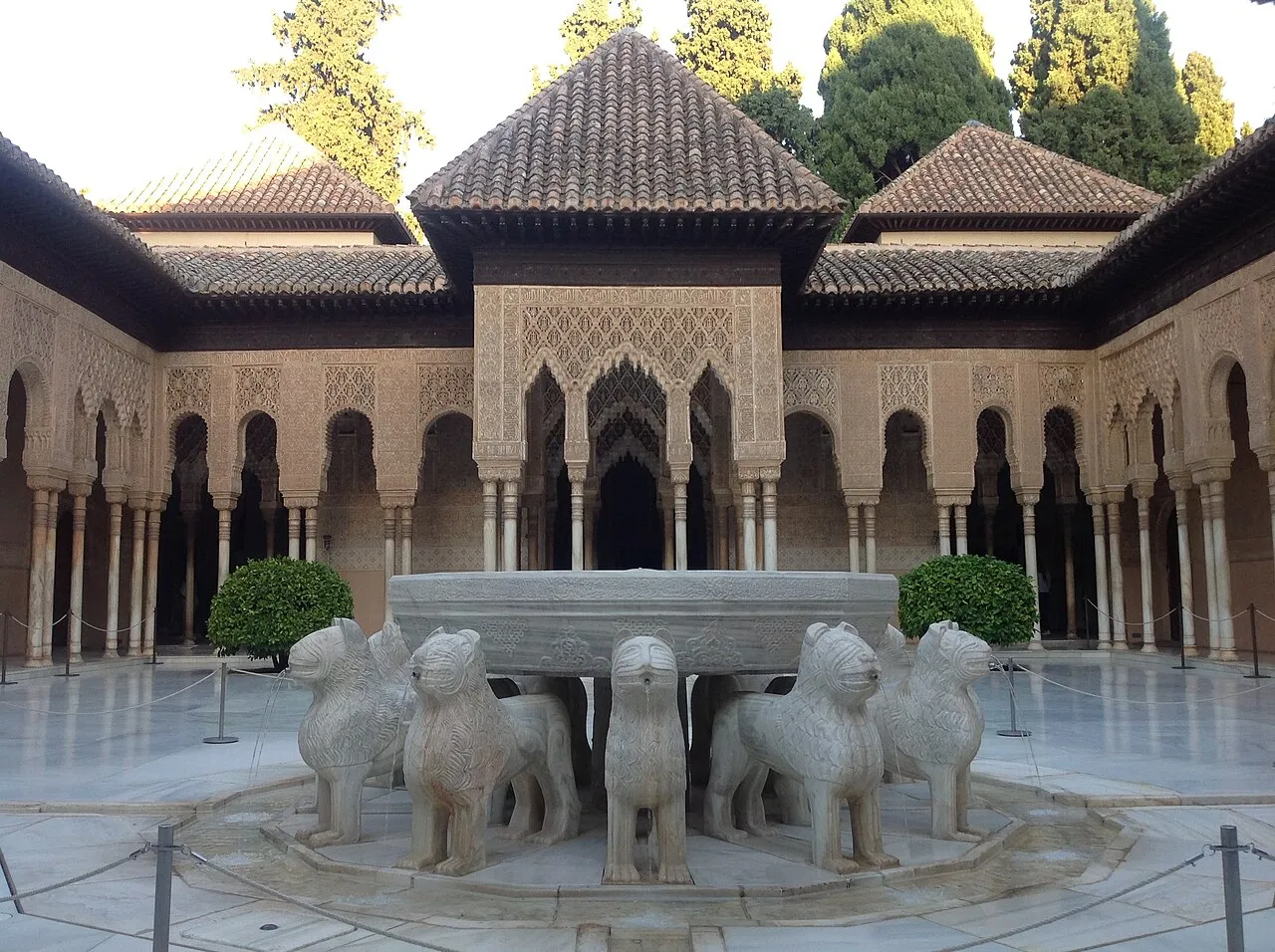
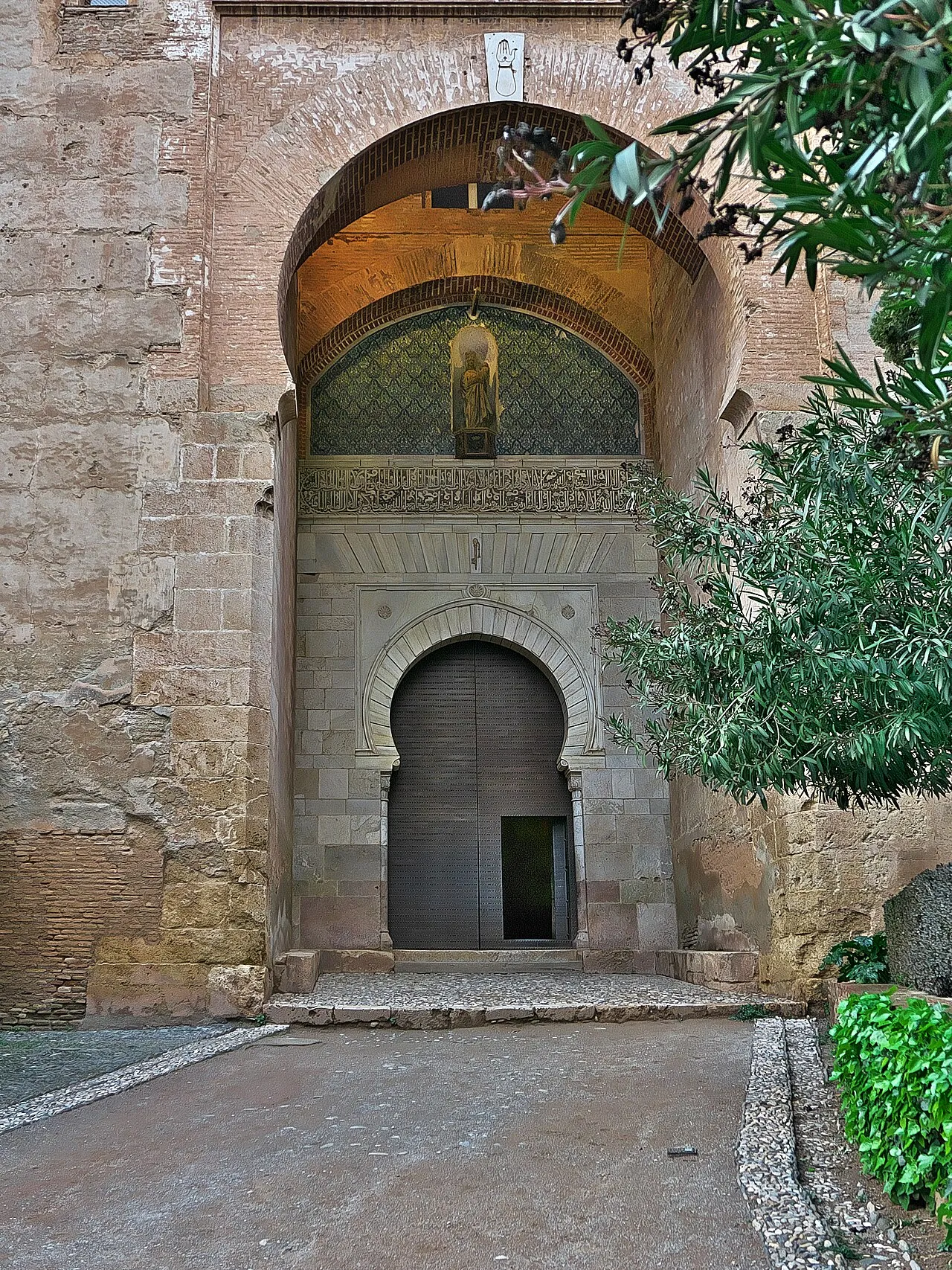
The walls. Nasrid decoration has three registers and not a single figure: geometry on the tiled dados, stylised plant forms in the plasterwork and writing everywhere. That writing is not decorative: it is poems, Quranic verses and the dynastic motto, and a good part of it was composed by the court poets, Ibn al-Yayyab and Ibn Zamrak, whose lines are literally carved into the walls.
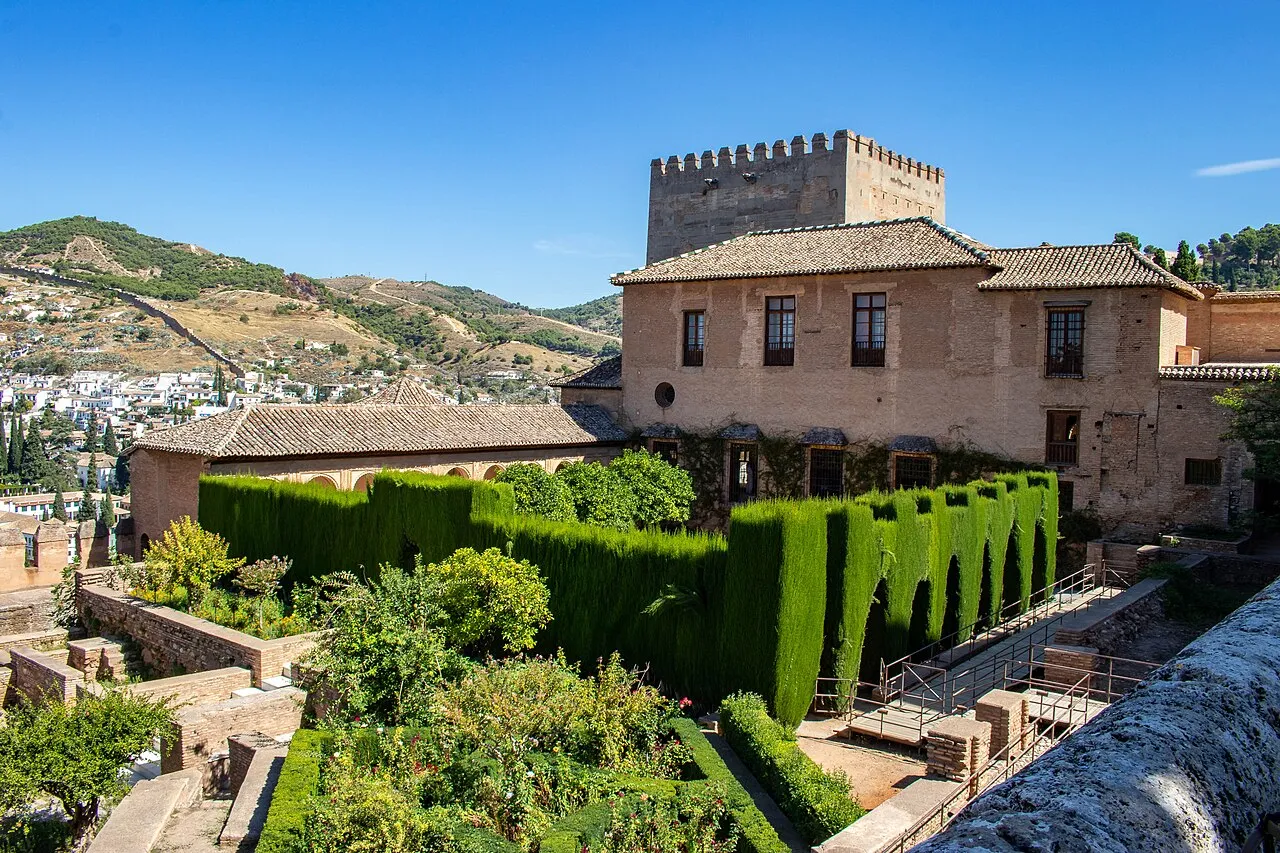
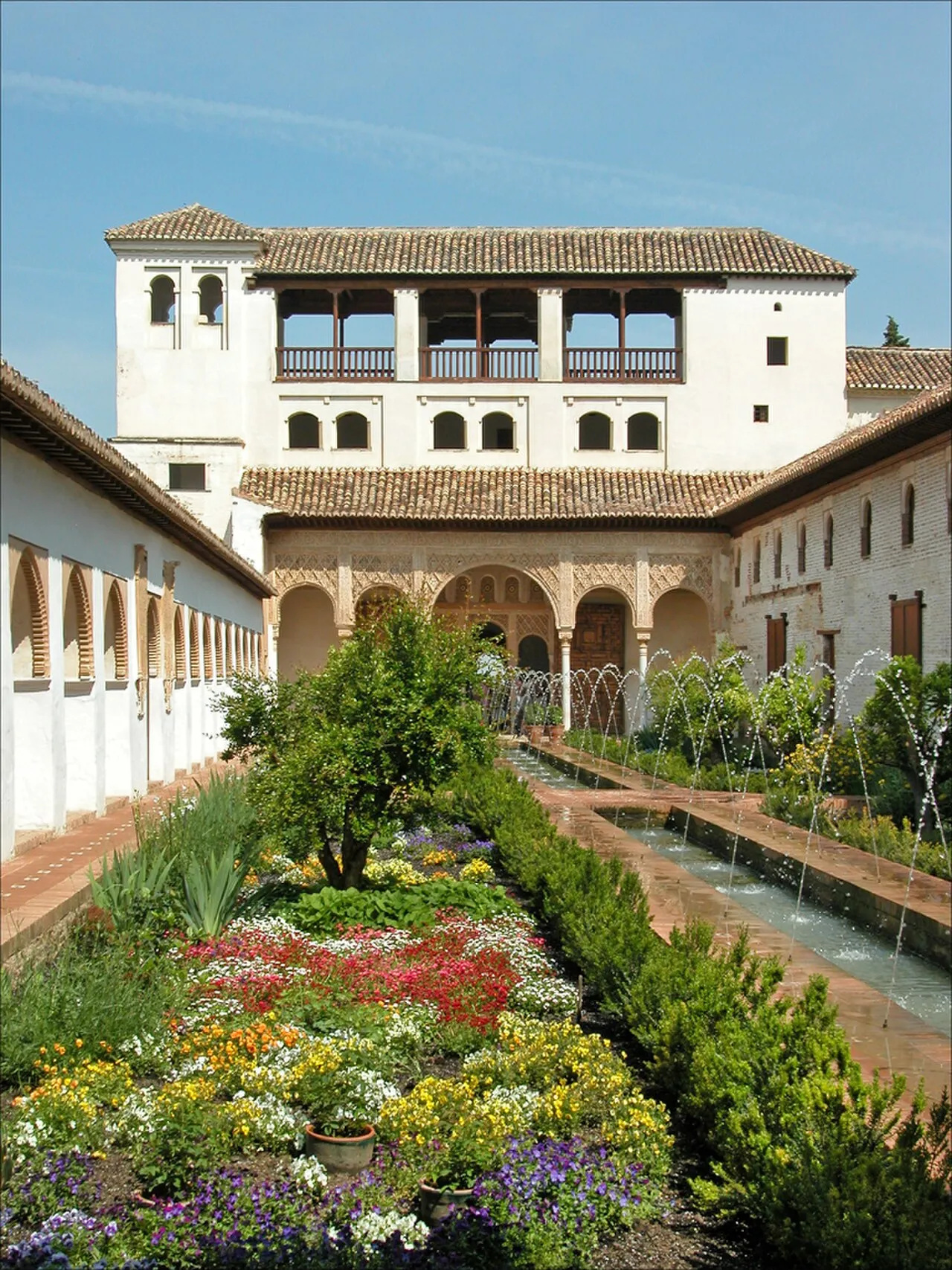
The water. The whole system — fountains, pools, baths, the Generalife gardens — works by gravity from the Acequia Real, the royal channel that takes water from the Darro several kilometres upstream. No pumps, since the thirteenth century. It is the most impressive piece of engineering in the complex and the one least explained.
The light and the sequence. Nothing can be seen whole from a single point: the spaces are discovered in succession, alternating gloom and open courtyard, low ceiling and height, shade and dazzle. It is architecture meant to be walked through, not photographed.
And the Palace of Charles V, that Renaissance cube many people consider an intrusion. It is one, and at the same time it is a remarkable building by Pedro Machuca, with a circular courtyard inscribed in a square that has no equivalent in Spain. It deserves ten minutes, if only to understand what was meant by planting it here.
Practical information
TicketsOfficial website, around 19 € for the general one. Check that it includes the Nasrid Palaces: the partial ones do not.
How far aheadA month or more in spring, autumn and long weekends. Less in winter and August.
DocumentsYou have to bring the ID card or passport of every visitor: the names are tied to the ticket.
The critical timeThe one for the Nasrid Palaces. Exact, impossible to move and no refund if you arrive late.
DurationBetween 3 h 30 and 4 h 30. Fifteen minutes from the entrance to the Palaces and another fifteen to the Generalife.
AlternativeNight visit to the Nasrid Palaces: cheaper, more intimate and with more availability.